
The Single Most Important Thing I Could Tell You in 5 Minutes
It can help you get and keep your priorities straight
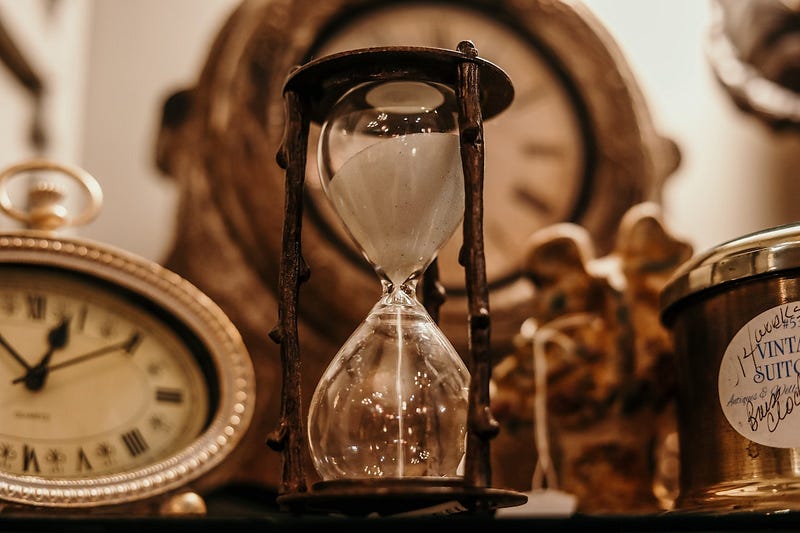
Are you focused on your most important priorities? Or do you get easily lost in frivolous distractions? Does your day slip by and then, as you slide into bed, you’re wondering, “Where did the time go?”
We all need downtime—rest, play, and relaxation. But if you spend more time on Animal Crossing than your real aspirations, listen up.
Life is fragile and uncertain.
But we fail to remember that. Most of us live as though our time will last forever, making endless plans and dreaming fantastic future fantasies.
But how do you know you’re not going to die right now, between this breath and the next? A tired, drunk, or distracted driver, for example, could end your life in an instant.
You’re not entirely at fault for this critical memory lapse.
According to the Yoga Sutras, we each possess an ingrained desire for continuity that’s not easy to root out. Thus, we assume tomorrow is guaranteed. Instead of treating our time like the precious commodity it is, we often fritter it away on shallow, superficial, and inane activities.
How can you counter this deeply embedded presumption of continuity and use your priceless moments well? Let’s consider the advice of philosophers and spiritual masters of the past and present.
“This existence of ours is as transient as autumn clouds. To watch the birth and death of beings is like looking at the movement of a dance. A lifetime is like a flash of lightning in the sky, Rushing by, like a torrent down a steep mountain.” — the Buddha
Life Is Precious. Let’s Not Forget!
I don’t mean to sound harsh, but you have to practice awareness of death and impermanence every single day to undo the deep-rooted assumption of continuity.
But this type of exercise doesn’t have to feel morbid if you remember the main point: to bring meaning, purpose, and motivation to each day.
Christian monks regularly chanted the trope “Memento Mori” to recall the fleeting nature of the body-mind complex. The phrase means:
“Remember you have to die.”
For my own use, I’ve personally contracted it to: “Remember dying.”
Stoic philosophers composed their own decrees to meditate on death frequently. Some frequented tombs to keep alive the remembrance of death.
Centuries ago, Tibetan masters turned their tea cups over at bedtime. They used this simple gesture as a reminder of death and impermanence. After all, they might not wake up to drink their warm butter tea the next morning.
The 14th Dalai Lama offers a modern twist with this morning intention that doesn’t dwell on death itself:
“Every day, think as you wake up, today I am fortunate to be alive, I have a precious human life, I am not going to waste it. I am going to use all my energies to develop myself, to expand my heart out to others; to achieve enlightenment for the benefit of all beings. I am going to have kind thoughts towards others, I am not going to get angry or think badly about others. I am going to benefit others as much as I can.” — the Dalai Lama
If you like his advice, write it in your journal and read it to yourself each morning.
Alternatively, create your own ritual, your own verse, or your own song to remind yourself daily this life is too precious to let it slide by half-asleep.
“When you are strong and healthy, You never think of sickness coming, But it descends with sudden force Like a stroke of lightning.”
When involved in worldly things, You never think of death’s approach: Quick it comes like thunder Crashing round your head.” -Milarepa
Closing Thoughts
We all know we will die. We just don’t know how or when. Yet we masterfully neglect to remember this critical fact in our day-to-day reality and assume that tomorrow is guaranteed.
This can lead us to fritter our time away on the mundane, insignificant, and unimportant aspects of life.
If you want to keep your priorities straight and live an intentional life, follow the advice of philosophers and spiritual practitioners of the past and present, remember death and impermanence every single day.
(Writing Prompt from Diana C.)
For more inspiration, sign up for my bi-monthly Wild Arisings newsletter and receive access to free self-discovery resources.
You might also like:


