
The Simple Solution To Our Climate Crisis
We have overlooked a straightforward yet powerful carbon capture technology.
One of the most promising climate-saving technologies out there is carbon capture. After all, it is the most obvious way to save the planet: simply remove the thing that is causing all the problems! But this technology is years away from being able to actually make a dent in the atmospheric levels of carbon dioxide, as it is far too complex, unrefined, and costly. Fortunately, there is a simple, unused method of carbon capture right beneath our noses that is powerful enough and cheap enough to save the planet. So, why aren’t we using it?
Before we dive into this fantastic carbon capture method, let’s quickly recap why our current methods aren’t up to scratch. Primarily, most of them require a lot of electricity, aren’t very efficient, and take up a lot of space. All of this means that they cost too much to remove a meaningful amount of carbon. They also aren’t very scalable, as it takes a lot of time and tonnes of money to build enough facilities to meet capture requirements.
But we seem to have forgotten that the Earth already absorbs carbon dioxide, and we can easily enhance this process. Let me explain.
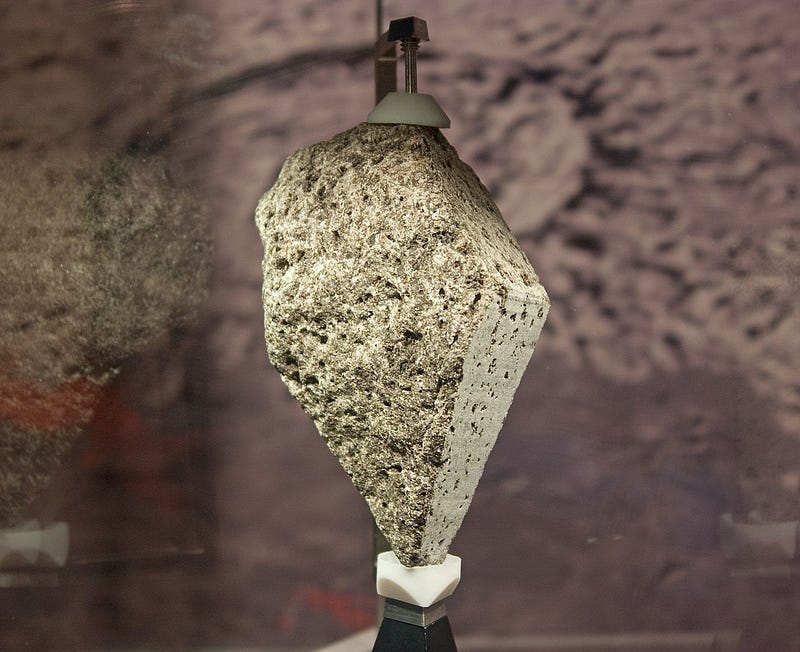
Olivine is the most common mineral, making up 60% to 80% of the Earth’s upper mantle, and it can absorb carbon dioxide exceptionally efficiently. You see, all rain is slightly acidic, given that carbon dioxide dissolves in the clouds and turns into carbonic acid. When rain lands on olivine, the carbonic acid reacts with it, creating carbonates. These carbonates are incredibly stable and biologically inactive. This process means that olivine, with the help of rain, can absorb carbon dioxide directly from the atmosphere and trap it away securely indefinitely.
If olivine is crushed into fine sand, its surface area is dramatically increased, and this entire process can be turned up to eleven. In fact, 1 kg of crushed olivine can absorb 1 kg of carbon dioxide, making it one of the most efficient and powerful forms of carbon capture. It is so efficient that even if we use fossil fuel-powered mining and crushing to get olivine sand, it may actually still be carbon-negative! For example, the mining of limestone, which requires a similar type of mining, only releases 440 kg of carbon dioxide per tonne mined.
But, because olivine is so abundant and easy to mine, we can easily use carbon-neutral renewable power to mine it. This mine should also have a minimal environmental impact on the surrounding area, as there will be no risk of heavy metals leaching from it. On top of all of this, the olivine only requires crushing to be functional, so the processing will be very energy efficient.
This makes the price of olivine carbon capture surprisingly cheap. Raw olivine costs about $25 per tonne, and crushing a tonne into fine sand will cost around $10. So, olivine carbon capture should cost less than $50 per tonne, including additional logistical and peripheral costs. This is far, far cheaper than current carbon capture technologies, which are north of $250 per tonne.
For some comparison, using the cheapest commercially available carbon capture technology to offset the US’s annual carbon emissions would cost 1.1 trillion dollars, or $3,314 per person. Using olivine, the cost plummets to 220 billion dollars, or $663.85 per person.
But these two aren’t a valid comparison, as olivine can scale to this size and larger far more quickly and for way less money. Firstly, we know we can mine enough of the stuff fast enough as we have an analogue. Coal mining is very similar to olivine mining, and we currently mine 7.4 billion tonnes of coal each year, and it only takes around 4 years to construct a coal mine. This means that it is possible to mine the billions of tonnes of olivine needed to absorb a significant amount of carbon dioxide. If, in fact, olivine mining can be scaled to the same size as coal mining, we could use it to offset 20% of our global annual carbon emissions. It also means that it would only take a few years to scale up olivine mining to this level.
Unlike other carbon capture methods, we also don’t need any additional space beyond these mines. You see, because olivine sand is biologically inactive and is effectively the same as normal sand, it can be spread out in nature without impacting ecosystems (at least in environments that can cope with extra sand). Alternatively, it can be used as an aggregate in construction. This makes it remarkably scalable, far more so than any other form of carbon capture. So there is plenty of space to put the billions of tonnes of olivine sand.
In other words, not only is olivine carbon capture super efficient, but it is also very cheap and incredibly expansible. It seems to tick all the boxes for a technology that could stop the climate apocalypse in its tracks. So why aren’t we using it?
Well, olivine isn’t a pure mineral and contains impurities like nickel. When olivine reacts with carbonic acid, it releases nickel into the environment. Flora and fauna can cope with a certain level of nickel without ill effect, but above that threshold, it can negatively impact their health. So even though olivine itself is entirely biologically inert and safe, if too much of it is in one place, it could cause local nickel levels to reach a dangerously high level.
This is why we aren’t rushing to use olivine. A lot of research is needed to quantify the dangers of olivine nickel leaching and how we can mitigate this issue. One idea is to spread olivine out enough and in specific locations so that local nickel levels don’t get too high and ensure the nickel doesn’t accumulate to dangerous levels in bodies of water. Another idea is to use filters to remove the leached nickel before it enters the environment. Luckily, several groups are currently investigating these solutions.
So yes, olivine could be one of the best solutions to stopping the climate crisis. It is super simple, cheap, and incredibly easy to scale to planet-saving capacity. If it weren’t for this pesky nickel issue, we would already be using it worldwide. Fortunately, recent studies have found ways to safely use olivine without adverse effects, so who knows, maybe soon we could use this brilliant mineral to save the world.


