
The Silver Briefcase: How, as an Adult Child, I Learn to Let Go Over and Over
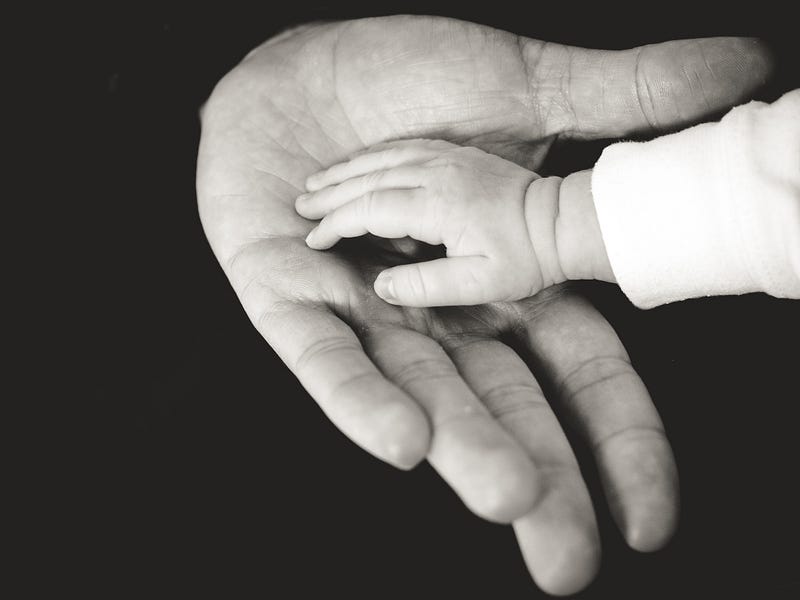
I held my dad’s hand — thumbs like mine, familiar as if I had been holding it for 38 years. His palms were thick and had a specific warmth I remembered from when I was a little girl before he left. As he tried to stabilize himself standing from the bed, he pulled his hand away, showing off for the discharge nurse. Introducing me to her like he was her best friend. He was best friends with the whole hospital staff, as if he worked there, as if he was still a nurse.
My sister, Elysa and I had been there three weeks prior, after his emergency triple bypass, when his chance of survival was 50–50. Intubated, asleep, and agitated, my dad heard Elysa when she said, “Hi Dad. We’re here, Dad.” A tear rolled down his cheek.
I was legally next of kin, but I didn’t know his wishes. The last time I had been to Tampa to see him was when I was 16. He never asked me to come again. Our relationship consisted of one line emails, then texts. Once in awhile we would have long conversations all about his relationships with various women and how he was devastated over the one who had put his clothes on the doorstep and changed the locks. Or about all the praise he received from his boss at work, or the nursing award he got, or how he finally paid off his share of my student loan.
I wanted him to know I had traveled all over Europe and how I climbed two 14,000 foot mountains in the Rockies. I wanted him to ask about the Anasazi ruins or how I met my husband when I shared my cake with him at a party. I wanted my dad to ask me about being a mother and all about my son, and how I write sometimes just to feel ink on paper.
I wanted him to ask me about all of the meditations on “Radical Acceptance” of having an incapable father or the medications I take to stop panic. If he asked, I would have told him about inner child work and how writing with my left hand helped me release my anger. I would have shown him my art therapy paintings of the canyon, the basement stairwell, the unfillable gap. I kept waiting for him to come back and ask me about who I had become.
In the ICU waiting room, his girlfriend’s daughter warned us, “Their apartment is a mess. They just have a lot of stuff.”
Conversations over the years turned into laundry lists of medical terminology, appointments, and needs for his girlfriend. When my dad retired from nursing, and when Ellen’s M.S. became bad, she became his patient. No one could ever care for her better than him, and so their one-bedroom efficiency apartment became a hospital room.
The living room held the hospital bed, empty now because Ellen stayed in a nursing-home while my dad recovered from the heart-attack. Wilted plants and other furniture were pushed to the walls. Bed pans, tubes, cords, medicine bottles, sheets crumpled into a ball: My dad’s apartment was frozen in time. A mildewed miniature fountain, the bicycle print that had been in my childhood home, piles and piles of envelopes wrapped in rubber bands, a George Forman Grill, Vitamixer, an ice cream maker, a turkey fryer, three printers, bags of makeup and hair products, and boxes delivered on the front stoop from the Home Shopping Network.
And photographs of all of us. Every inch of wall space and furniture surfaces were covered with photos. The long hair one of Elysa and I from high school. Printed out pictures of my baby from Facebook. His parents in 70s outfits, school photos from when we were his daughters. Kid pictures of our cousins. And everything was thick with dust and smokers’ grime.
“He chose this,” Elysa said.
Then we cleaned.
After bringing my dad home, shopping, and cooking for him, we sat at his small table. He arranged his new medications, held one close, and squinted to read the directions.
“Dad, I had to sign off on decisions for you,” I said, “I don’t know what you want.”
“It’s all in the silver briefcase,” he laughed.
I scanned the room quickly. A shelf lined with pill bottles, a pile of receipts, Ellen’s scooter, an unopened box. Elysa, standing in the kitchen caught my eye.
He looked up at me and said, “Thank you.”
I noticed his hands trembling and tired, and I let go.