
“The Silence of the Lambs”: A Timeless Masterpiece Turns 30
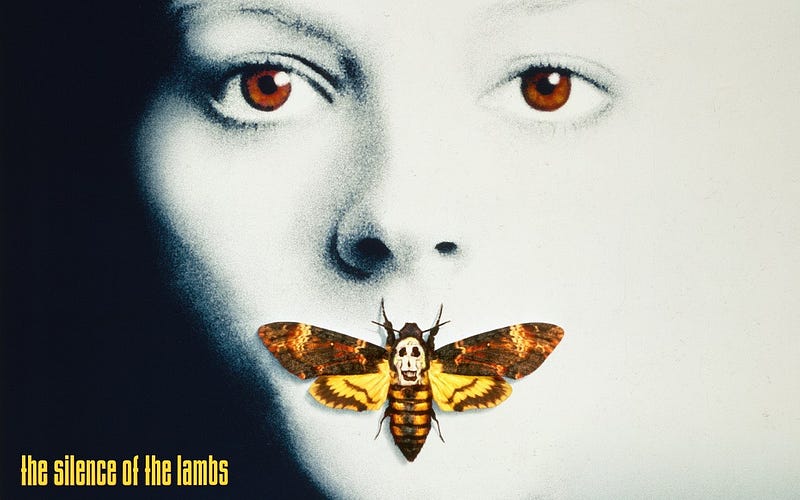
30 years ago last month, Jonathan Demme’s The Silence of the Lambs was released in theaters. The film adaptation of Thomas Harris’s novel grossed a staggering $273 million and become the third (and most recent) film to sweep the “Big Five” Oscar categories. Three decades later, it is rightfully regarded as one of the best films ever made — but it is not without controversy.
The Development, Release, and Initial Reception
The story of The Silence of the Lambs really begins in 1981, a full decade before the film premiered. That year, Thomas Harris published the novel Red Dragon, which chronicled the relationship between FBI agent Will Graham and cannibalistic serial killer Hannibal Lecter. The novel received a warm reception from critics and readers and was subsequently adapted into a 1986 film directed by Michael Mann entitled Manhunter. The film starred William Peterson (who later headlined the CBS blockbuster CSI: Crime Scene Investigation) as Graham and Brian Cox (currently scoring acclaim for his role on HBO’s Succession) as Lecter. The film received mixed reviews and generated little excitement at the box office, but has developed a cult following in the intervening years.
Despite the tepid initial reception to the film, the success of the novel led Harris to continue the saga of Hannibal Lecter. In 1988, he released the sequel to Red Dragon entitled The Silence of the Lambs. The novel follows Lecter, now in a maximum security prison, agreeing to help FBI trainee Clarice Starling hunt down a serial killer nicknamed “Buffalo Bill.” Although the novel was (and remains) the subject of significant criticism for perceived transphobic and homophobic content (more on that later), it generally received a warm reception from critics and audiences who found the psychological dynamics both within and between the characters of Lecter and Starling irresistible.
Screenwriter Ted Tally, who only had one feature film writing credit to his name at the time, was tapped to adapt the novel for the big screen. The project was initially envisioned as a vehicle for legendary Oscar winner Gene Hackman, but he eventually withdrew from the project. Shortly after Hackman withdrew, Jonathan Demme came on board to direct. Unlike Tally, Demme was well-established with a string of well-received films like Melvin & Howard and Something Wild to his name.
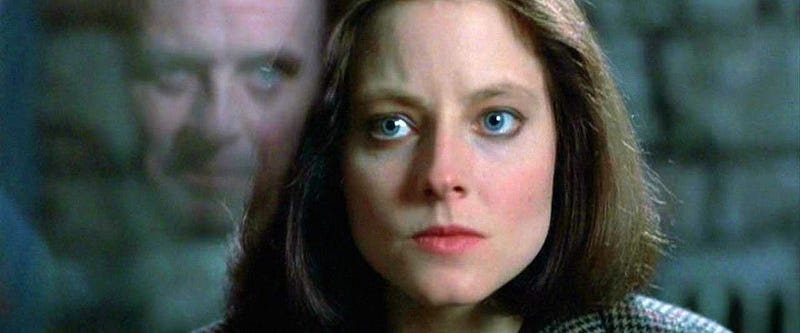
Unlike the relatively straightforward selection of key behind-the-scenes talent, the casting of the key roles of Starling and Lecter was more complex. Although Jodie Foster lobbied for the role and had just won the Best Actress Oscar for The Accused, Demme wasn’t sure she was right for the part. Michelle Pfeiffer and Meg Ryan were among the A-list actresses who turned down the role due to its gruesome themes and Laura Dern was deemed not bankable enough to headline the film despite the filmmakers interest in her taking on the role. Eventually, they circled back to Foster.
For the role of Hannibal Lecter, a virtual who’s who of A-listers were considered, including Sean Connery, Al Pacino, Robet DeNiro, Dustin Hoffman, and Daniel-Day Lewis. Hopkins was eventually selected because the filmmakers were impressed by his work opposite John Hurt in the 1982 classic The Elephant Man. Once the cast was set, The Silence of the Lambs began its shoot, which occurred over a 3.5 month period from late 1989 to early 1990 in Pennsylvania and West Virginia.
After two weeks in limited release in New York City, the film opened nationwide on February 14, 1991. The date is notable for two reasons. First, the release of such a gruesome, horrifying film on the syrupy sweet Valentine’s Day holiday was undoubtedly an intentional bit of counter-programming to raise the film’s profile. Second, February is typically a wasteland in which studios dump movies with little buzz and box office prospects. It certainly isn’t a release date befitting of a movie with serious Oscar potential, given that it would be more than a year before the ceremony it was eligible for would be held.
The film received raves from critics upon its initial release and — perhaps more surprisingly — became a box office sensation. The film was #1 for five weeks and grossed $131 million in the U.S. and $273 million worldwide ($524 million when adjusted for inflation). This is especially impressive considering that its budget was a mere $19 million, making the film immensely profitable.
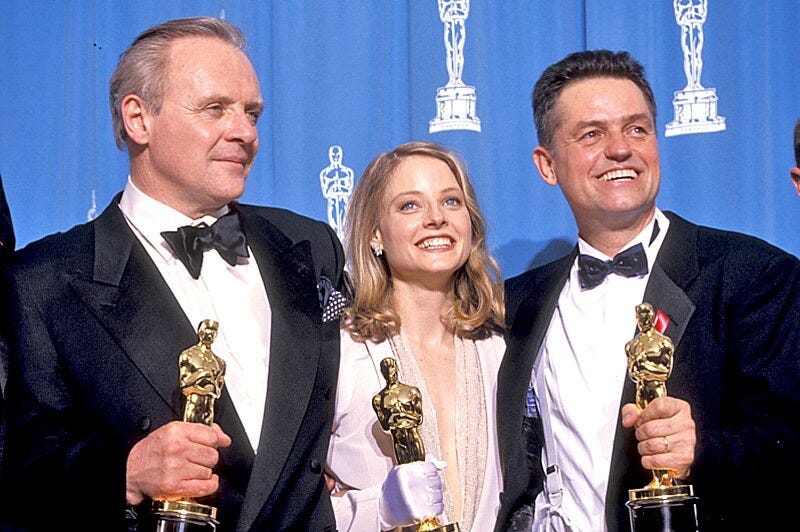
Even more surprising than its enthusiastic critical reception and global box office success was that it held on a full year to become a major player at the 64th Academy Awards. Not only is it a tall order for movies to remain in the awards conversation for over a year (hence why most Oscar-baiting films are widely released within weeks of the ceremony), but it is extraordinarily rare for Oscar to fete a thriller, let alone a graphically violent thriller with horror elements. Prior to The Silence of the Lambs, the only movies that came close to fitting this bill and received Best Picture nominations are Steven Spielberg’s Jaws and William Friedkin’s The Exorcist. (And, yes, that means that the Academy failed to nominate Alfred Hitchcock’s Psycho for Best Picture.)
The Silence of the Lambs scored seven Oscar nominations — Best Picture, Best Director (Demme), Best Actress (Foster), Best Actor (Hopkins), Best Screenplay (Tally), Best Film Editing (Craig McKay), and Best Sound (Tom Fleischman and Christopher Newman). It tied with Barbra Streisand’s The Prince of Tides as the third most-nominated film that year behind Oliver Stone’s JFK (10 nominations) and Warren Beatty’s Bugsy (8 nominations). (Other major players at the Oscars that year included Thelma & Louise, Beauty and the Beast, Boyz N The Hood, and Terminator 2: Judgment Day.)
The ceremony was held on March 30, 1992, a full 60 weeks after The Silence of the Lambs was officially released. Although it was considered a frontrunner for several categories, few expected it to become only the third film in history to win “The Big 5” categories — Best Picture, Best Director, Best Actress, Best Actor, and Best Screenplay. The only two previous two films to do it were the 1934 romance It Happened One Night and the 1975 drama One Flew Over the Cuckoo’s Nest. The film’s Oscar fetes helped elevate the film’s reputation from a well-respected thriller to an iconic masterpiece.
The Enduring Legacy
There are three undeniable pieces of evidence that demonstrate what a lasting impact The Silence of the Lambs had in popular culture.
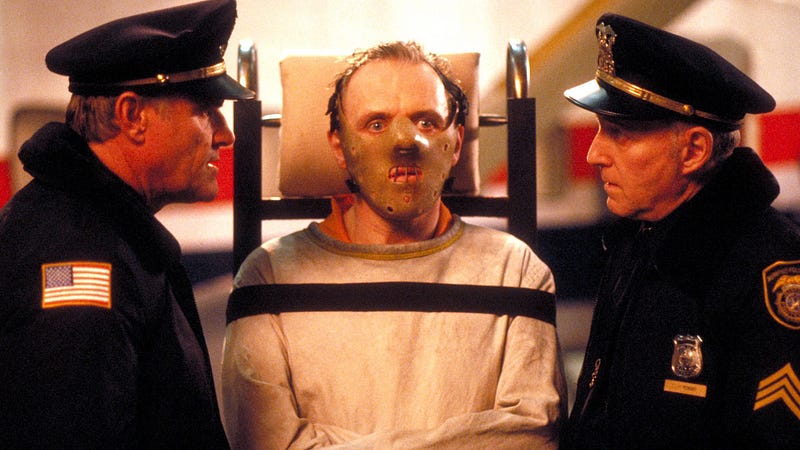
The first and most obvious is the frequent citation of the film in “Best of” lists by prominent organizations, particularly the American Film Institute (AFI). The film ranked #65 on the AFI’s list of the 100 best American films in 1998 and #74 on the revised list they released in 2008. The film also ranked at #5 on the AFI’s list of the most thrilling American movies ever made. On their list of all-time best movie heroes and villains, Hannibal Lecter was ranked the #1 villain and Clarice Starling was ranked the #6 hero. And the film’s most famous line of dialogue ranked as the 21st best movie quote in history (“A census taker tried to test me once. I ate his liver with some fava beans and a nice chianti”). The film has received citations from many other magazines, critics groups, and film organizations as well.
The second is the fact that the film spawned an entire franchise. Thomas Harris’s 1999 sequel to The Silence of the Lambs (straightforwardly titled Hannibal) was made into a 2001 film of the same name by legendary director Ridley Scott (Alien). Anthony Hopkins returned as Lecter for the film, but Jonathan Demme and Jodie Foster declined to return. Julianne Moore stepped in to replace her and the screenplay was written by the powerhouse duo of Pulitzer Prize-winning playwright David Mamet (Glengarry Glen Ross) and Oscar winning screenwriter Steven Zailian (Schindler’s List). The film was a box office hit grossing $351 million globally but received mediocre reviews, with many criticizing the gratuitousness of the violence and the direction the novel and film took Clarice’s character in.
Seeking to capitalize off the financial success of these two films, a new adaptation of Red Dragon was commissioned. Hopkins returned to the role of Lecter again, but the behind the scenes talent rotated with Brett Ratner (Rush Hour) taking over to direct and Ted Tally returning to adapt the screenplay. Although Clarice does not figure into the plot line, there was nevertheless an impressive supporting cast that featured Edward Norton, Ralph Fiennes, Mary-Louise Parker, and Phillip Seymour Hoffman. The film fared better with critics than Hannibal but grossed substantially less (a still robust $209 million globally). A prequel to the trilogy entitled Hannibal Rising was written by Thomas Harris in 2006 and turned into a film in 2007. That film, which did not feature Hopkins, was a box office bomb and was pummeled by critics.
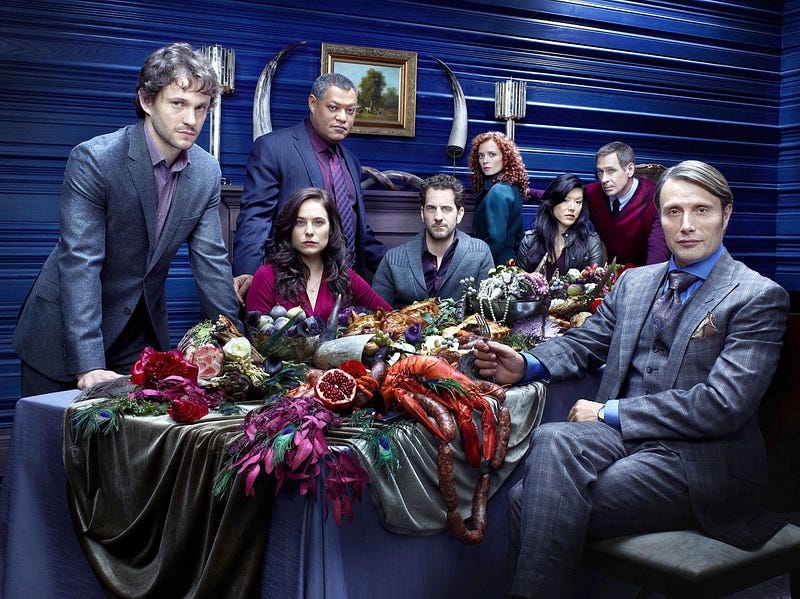
With its box office prospects clearly dwindling, the Hannibal Lecter universe moved on to the small screen. From 2013 to 2015, NBC aired a critically adored series entitled Hannibal, which had a small but very passionate fan base. The show produced 39 episodes over three seasons and had an impressive ensemble that included Mads Mikkelson (as Lecter), Hugh Dancy, Laurence Fishburne, and Gillian Anderson. And just two weeks ago, CBS premiered a new series entitled Clarice. The series takes place a year after The Silence of the Lambs and follows Clarice Starling as she returns to the field investigating high profile murders and sex crimes in the Washington, D.C. area. So far it has received poor reviews and tepid ratings, but its sheer existence shows that the property is still seen as relevant and commercially viable.
The third and final piece of evidence that the film has embedded itself in popular culture is the massive amount of serial killer-themed content that proliferated in its wake. Although Thomas Harris nor Jonathan Demme can hardly be credited with inventing the genre, they did revitalize interest in it and elevated it from the B-movie ghetto to prestige cinema. It’s hard to discount the impact of the film on movies like Se7en and shows like Criminal Minds in terms of themes, content, and aesthetics.
The Contemporary Re-evaluation
In preparation for this article, I revisited the film for the first time in over a decade. I expected it to hold up, but I was a bit worried that it would feel dated and that the onslaught of homages, copies, and parodies that have saturated pop culture since its release would rob it of some of its power and novelty. However, that didn’t happen for me at all. I found it to be two of the most engrossing, riveting, and technically flawless two hours of cinema I had seen in years.
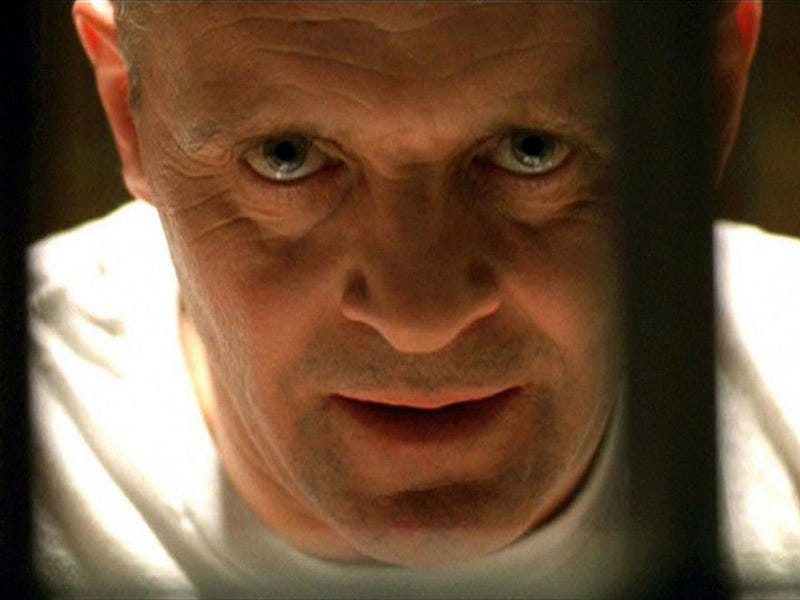
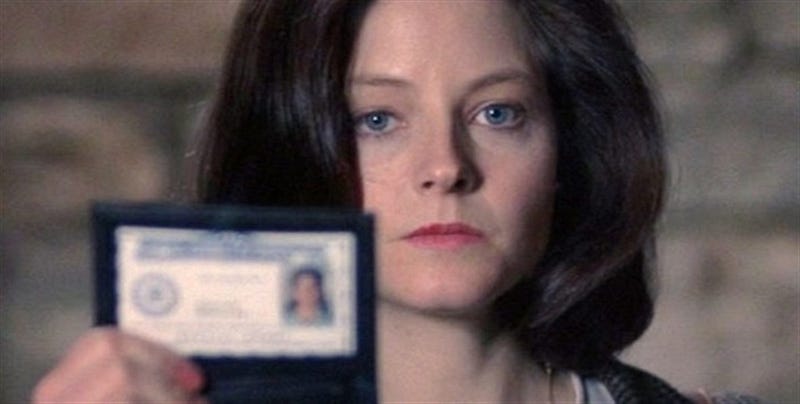
There are numerous aspects of the film that make it a timeless masterpiece. The performances are perhaps the primary one. Despite the fact that the production company and Oscars considered them co-leads, Foster is the undeniable lead of the film. Clarice dominates the narrative and takes up the vast majority of the screen time. In fact her relationship with Lecter is largely secondary to her hunt for “Buffalo Bill.” Clarice is a steely, no-nonsense heroine who is remarkably perceptive, competent, and brave. But her thick Virginia drawl, soft features, and brief glimpses of fragility and tenderness elevate Clarice beyond the “tough cop” role and into a truly fascinating multi-dimensional character. As Lecter, Hopkins is perfectly cast. He has an aristocratic charm and intelligence that belies the animal-like brutality of his character and he is so electrifying in every frame of his 25 minutes of screen time that you can see why virtually everyone went along with the idea of him as a lead. (Interestingly, both Hopkins and Foster are back in the Oscar race this year; Hopkins has been nominated across the board for his turn as a man slipping into dementia in The Father and Foster just won the Golden Globe for Best Supporting Actress for her turn as an attorney in the Guantanamo Bay-set drama The Mauritanian). This is hardly a two-person show, however. There is an ensemble here that includes Ted Levine (as “Buffalo Bill”), Scott Glenn (as FBI Director Jack Crawford), Anthony Heald (as Dr. Frederick Chilton), and Brooke Smith (as Catherine Martin). Every single role is perfectly cast and performed.
Ted Tally’s adaptation wisely plays up the most fascinating aspects of the story, realizing that it is the dynamic between Clarice and Hannibal that is the film’s most unique and powerful asset, not the hunt for “Buffalo Bill.” The screenplay is deeply interested in what makes the characters tick internally and what makes them connect. The relationships, plot progression, and dialogue remarkably avoid cliches, contrivances, and gratuitousness. And the unique structure of the screenplay, which balances Clarice’s first major case with the dangerous psychological dance she and Hannibal are engaging in, makes it all feel thrillingly fresh.
The film is also superb at a technical level. Demme directs the film with clear vision and confidence and avoids any stylistic flares that might render it self-indulgent. It is crisply edited by Craig McKay who prevents the film from ever flagging in terms of pacing. The cinematography by Tak Fujimoto (which should have scored the film an 8th Oscar nomination) is exceedingly effective and memorable as it captures the gloomy mid-winter in the Mid-Atlantic with haunting accuracy. The score (which should have scored the film its 9th Oscar nomination), composed by three-time Oscar winner Howard Shore and performed by the Munich Symphony Orchestra, is appropriately chilling and unobtrusive. It is truly one of those rare movies where virtually every single element works.
A Note on Transphobia and Misogyny
The legacy of The Silence of the Lambs is not without controversy, however. In addition to criticisms of its excessive violence (particularly its portrayal of horrific violence against women), the portrayal of “Buffalo Bill” continues to be hotly contested decades after the film’s release. Many called out the film for transphobia due to the fact that the film’s main villain is depicted as a “transsexual” seeking “sex reassignment surgery.” These accusations persisted even though it is explicitly debunked within the film itself. The psychological profile of Bill is that he is not in fact transgender but rather someone who sought to transform into someone else due to profound self-loathing and saw changing his body and appearance as a way to do it. It is further revealed that he was denied gender confirmation surgery because doctors deemed that he was not truly transgender. For me, the inclusion of these elements was a significant step in the right direction. But it hardly resolved my concerns.
Ultimately, the film at best condones and at worst implies a real and meaningful connection between being transgender, mentally ill, and violent. Such a connection is completely lacking in scientific basis and has been repeatedly use to justify discrimination and violence toward transgender individuals. The film also suggests that being transgender is something that can be easily faked and used to one’s own advantage, which is a toxic and insipid argument perpetuated by opponents of people using restrooms that correspond to their gender identity. As such, “Buffalo Bill”’s portrayal is deeply problematic. It is irresponsible for filmmakers to reinforce harmful and inaccurate stereotypes, particularly when it comes to highly stigmatized and vulnerable populations. Although it is harmful and unacceptable and may make the film unable to be enjoyed or appreciated for some, I personally cannot discount the context. This film was made over three decades ago in a time when discussions of sexual orientation remained taboo in films and television and discussions of gender identity were virtually unheard of. Hollywood consistently fumbles trans representation in 2021, so we certainly couldn’t have been expected them to get it right in 1991.
Interestingly, there’s a scene in the film when FBI Director Jack Crawford (Scott Glenn) condones a particularly egregious display of sexism committed against Clarice by other law enforcement officers. She confronts him after the fact, pointing out that by condoning the behavior he was providing tacit approval of it. It’s a well-executed and important moment, particularly for Clarice’s character arc, but it highlights the film’s hypocrisy — it clearly and progressively calls out sexism and misogyny while perpetuating transphobia.
These (legitimate) issues aside, The Silence of the Lambs is a masterful, influential, iconic, and enduring film that is among American cinema’s greatest achievements.
Follow the author of this article on Medium and Twitter.
Read recent articles about movies by this author:


