
The Sick Phenotype
Aging isn’t optional, but illness usually is
I was perusing the classic book, The Barbell Prescription, the other day — as you do when a photo of a graying and balding, but very muscular guy, catches your eye.
I’ll spare you the book review, but the author — who I envision as the very same beefy, grandfatherly type in the cover photo, a sultry mix of Sam Elliot and Arnold Schwarzenegger — announced: you can age healthy or sick.
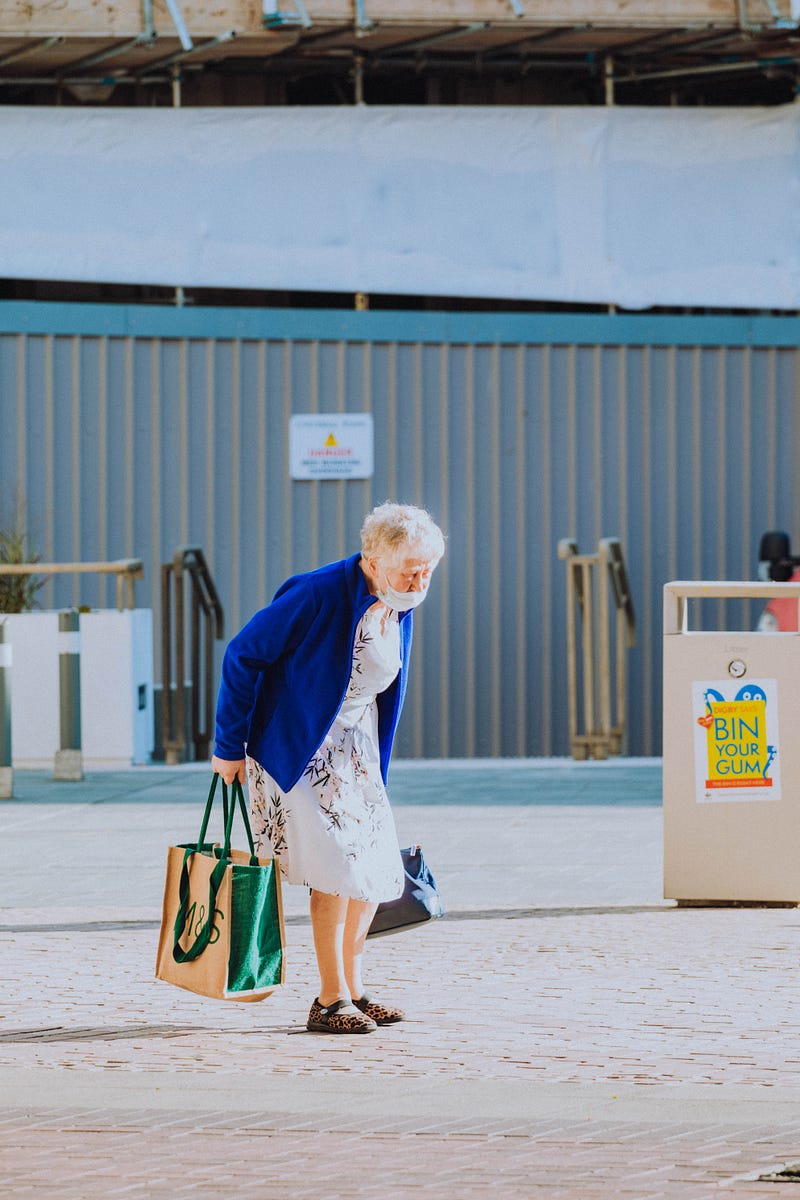
He calls old people who are weak and off-balance examples of “the sick phenotype.” It wasn’t genetics that got them there, but environment.
I see the contrast daily at the gym versus the grocery store. In my community, 95% of gym-goers are old as dirt and twice as dusty but they are moving and they are in good shape.
I see my acquaintance Marge, 81, walking every day in the ‘hood and pumping iron on the machines.
And I see a few gray-haired neighbors who shuffle around the grocery aisles, or riding in carts.
We chose our phenotype, healthy or sick.
Movement
Moving every day is a no-brainer, partly because it’s easier for most people to add movement than subtract sweets and treats.
Let’s get real, most of us would rather toss a medicine ball around all day than give up cookies.
Turns out we are better off doing both, but what we are really bad at — especially as we get older — is getting off the $#@* couch.
Several scientific studies recommend 8,500 steps per day to improve health, but the good news is that doesn’t mean hiking four miles. The steps can, and should, be done throughout the day.
I struggle getting my steps because I write, so I focus on getting my butt off the chair at regular intervals with a watch timer.
NASA and other research recommend getting up, even for a minute, every 20 minutes if you sit most of the day. Prolonged sitting is unhealthy at any age, but most of us park ourselves on the couch more as we get older.
Ever wonder why astronauts stumble out of those spaceships when they hit Earth again? If they’ve spent weeks or months in space, they’ve lost muscle mass and coordination (for starters) because they missed out on our ally, gravity.
Prolonged sitting is a great way to mimic micro-gravity and age very, very quickly.
Diet
This is an enormous topic, but after years of research I’ve concluded there are two approaches that work. The Blue Zone research on very long-lived populations has shown a Mediterranean-style diet works wonders. At the same time, comparison studies on weight loss prove very low carb (“keto”) beats low fat every time, and reduces inflammation.
How can eating both more veggies AND more meat work? The quick answer is: both Mediterranean and keto diets eliminate sugar. The longer answer is, the Mediterranean diet has a lot more meat than is commonly reported, and the diet is not uniform, even within the same region.
So, if you like steak — go keto. It’ll get your blood glucose down, reverse high insulin, improve your mental health, reduce blood pressure, and (after the initial “flu”) make you feel like a champ. Although some worry it will raise cholesterol, recent models show this may not be a problem.
Cholesterol and heart disease aren’t as simple as we once imagined.
Or if you love Disney films and animals, eat Mediterranean style, grassfed meats. This diet, too, reduces inflammation and blood pressure — two of the big markers of poor metabolic health.
These two diets will eliminate processed carbs (white flour) and sugar, thereby lowering high insulin levels and promoting weight loss.
If you make one dietary change, I implore you to consider the health-wrecking effects of sugar. Blood glucose spikes and chronically high blood sugar wreak havoc on metabolic health.
It is a well established fact that chronically high insulin is correlated not only with Type 2 Diabetes but also with cancer.
Breathing
Ask anyone with asthma or sleep apnea, and they will tell you to never take good breathing for granted.
We do not all breathe the same way. If you have any doubts, author James Nestor puts them to rest in his bestseller Breath: The New Science of a Lost Art.
It turns out learning to breathe correctly, called breathing normalization, is a foundation of great health at any age. The first step is to master 100% nasal breathing.
I often see mouth breathers at the gym, but we are designed to breathe only through our noses — whether we are eating, talking, exercising, or sleeping.
The nose filters viruses and bacteria, warms or cools the air, and allows the right amount of oxygen into the lungs.
If you hate exercise, don’t want to change your diet, and prefer sitting all day — consider learning to breathe properly!
Lifting Heavy
If you sit all day, the gym isn’t a cure-all.
And yet, we should all be lifting weights to slow down the clock.
Aerobics are fine and dandy if barbells make you break out in hives, but science has concluded we should all strive to become more like Ruth Bader Ginsburg in her later years.
Picking up heavy objects daily is a good idea, no matter what your political ideology.
Weightlifting improves blood flow and muscle mass and transforms the central nervous system. Lifting weights in old age can bring significant improvements to overall strength, and is particularly powerful in fighting depression in the elderly.
Plus, it feels great to have some muscle again!
Community
Making new friends and keeping old ones can be a struggle as we age. Did you move recently? It’s rough to make new friends. Old friends are more likely to die, or may move away to be closer to their kids.
I confess to being a godless philistine so when I moved to the South the idea of joining a church freaked me out. But the Unitarians were right around the corner so I gave it a shot. The church has become a place to meet others who are like-minded, including a few atheists!
We are hard-wired for face-to-face interactions, and aging brings isolation for many of us.
Most of us gals will become widowed.
Build a social circle and maintain it. There are so many ways to do this: playing board games, volunteering, reaching out to neighbors, or joining a knitting circle. The list is endless, and it’s possible to get together, even in the age of Covid.
Last Thoughts
People envision the elderly dying in nursing homes, but statistics show that over 95% of us remain in our own homes until the end.
Every decade, we seem to learn more about aging well. The science of health is truly a treasure trove that is revealing more and more each day about how aging works.
What is the fundamental take home? Perhaps it’s this — the ultimate bumper sticker slogan:
“Use it or lose it!”
Get daily movement, pick up something heavy, lower your blood sugar with the right diet and keep in touch with old friends and new.
It all sounds so clichéd, and maybe it is, but decrepitude is optional.


