The Short Life and Sad Death of Alexei Navalny
Opposing Russian President Vladimir Putin seems to be bad for the health.
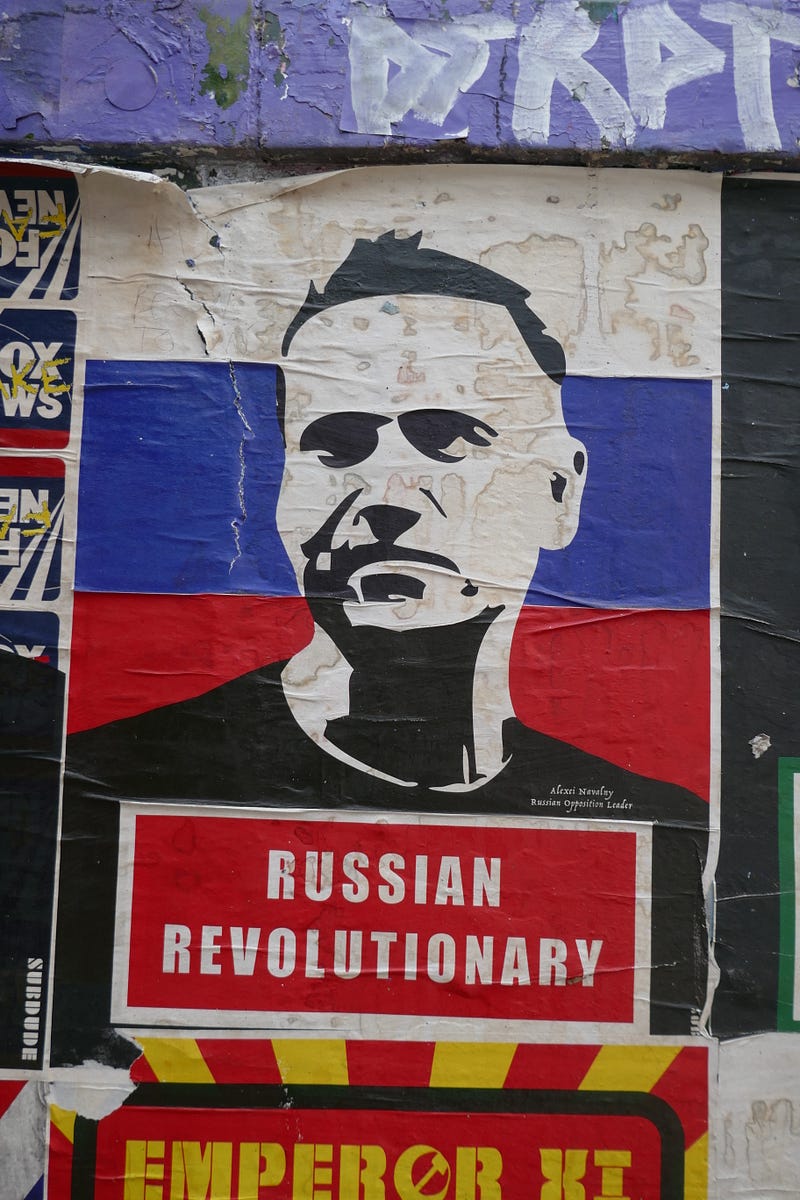
Russian dissident Alexei Navalny — targeted, poisoned, and imprisoned during his relatively short career as Vladimir Putin’s most outspoken critic — has died in a Russian prison.
He was 47.
“Alexei Navalny, the vocal critic of Vladimir Putin, dies in prison,” reported Jon Haworth, Patrick Reevell, and Nadine El-Bawab for ABC News today.
“On 02/16/2024, in correctional colony №3, convicted Navalny A.A. felt ill after a walk, almost immediately losing consciousness,” said the Russian prison service in a statement. “The medical staff of the institution immediately arrived, and an ambulance team was called. All necessary resuscitation measures were carried out, which did not yield positive results. The doctors of the emergency medical service pronounced the convict dead.”
President Joe Biden expressed outrage at Navalny’s death and used the occasion to push recalcitrant Republicans for more military aid to Ukraine.
“The failure to support Ukraine at this critical moment will never be forgotten,” President Biden warned portentously. “And the clock is ticking. This has to happen. We have to help now.”
While some in the press believe that “The idea of total Ukrainian victory is delusional” (Andrew Lathan, The Hill. February 15, 2024.) even Ukraine’s staunchest allies are beginning to wonder “Can Ukraine Still Win?” (Keith Gessen, The New Yorker. February 15, 2024).
It’s unclear how Navalny’s death might complicate or escalate the situation in Ukraine. President Biden once promised consequences, should Navalny die in prison. Now that Russia has crossed that particular red line, Biden might retaliate.
Or he might not.
Like other world leaders, President Biden blamed Navalny’s death on Putin and his allies.
“World leaders blame Putin for Alexei Navalny’s death in a Russian prison,” reported the Associated Press today.
Now that he is gone, media outlets from one end of the globe to the other are lionizing Navalny’s bravery and commitment to the truth.
Unlike Vladimir Putin — who got his start in politics after a successful stint with the notoriously brutal KGB under the old USSR — Navalny started as an idealistic young lawyer, where he gained attention for exposing corruption within Russian state-owned companies.
His fearless activism and relentless pursuit of truth earned him both admiration and animosity from various quarters.
As an opposition leader, Navalny utilized social media and his blog to rally support and disseminate information, garnering a significant following among Russia’s youth disillusioned with the status quo. His anti-corruption investigations, notably targeting high-ranking officials and oligarchs, earned him enemies in the highest echelons of power.
Even before his untimely death, Navalny’s activism came at a great cost.
Over the years, he has faced numerous arrests, legal challenges, and even physical assaults, including a near-fatal poisoning in August 2020, which he and many Western governments allege was orchestrated by the Russian government — a claim Moscow still denies.
August 2020: Poisoning Incident
Navalny fell critically ill on a flight from Siberia to Moscow, prompting an emergency landing in Omsk, Russia. He was subsequently airlifted to Germany for medical treatment.
German doctors confirmed that Navalny was poisoned with a Russian nerve agent, a military-grade chemical weapon. Navalny accused the Kremlin of orchestrating the attack, an accusation vehemently denied by Russian authorities.
September 2020: Investigation Findings
Following extensive investigations by independent laboratories in Germany, France, and Sweden, it was confirmed that Navalny was indeed poisoned with Novichok. The Organization for the Prohibition of Chemical Weapons (OPCW) also corroborated these findings, further implicating the Russian state in the attack.
January 2021: Arrest and Imprisonment
Upon his return to Russia from Germany, Navalny was immediately detained at Sheremetyevo Airport in Moscow. His arrest sparked widespread protests across Russia, with thousands taking to the streets to demand his release.
Navalny was subsequently sentenced to two and a half years in a penal colony for violating probation terms from a previous embezzlement conviction — a charge widely regarded as politically motivated.
May 2021: Hunger Strike
Navalny launched a hunger strike to protest the lack of medical attention and inadequate treatment he received while imprisoned. Concerns over his deteriorating health mounted as reports emerged of Navalny experiencing severe back pain and numbness in his legs. His hunger strike drew international attention, with world leaders calling for his immediate release and access to proper medical care.
The repeated attacks on Navalny underscored the lengths to which the Russian authorities are willing to go to suppress dissent and stifle opposition.
Despite the risks, Navalny remained undeterred in his pursuit of political change. His resilience in the face of adversity turned him into a symbol of resistance against authoritarianism in Russia. Even after his imprisonment, his message continued to resonate with many Russians disillusioned with corruption and repression.
His death is likely to galvanize a similar response.
Alexei Navalny was more than just a political figure; he was a symbol of defiance against the Kremlin’s authoritarian rule.
His unwavering commitment to transparency and democracy made him a thorn in the side of Russian authorities and a beacon of hope for those striving for change in the country.
His death is a terrible blow. Will it harden the hearts of the Russian people against Vladimir Putin?
(contributing writer, Brooke Bell)