
The Short and Violent Life of Male Woolly Mammoths
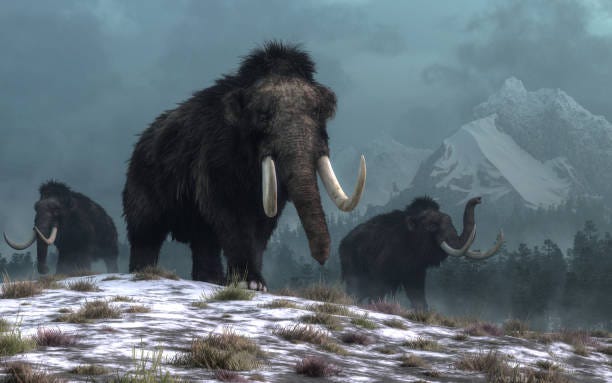
The woolly mammoth, a close relative of the modern elephant, is one of the most iconic creatures of the Ice Age. These massive herbivores roamed the cold tundras of the Northern Hemisphere, from Europe to North America, for thousands of years before going extinct around 4,000 years ago. Despite their impressive size and strength, male woolly mammoths had a short and violent life, leaving behind more corpses than their female counterparts.
Living Fast and Dying Young
Male woolly mammoths, like many other male mammals, lived fast and died young. They reached sexual maturity around the age of 12 and had a life expectancy of only about 30 years. In comparison, female woolly mammoths could live up to 60 years, twice as long as their male counterparts. This gender disparity is not unique to woolly mammoths; it is a common pattern among mammals, known as sexual dimorphism.
Fierce Battles for Mating Rights
One of the main reasons why male woolly mammoths had a shorter lifespan was their competitive nature. During the breeding season, which usually occurred in the fall, male mammoths would engage in fierce battles to win the right to mate with females. These battles could be deadly, as males used their long, curved tusks to gore each other. Some of the injuries sustained during these fights were fatal, leading to a high mortality rate among males.
“Male woolly mammoths fought for the right to mate, and these battles could be brutal,” says Dr. Victoria Herridge, a paleontologist at the Natural History Museum in London. “They would charge at each other, heads down and tusks forward, and try to inflict as much damage as possible.”
Solitary Lifestyle
Another factor that contributed to the high mortality rate among male woolly mammoths was their solitary lifestyle. Unlike females, who formed tight-knit family groups and cooperated to raise their young, males were mostly solitary and roamed the tundra alone. This meant that they had to fend for themselves and were more vulnerable to predation and environmental hazards, such as harsh weather and starvation.
“Male woolly mammoths were solitary creatures, and this made them more vulnerable to all sorts of dangers,” says Dr. Herridge. “They had to find their own food and water, and they had no one to watch their back when predators were around.”
Leaving More Corpses
The combination of these factors meant that male woolly mammoths were more likely to die young and leave behind a higher number of corpses than females. This has been confirmed by archaeological evidence, which shows that male mammoth skeletons are more commonly found than female ones. This is not to say that female woolly mammoths had an easy life; they too faced many challenges and were often hunted by predators such as wolves and cave lions. However, their more social and cooperative nature may have given them an edge when it came to survival.
“Male woolly mammoths had a tough life, and they died in greater numbers than females,” says Dr. Herridge. “But both males and females had to contend with a harsh and unpredictable environment, and they both played important roles in the ecology of the Ice Age.”
Male woolly mammoths lived fast, died young, and left behind more corpses than their female counterparts. Their competitive and solitary lifestyle, combined with the hazards of life in the Ice Age, meant that they had a high mortality rate. However, their legacy lives on in the fossil record, providing us with insights into the lives and struggles of these iconic creatures.