avatarYewande Ade

Free AI web copilot to create summaries, insights and extended knowledge, download it at here

3953

Abstract

nfant mortality rates were shocking because <a href="http://www.actionarchaeology.ca/index.php/projects/featured-artifacts/into-the-mouth-of-babes/">only two out of ten</a> infants lived to see their second birthday.</p><p id="f889">With time, medical practitioners started to openly condemned the use of these bottles for babies and linked the unexplained deaths of many children to the use of these bottles.</p><p id="f30f">The use of murder bottles was heavily discouraged because of the large amount of bacteria they carried in their rubbers and because it wasn’t easy to clean them.</p><p id="890d">While many children fell ill <a href="https://steemit.com/til/@gizmoto/victorian-murder-bottles">after using</a> these bottles to feed, a thousand others died from its use. The instructions on the packaging of the bottles did not help matters, as they discouraged mothers from washing the bottles too often so that the rubbers wouldn’t wear out.</p><p id="1802">Rather than desist from using the bottles, many mothers continued to buy them for their children. Sadly, the sale of these bottles continued to increase and its popularity continued well into the 1920s.</p><h1 id="5e35">Misinformation</h1><p id="21c0">At the time, the misinformation surrounding the use of the bottle didn’t help.</p><p id="5b2d">There was a victorian lifestyle guru and english writer named Mrs Beeton who recommended that the teats of <a href="http://www.actionarchaeology.ca/index.php/projects/featured-artifacts/into-the-mouth-of-babes/">these bottles</a> should only be washed every 2–3 weeks. In her words:</p><p id="21a8" type="7">“The nipple need never be removed till replaced by a new one, which will hardly be necessary oftener than once a fortnight.”</p><figure id="74af"><img src="https://cdn-images-1.readmedium.com/v2/resize:fit:800/1*9m0zJO2BBX8pyjxmX1T1cA.jpeg"><figcaption>Isabella Beeton’s book on household management advised mothers to clean the feeding bottles fortnightly; Source: <a href="https://theconversation.com/breast-or-bottle-feeding-the-debate-has-its-origins-in-victorian-times-123296">The Conversation</a></figcaption></figure><p id="ceac">After some time, <a href="https://anomalien.com/the-victorian-era-murder-bottles/">a ban</a> was placed on the use of the bottles. This ban first took effect in 1897, in Buffalo, New York.</p><p id="976f">As more condemnation of its use arose within the United States and its environs, more states also banned its use.</p><h2 id="cdc5">Change</h2><p id="32ae">Due to the poor sanitary conditions and problems posed by the murder bottles, many babies died from contacting bacterial infections while using it.</p><p id="ddcf">Unfortunately, <a href="https://www.lizaoconnor.com/2014/01/deadly-victorian-baby-bottles.html">antibiotics</a> had not been discovered at that time. For this reason, many mothers were advised to breastfeed their childen or hire a nurse.</p><p id="1d72">In 1894, a new and safer bottle was designed for babies to use. It came with an open mouth and it was easy to pour milk into it. It was a lot more preferrable than any of the other feeding bottles that had existed.</p><h1 id="bb80">References</h1><div id="fdd9" class="link-block"> <a href="https://www.lizaoconnor.com/2014/01/deadly-victorian-baby-bottles.html"> <div> <div> <h2>Deadly Victorian Baby Bottles</h2> <div><h3>While the rich of the latter half of the 19th century could afford wet nurses, the doctors strongly encouraged ladies…</h3></div> <div><p>www.lizaoconnor.com</p></div> </div> <div> <div style="background-image: url(https://miro.readmedium.com/v2/resize:fit:320/0*gBj6o7wq47LiCQ6a)"></div> </div> </div> </a> </div><div id="be61" class="link-block"> <a href="https://steemit.com/til/@gizmoto/victorian-murder-bott

Options

les"> <div> <div> <h2>Victorian Murder Bottles - Steemit</h2> <div><h3>At the turn of the century, bottle feeding was considered to be a revolutionary concept. Running a Victorian-era home…</h3></div> <div><p>steemit.com</p></div> </div> <div> <div style="background-image: url(https://miro.readmedium.com/v2/resize:fit:320/0*yk7DstMKOjakXDVI)"></div> </div> </div> </a> </div> <figure id="368d"> <div> <div> <img class="ratio" src="http://placehold.it/16x9"> <iframe class="" src="https://drive.google.com/viewerng/viewer?url=https%3A//www.fohbc.org/PDF_Files/CHarris_PhotographicProof.pdf&amp;embedded=true" allowfullscreen="" frameborder="0" height="780" width="600"> </div> </div> </figure></iframe></div></div></figure><div id="b7dd" class="link-block"> <a href="https://www.wondersandmarvels.com/2016/05/museum-mysteries-murder-bottles.html"> <div> <div> <h2>Museum Mysteries: Murder Bottles - Wonders & Marvels</h2> <div><h3>By Michelle Marcella Behind the scenes at the Russell Museum of Medical History and Innovation at Massachusetts General…</h3></div> <div><p>www.wondersandmarvels.com</p></div> </div> <div> <div style="background-image: url(https://miro.readmedium.com/v2/resize:fit:320/0*0dh51X3X55esIGZG)"></div> </div> </div> </a> </div><div id="e249" class="link-block"> <a href="https://littlepennydreadful.tumblr.com/post/76193242995/a-little-history-of-the-victorian-murder"> <div> <div> <h2>Little Penny Dreadful</h2> <div><h3>A little history of the Victorian "Murder Bottle". from the Baby Bottle Museum: The banjo shaped feeders of the late…</h3></div> <div><p>littlepennydreadful.tumblr.com</p></div> </div> <div> <div style="background-image: url(https://miro.readmedium.com/v2/resize:fit:320/0*Hjs_PfNb1ZjjM9JK)"></div> </div> </div> </a> </div><div id="b095" class="link-block"> <a href="http://www.actionarchaeology.ca/index.php/projects/featured-artifacts/into-the-mouth-of-babes/"> <div> <div> <h2>Into the Mouth of Babes- Victorian baby bottles | SCARLETT JANUSAS ARCHAEOLOGY INC.</h2> <div><h3>Evidence of the use of wet nurses dates back to the 18 th century B.C. in Babylon. It was a practice that became the…</h3></div> <div><p>www.actionarchaeology.ca</p></div> </div> <div> <div style="background-image: url(https://miro.readmedium.com/v2/resize:fit:320/0*MO9kWWOjaeQSFT2Y)"></div> </div> </div> </a> </div><div id="ca05" class="link-block"> <a href="https://historydaily.org/feeding-bottles-of-the-victorian-era"> <div> <div> <h2>The Murder Bottles of the Victorian Era</h2> <div><h3>During the Victorian era, a newly developed feeding bottle for infants was introduced. There were many benefits to the…</h3></div> <div><p>historydaily.org</p></div> </div> <div> <div style="background-image: url(https://miro.readmedium.com/v2/resize:fit:320/0*AqfKiUxeznuqBcfL)"></div> </div> </div> </a> </div><figure id="ffc4"><img src="https://cdn-images-1.readmedium.com/v2/resize:fit:800/1*PJtIgf4wERCdnU0-xcblpg.jpeg"><figcaption></figcaption></figure></article></body>

The Shocking Tale of How Feeding Bottles Led To The Death of Many Babies

This happened during the victorian era
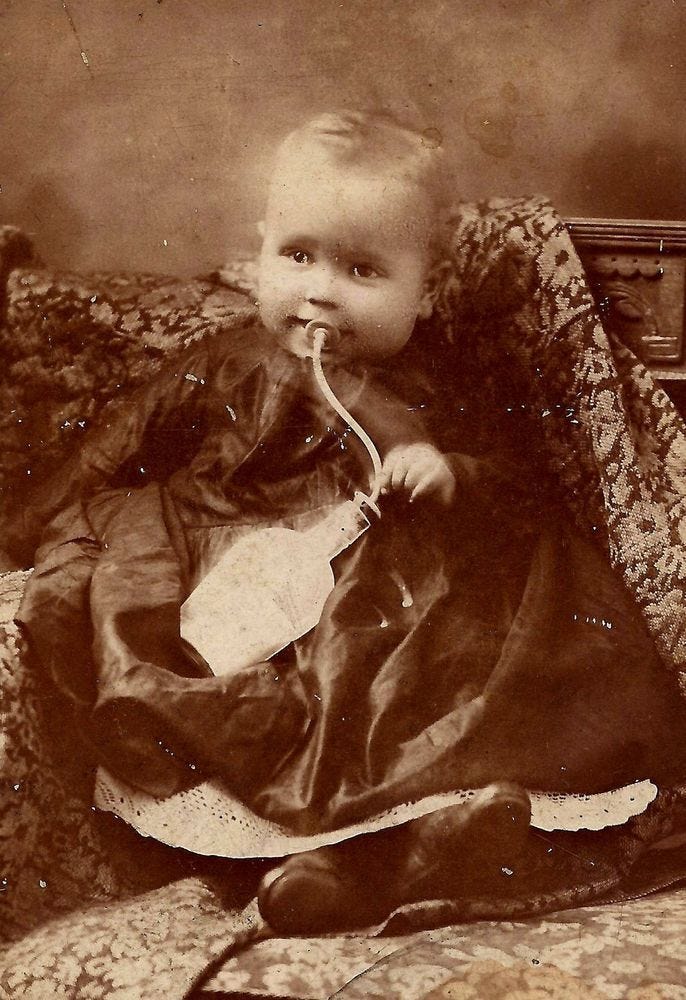
A baby using the baby feeder widely known as “murder bottle”; Photo source: Messy Nessy

During the victorian era, different feeding bottles were used to feed babies. One of the most popular was the banjo-shaped bottle. It was made of earthenware and glass. It also had a long rubber tube attached to the stopper at its neck.

The banjo-shaped feeding bottles were common during the 1800s and were manufactured in great quantities. They looked appealing and many mothers got them for their babies. The device seemed quite helpful and eased feeding.

These bottles were often marketed with names like: “Little Cherub”, “Mummies Darling” and “The Alexandria”. There were also other nationalistic names for the bottles such as — “The National”, “The Victorian” and “The Empire”.

With the way the bottles were shaped, a child could feed from it without help. Many mothers welcomed its use because it gave them the freedom to attend to other household matters while the baby fed.

The bottles helped provide relief for women that felt saddled with the stress that came with child-care. For these women, the use of a feeding bottle was a viable alternative when compared to breastfeeding.
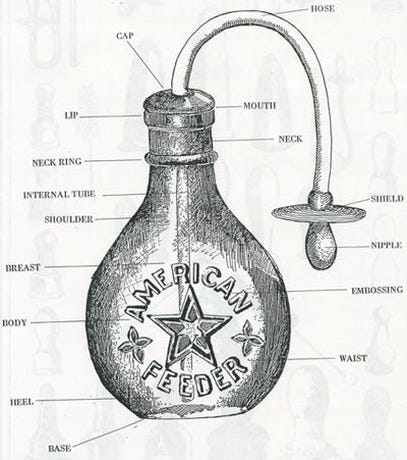
Many babies used the banjo-shaped bottles during the victorian era; Source: Messy Nessy

For mothers that were unable to breastfeed or could not afford to breastfeed their children as often as required, it was indeed a welcome relief.

There was also a heavy reliance on the bottles by women mothers whose dressing made it difficult for them to feed their babies. For instance, the restrictive corset was a fairly popular form of dressing during the victorian era and it was slightly inconvenient to breastfeed while wearing it.

A Shocking Discovery

As the use and production of the bottles increased, people began to notice certain inconveniences about it.

The design of the bottle wasn’t open enough, hence it was a bit difficult to clean.

The inability to properly clean it caused it to become a breeding ground for all sorts of bacteria. At the time, the doctors were unsure of what the bacteria was, but it remained in the under-cleaned hose of the bottles. The bacteria would then flourish to a point where it became deadly.

The bottles caused the tragic death of so many babies and this was where they earned the nickname “murder bottles”. Hidden dangers were contained in these baby feeders, which were also widely called “the murderer” or “the killer.”

At this time, infant mortality rates were shocking because only two out of ten infants lived to see their second birthday.

With time, medical practitioners started to openly condemned the use of these bottles for babies and linked the unexplained deaths of many children to the use of these bottles.

The use of murder bottles was heavily discouraged because of the large amount of bacteria they carried in their rubbers and because it wasn’t easy to clean them.

While many children fell ill after using these bottles to feed, a thousand others died from its use. The instructions on the packaging of the bottles did not help matters, as they discouraged mothers from washing the bottles too often so that the rubbers wouldn’t wear out.

Rather than desist from using the bottles, many mothers continued to buy them for their children. Sadly, the sale of these bottles continued to increase and its popularity continued well into the 1920s.

Misinformation

At the time, the misinformation surrounding the use of the bottle didn’t help.

There was a victorian lifestyle guru and english writer named Mrs Beeton who recommended that the teats of these bottles should only be washed every 2–3 weeks. In her words:

“The nipple need never be removed till replaced by a new one, which will hardly be necessary oftener than once a fortnight.”
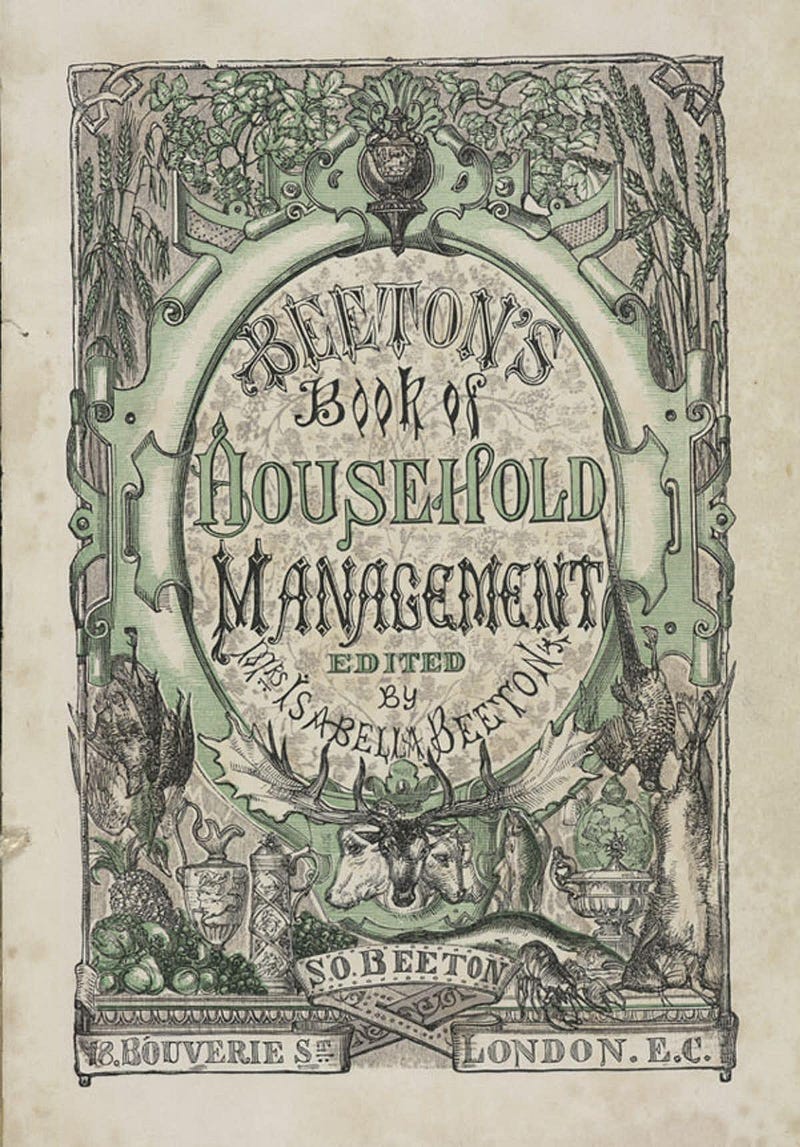
Isabella Beeton’s book on household management advised mothers to clean the feeding bottles fortnightly; Source: The Conversation

After some time, a ban was placed on the use of the bottles. This ban first took effect in 1897, in Buffalo, New York.

As more condemnation of its use arose within the United States and its environs, more states also banned its use.

Change

Due to the poor sanitary conditions and problems posed by the murder bottles, many babies died from contacting bacterial infections while using it.

Unfortunately, antibiotics had not been discovered at that time. For this reason, many mothers were advised to breastfeed their childen or hire a nurse.

In 1894, a new and safer bottle was designed for babies to use. It came with an open mouth and it was easy to pour milk into it. It was a lot more preferrable than any of the other feeding bottles that had existed.

References

History
Children
Women
Technology
Baby
Recommended from ReadMedium