
The Shift of 4 Ages According to Ancient Vedic Secret
The Central Role of the Heart in Embryonic Development
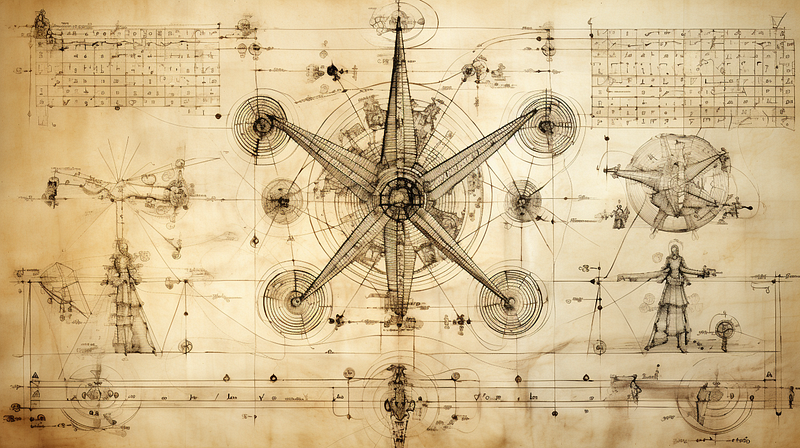
The heart plays a pivotal role in embryonic development and is deeply connected to the principles of sacred geometry. In the earliest stages of development, the physical body begins as a single cell, a sphere, which is a fundamental shape in geometry. As development progresses, this sphere multiplies, forming more complex structures. One of the first shapes to emerge from this process is the star tetrahedron, an eight-celled organism, which symbolizes the embryonic journey from simplicity to complexity.
As the embryo continues to develop, it transforms into a toroidal field, a structure that resembles a doughnut shape with a central void. This central space is where the heart, the first organ, begins to form. This aspect of embryonic development highlights the heart’s primary importance in the formation of the physical body.
The heart’s early emergence in embryonic development symbolizes its central role in life, not just as a physical organ pumping blood, but as an integral component of our being that connects to broader universal patterns. The heart’s formation and function are not random but are deeply intertwined with the principles of sacred geometry, which underpin the structure and harmony of the universe.
This connection between the heart and sacred geometry is also reflected in various cultural and spiritual beliefs. Many ancient traditions recognized the heart as a source of life, wisdom, and spiritual insight. This understanding aligns with the modern interpretations of sacred geometry, where shapes and patterns are seen as manifestations of the deeper order of the universe.
In summary, the heart’s central role in embryonic development is a reflection of its broader significance in the fields of sacred geometry and spiritual understanding. It’s more than just an organ; it’s a symbol of life and the intricate patterns that connect all forms of existence.
The Heart’s Electromagnetic Field: Impact on Physiology and Emotion
The heart’s electromagnetic field is a significant aspect of human physiology, exerting a profound impact not just on our physical body but also on our emotional state. This field, generated by the heart, is incredibly powerful and extends far beyond the organ itself, influencing the body and the environment around it.
Scientifically, the heart is recognized not merely as a pump but also as an organ capable of generating a strong electromagnetic field. Remarkably, this field produced by the heart is far more powerful than that generated by the brain. In terms of electricity, it is about 100 times stronger, and in terms of magnetism, it can be up to 5000 times more potent. This significant disparity highlights the heart’s dominant role in the body’s energetic system.
This electromagnetic field plays a crucial role in the way our body functions. It affects not just the circulatory system but also has far-reaching implications for our nervous system and overall health. For instance, the heart’s rhythm and variability can be influenced by our emotions and mental state. Positive emotions like love, joy, and gratitude can create a more harmonious and coherent heart rhythm pattern. In contrast, negative emotions like anger, stress, and fear can lead to a chaotic and incoherent pattern.
The coherence or lack thereof in the heart’s rhythm has been linked to various aspects of human health and well-being. A coherent heart rhythm, typically associated with positive emotional states, promotes physiological efficiency, mental clarity, and emotional stability. It is conducive to a state of overall health and well-being. On the other hand, an incoherent heart rhythm can lead to stress, anxiety, and various health problems.
Moreover, the heart’s electromagnetic field is not confined to the physical body but extends out into the space around us. This field can interact with and influence the fields generated by other people’s hearts. It explains, in part, how people can ‘sense’ the emotional state of others, or why being around certain individuals can make us feel uplifted or drained.
In essence, the heart’s electromagnetic field is a key player in the intricate dance of human physiology and emotion. It underscores the ancient understanding, seen in various cultures, of the heart as an organ of profound emotional and spiritual significance. Modern science is now uncovering what ancient wisdom has long suggested: that the heart is central to our emotional experiences and plays a significant role in shaping our interactions with the world and with others.
Heart Rate Variability (HRV) and Its Connection to Emotional States
Heart Rate Variability (HRV) is an essential physiological indicator that reflects the body’s ability to adapt to various emotional and environmental stimuli. It is the measure of the variation in time intervals between heartbeats, which, contrary to what one might assume, is not uniform but varies with each beat. This variability in heart rhythm provides critical insights into the state of our autonomic nervous system, which regulates many of the body’s involuntary functions.
HRV is intimately connected to our emotional states. The autonomic nervous system, which HRV is a measure of, consists of two primary components: the sympathetic nervous system, which prepares the body for ‘fight or flight’ responses, and the parasympathetic nervous system, which promotes ‘rest and digest’ activities. These systems are continually interacting to maintain balance, or homeostasis, in the body.
When an individual experiences stress or negative emotions such as anger, anxiety, or frustration, the sympathetic nervous system kicks in, leading to a decrease in HRV. In this state, the heart rate becomes more uniform and less adaptable, reflecting a body gearing up for a potential threat. This reaction, while beneficial in short-term stressful situations, can be detrimental if it becomes a chronic condition, leading to various health issues such as hypertension and heart disease.
Conversely, positive emotions like joy, gratitude, and love activate the parasympathetic nervous system, which enhances HRV. In this state, the heart rate exhibits greater variability between beats, indicating a more relaxed, adaptable, and resilient physiological state. This variability is a sign of good health and well-being, as it demonstrates the body’s capacity to respond flexibly to changing circumstances and stresses.
The connection between HRV and emotional states is not just one-way; it’s reciprocal. Just as our emotions can influence our HRV, consciously altering our breathing patterns and focusing on positive emotional states can improve our HRV. Techniques like deep breathing, meditation, and mindfulness can promote a state of relaxation and positively affect HRV, thereby enhancing overall well-being.
HRV is also used as a tool in various health and wellness programs to monitor and improve mental and physical health. By tracking HRV, individuals can gain insights into their stress levels, emotional well-being, and overall health. It can guide them in making lifestyle changes that promote balance, resilience, and a healthier state of mind and body.
In summary, HRV is a powerful indicator of the body’s response to emotional states and stress. Understanding and monitoring HRV can provide valuable information about one’s overall health and well-being, offering a window into the complex interplay between our emotions and physiological states.
The Heart as a Center of Intuition and Emotional Intelligence
The concept of the heart as a center of intuition and emotional intelligence is an idea that resonates deeply across various cultures and spiritual traditions, including those stemming from Ancient India and other ancient knowledge systems. This notion, often explored in spiritual texts, is now finding a fascinating intersection with modern scientific understanding.
Traditionally, the heart has been viewed as more than just a physical organ pumping blood throughout the body. It is often considered the seat of emotion, intuition, and deeper wisdom. In many ancient teachings, the heart is where one connects with emotions and develops a deep sense of knowing that goes beyond rational thought. It’s the place where one ‘feels’ the truth, often described as a deep inner knowing or intuition.
In recent years, scientific research has begun to shed light on the heart’s role in our emotional and intuitive processes. Studies have shown that the heart has its own intrinsic nervous system, sometimes referred to as the “heart brain,” which consists of around 40,000 neurons that can sense, feel, learn, and remember independently of the brain’s cerebral cortex.
This heart brain communicates with the head brain not only through the nervous system but also through hormones, pulse waves, and electromagnetic fields. The heart’s electromagnetic field is the most powerful rhythmic electromagnetic field produced by the human body. It envelops every cell of the body and extends out in all directions into the space around us, suggesting a fascinating avenue for understanding how we connect with others emotionally.
The heart’s field is modulated by our emotional state. When we experience emotions like love, gratitude, and compassion, the heart’s electromagnetic field becomes more harmonious and coherent, indicating a state of physiological efficiency and harmony in the body’s systems. Conversely, emotions like anger, frustration, and fear lead to a disordered, incoherent pattern in the heart’s field, indicating dysregulation and stress in the body.
These findings support the ancient idea that emotions are not just mental states but physiological states that affect the health and functioning of our body. They also suggest that the heart plays a crucial role in the processing and expression of emotions.
Furthermore, the heart’s electromagnetic field can be detected by other individuals and can produce measurable effects in another person’s brain and nervous system, leading to the hypothesis that the heart plays a significant role in social communication and interpersonal interactions. This aligns with the ancient concept of emotional and energetic exchange in relationships and social interactions.
Regarding intuition, research suggests that the heart also plays a key role. The heart appears to receive and process information about the world around us, some of which may be perceived intuitively. Studies have shown that the heart receives and responds to information about a future event before the event actually happens and even before the brain receives the signals.
In conclusion, the heart as a center of intuition and emotional intelligence is an idea deeply rooted in ancient wisdom and is increasingly being validated by contemporary scientific research. This perspective not only elevates the importance of emotional regulation and heart-centered living for personal well-being but also underlines the profound connection between our emotional states and our physical health, as well as our connections with others.
Heart-Centered Living as a Pathway to Higher Consciousness and Unity
Heart-centered living, a concept deeply rooted in ancient knowledge systems, including those from Ancient India, is increasingly recognized as a pathway to higher consciousness and unity. This approach to life emphasizes the importance of the heart as more than just a physical organ, viewing it as a central source of emotional intelligence, intuition, and spiritual insight.
The essence of heart-centered living involves aligning one’s thoughts, emotions, and actions with the qualities of the heart — such as love, compassion, empathy, and understanding. This way of life encourages individuals to connect deeply with their inner selves, fostering a sense of inner peace and harmony that radiates outward to influence their interactions with others and the world around them.
In many ancient traditions, the heart is seen as the seat of the soul and the source of true wisdom. It is believed to be the place where the individual connects with the universal consciousness or the divine. In this context, living from the heart means nurturing a profound connection with the spiritual aspect of our existence, transcending beyond the limitations of the rational mind and ego-based desires.
Heart-centered living also involves recognizing the interconnectedness of all life. When one lives from the heart, there is a greater awareness of the unity of all beings and a natural inclination towards acts of kindness, compassion, and service. This approach to life fosters a sense of oneness with others, breaking down barriers of separation and encouraging a more empathetic and understanding approach to relationships.
Practically, heart-centered living can involve various practices and techniques that help to cultivate heart qualities. These can include meditation and mindfulness practices focused on the heart, exercises to foster compassion and empathy, and activities that promote joy and gratitude. Many of these practices have roots in ancient spiritual traditions but are increasingly supported by modern research in fields like psychology and neurocardiology, which demonstrate the profound impact of emotions on physical and mental well-being.
Heart-centered living also has a transformative effect on one’s perception of the world. By focusing on heart qualities, individuals often find a shift in their worldview, seeing life as a collaborative, interconnected journey rather than a competitive struggle. This shift can lead to a more fulfilling and meaningful life, characterized by a deep sense of purpose and connection.
In the broader context of societal and global challenges, heart-centered living offers a path towards healing and unity. By fostering qualities of the heart in individuals, communities can cultivate a more compassionate, understanding, and cooperative society. This approach can be crucial in addressing issues such as social injustice, environmental crises, and cultural conflicts, where a shift from ego-centric to heart-centric values can lead to more sustainable and harmonious solutions.
In conclusion, heart-centered living is a pathway to higher consciousness and unity that resonates with ancient wisdom while being increasingly validated by modern science. It represents a holistic approach to life that integrates emotional, spiritual, and mental aspects, fostering personal growth, social harmony, and a deeper connection with the universal fabric of existence.


