
The Shave Horse Build
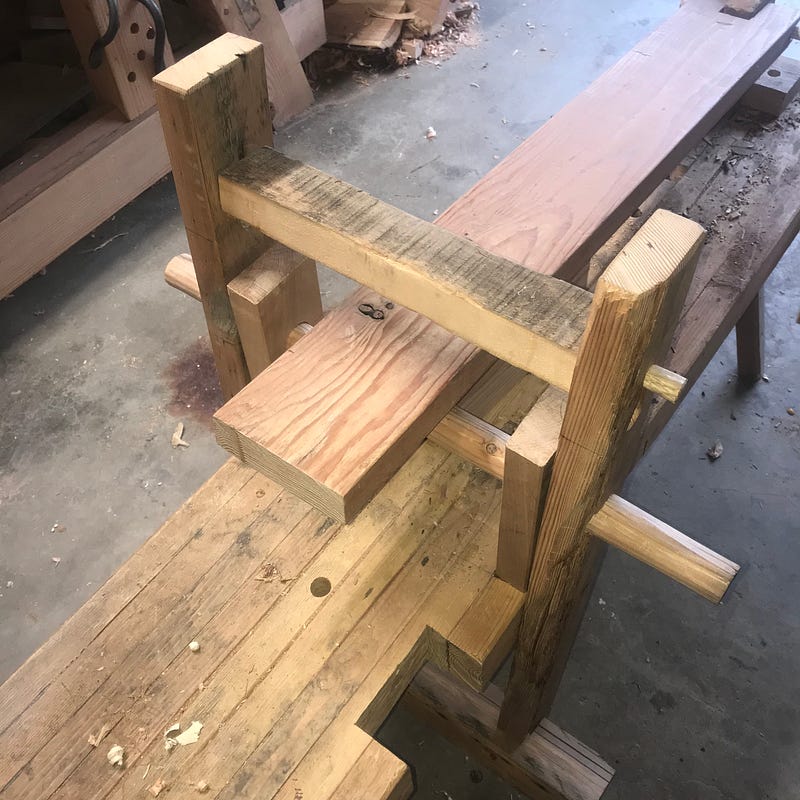
The last year has been easier for me than for most people, but then the several years before 2020 had made the ledger a little more equal. In the fall of 2019 I moved my 98 year old dad out of my home and into an assisted living center, then started to rebuild a life in retirement. I bought an antique Stanley joiner plane off of Ebay, figuring to fabricate some wood embellishments for my drift boat, then watched some YouTube tutorials on restoring antique hand planes… and fell down a rabbit hole of hand tool woodworking.
After 45 years as a carpenter my “wood butcher” skills were well honed; the edges on my few chisels and plane irons however were a mess. Scrolling through the YouTube “maker” videos I stumbled across Rex Krueger, whose “Rex Figures it Out” and “Woodworking For Humans” series were both great fun and informative, a stark contrast to much of the maker content. Rex straightened out my sharpening skills, I had been in the habit of honing my blades on my belt sander, and turned me on to the Low Roman Workbench as revived by Christopher Schwartz, who is a rock star in hand tool circles.
Rex recommended and I bought Schwartz’s book, Ingenious Mechanics, a deep dive into the earliest records of woodworking tools and fixtures, preserved ironically in the religious art of the Middle Ages.
Thank goodness that Jesus’s dad was reported to have been a carpenter. When painters portrayed scenes of Jesus the infant or child, they repaired to the local woodworking shop and in passing, recorded many of the technical details of their time. One such was the low bench, another was a curious notch through the edge of the workbench top, a notch in the shape of a dovetail.
Schwartz was uncertain about the use of the notch. He used it to secure a planing stop in one of his benches and passed the arms of a shave horse though the notches on another, though I couldn’t see how this was an advantage. Using the square notch and deadman that Rex had recommended though, I found a great use for the dovetail; first to secure the deadman support for long boards being planed and then as a place to attach a vise to the bench.
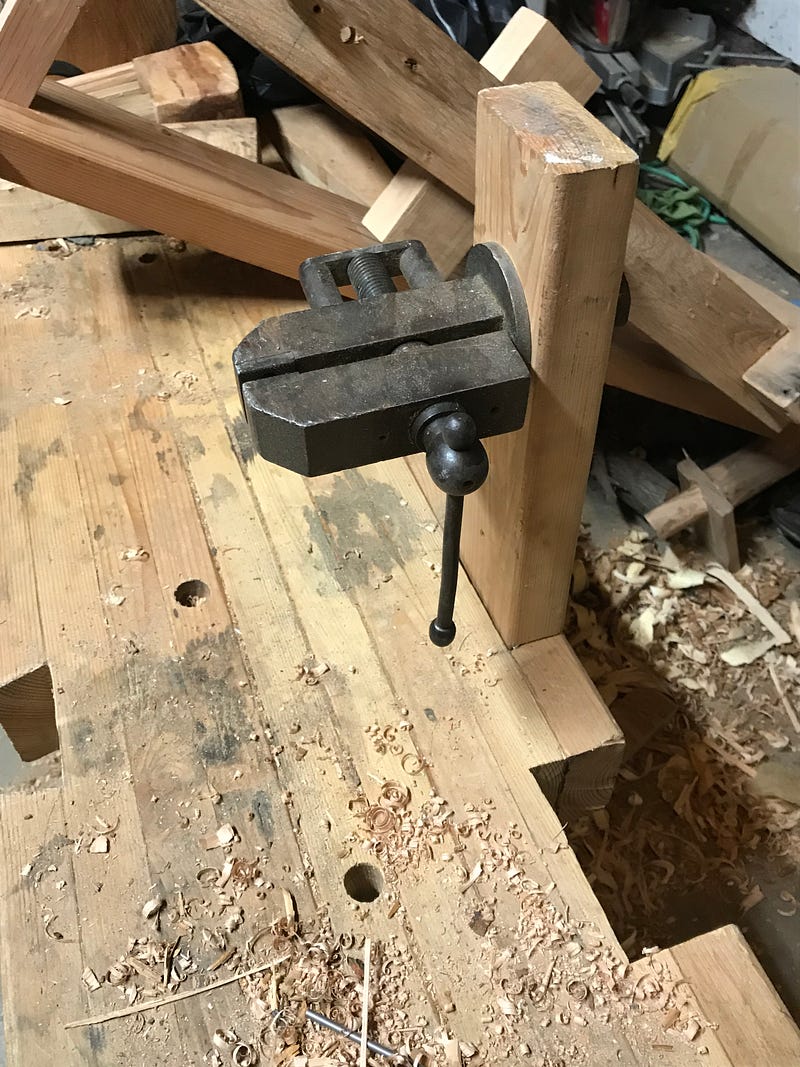
The perspective of this picture makes it hard to see but the notch in the foreground is square and the one with the block and vise is a dovetail shape, ever wider as it is cut deeper in the top. The block is cut to fit and can’t move laterally since the notch is narrowest at the opening. Carefully fitted this becomes a rock solid attachment.
It was a short hop to see that this would also be a killer connection for a shave horse built as a fixture for the bench.
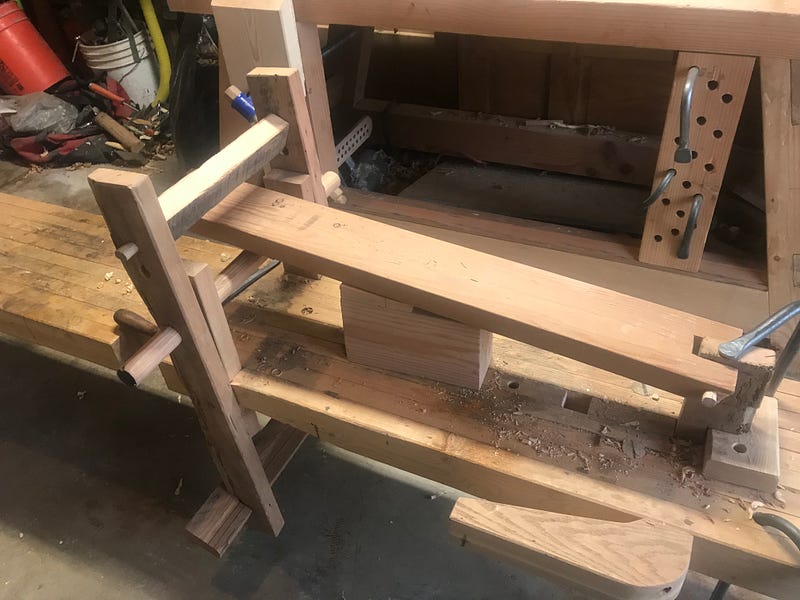
The shave horse is a traditional work station that incorporates a bench, a foot pedal operated vise, and a platform to clamp the work against. It is ideal for shaving wooden spokes, handles, chair and table legs to shape and to round lathe blocks close to final contour before turning. I had some decent pallet wood, dismantled from a hardwood delivery; nothing like free wood to work out a prototype. The build was on!
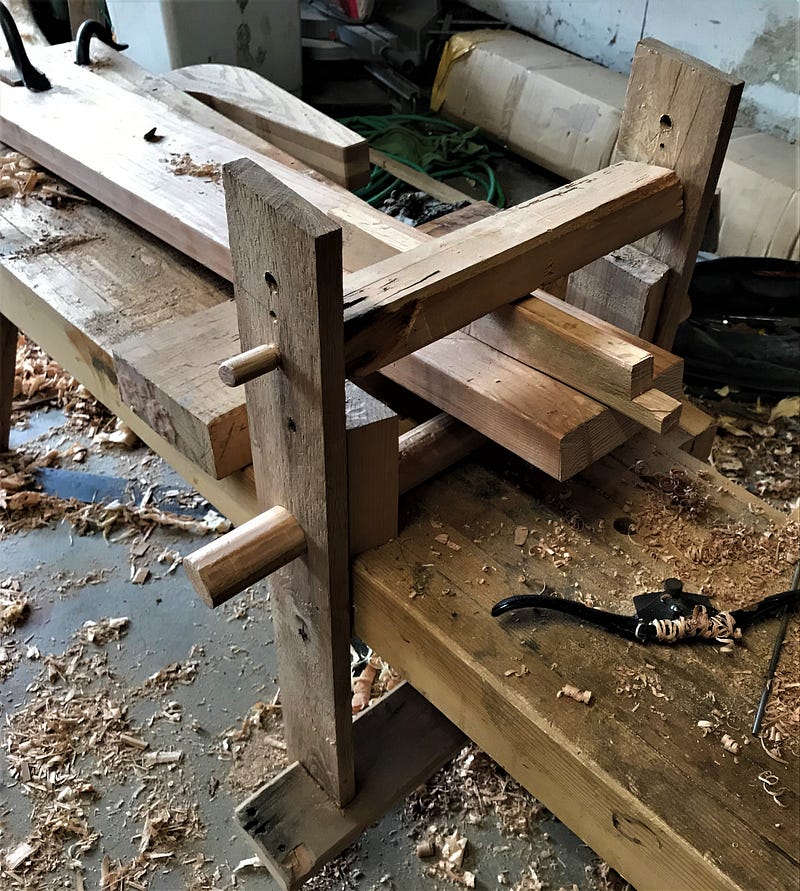
I already had sawed and chopped parallel dovetail notches in the bench, prospective attachment sites for a lathe build that will only work as a stand up tool. I cut two chunks of the pallet rails, creamy grained hardwood that lumber yards in Indiana deemed only fit for pallets, and planed them to the dovetail contour. Digging out the hand brace and auger bits, I bored 1 1/2" holes through the blocks and then shaved a chunk of recycled construction Doug Fir into an 1 1/2" dowel. This would have been much easier with a shave horse;)
I left a shoulder on the dovetail blocks so they wouldn’t push right on through the bench top, fit the dowel through the holes, and hammered them into place. Then I took two of the 3/4 x 3 1/2 pallet slats, which were oak (woo hoo), planed them reasonably straight and smooth, and bored 1 1/2" holes through them too so that when installed on the dowels they wouldn’t quite hit the floor.
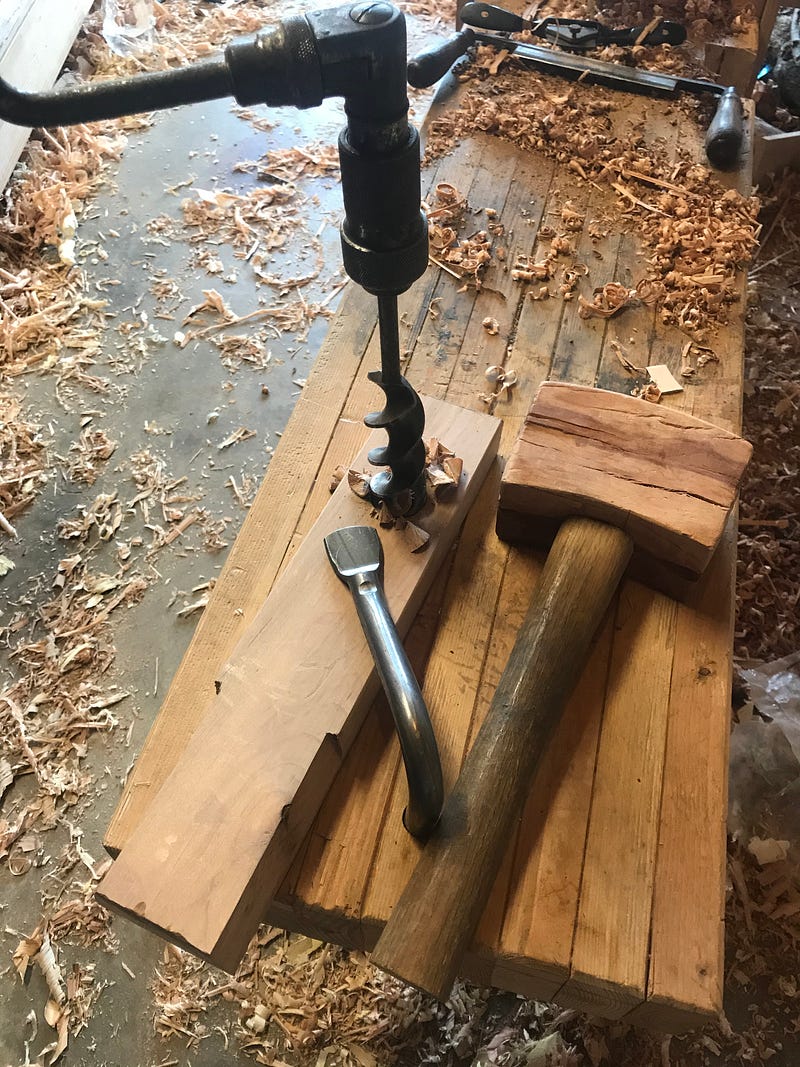
I bored 5/8" holes in the ends of the rough 2x3 piece that would be the jaw of the vise, the same diameter holes at the top of the slats. and whittled a couple of 5/8" pegs with flared ends to drive through the slats and into the ends of the jaw. I cut cross lap joints near the bottom of the slats and in a 2x4 cutoff which became the pedal. Now all I needed was the work platform.
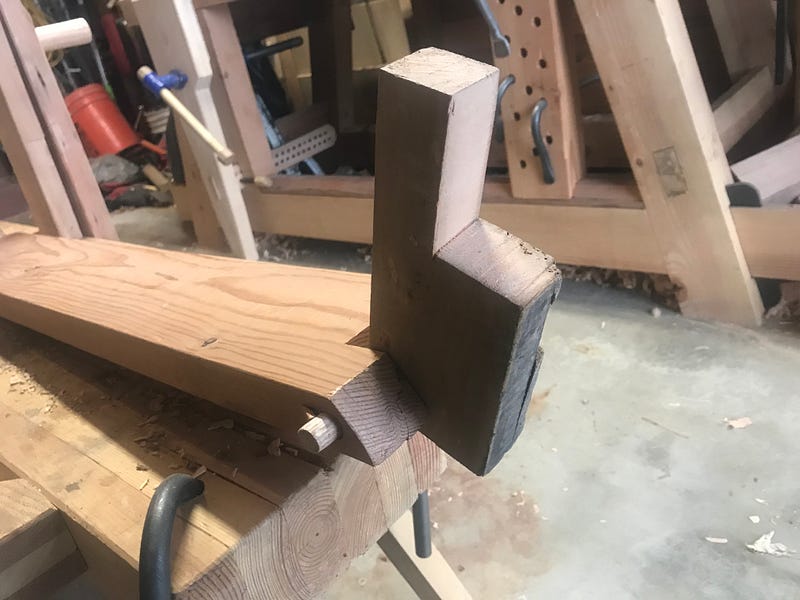
I already had a 1 1/2" square mortise cut near the end of the bench for a planing stop, so I cut a bridle joint in the end of a 2x6, bored a 5/8" hole through the gap and through the end of a 1 1/2"x 1 1/2" block and joined them with a dowel I whittled with the draw knife and spoke shave. The one pictured to the left is from my second version of the platform. I anchored the block to the bench with a steel hold down and I was in business.
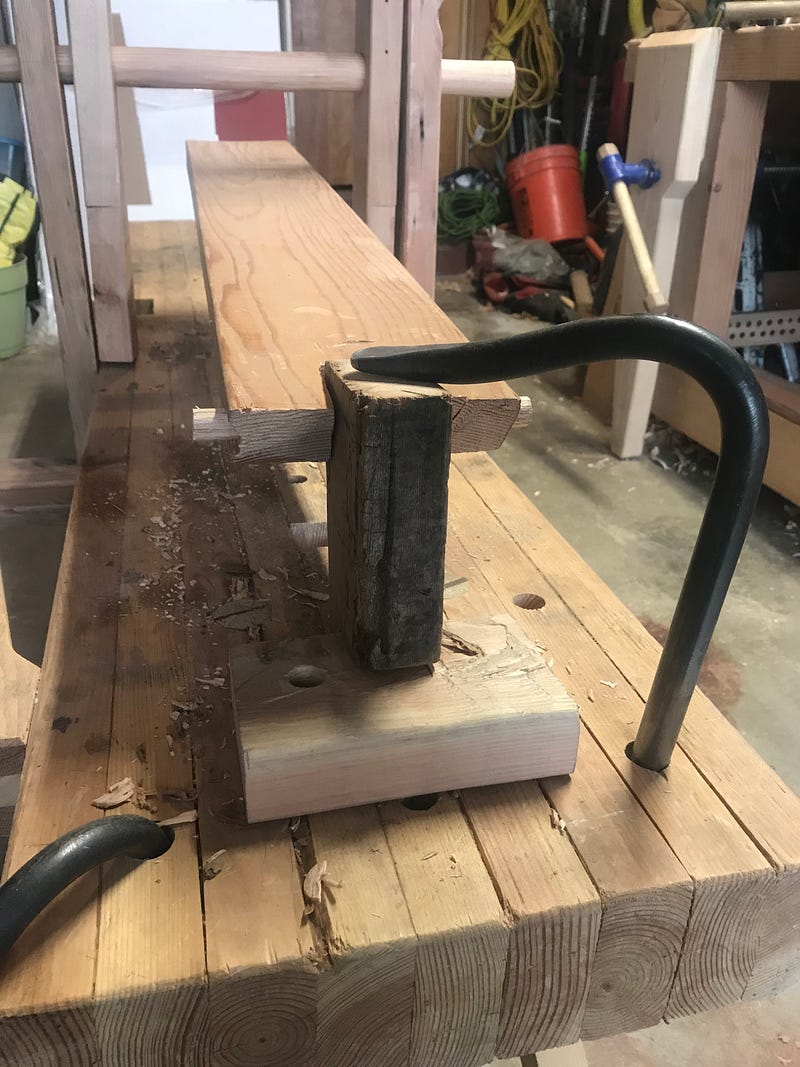
And here’s where it gets complicated.
A shave horse is fitted to the user. My first iteration worked fine, the only caveat being that the length from the pivot to the jaw was equal to the length from the pivot to the foot pedal. Essentially I got no mechanical advantage and the clamping force was less than pleasing. So when I got a couple of freer afternoons I started shave horse 2.0.
This time I made the dovetail blocks taller, allowing me to raise the pivot point. I remade the swing arms, jaw and foot pedal out of more recycled 2x4. With the original short work platform block the platform rose up at too high an angle for comfort. I remade the block to raise the pivot point of the platform, will probably do that one more time boring cross holes up its length so I can slide a dowel through to raise or lower the pivot. The platform rests on a block at its upper end; I sawed a tapered piece and screwed it to the support block to match the angle of rise, the only metal fasteners in the project and not necessary, just lazy. I can see more modifications in the future to allow height adjustments on the jaw, the platform, and the platform angle.
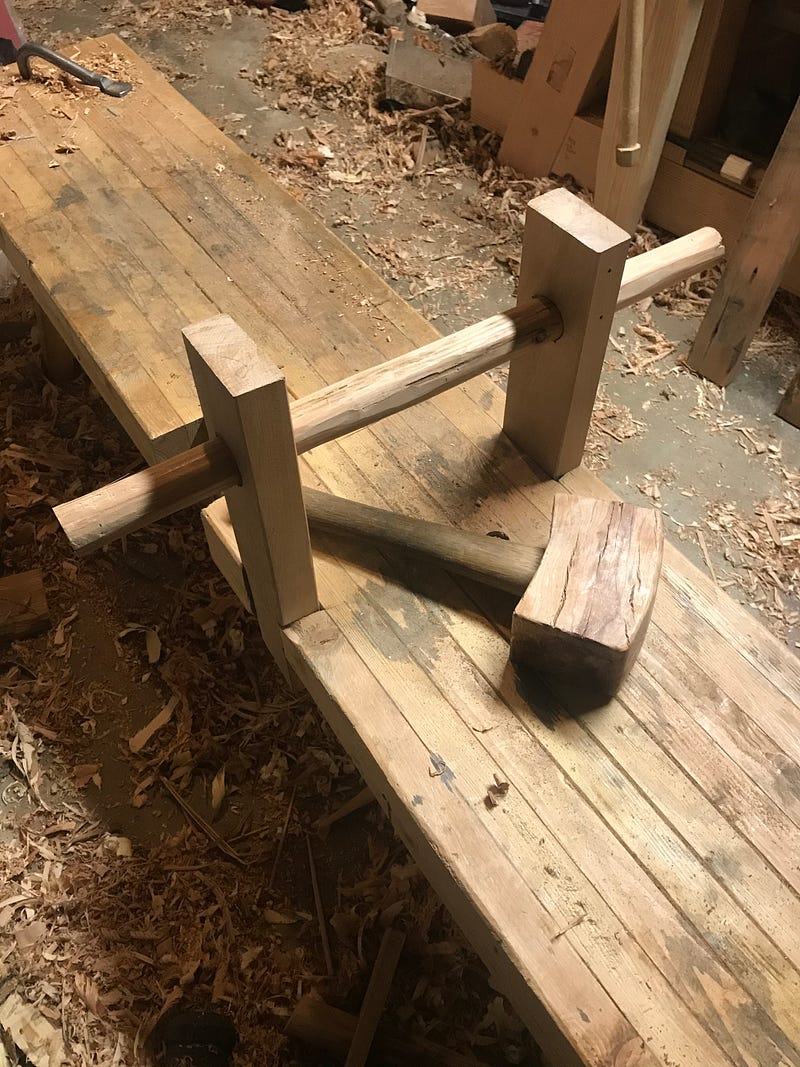
The increased moment arm from pivot to pedal increased the clamping power nicely. Chris Schwartz’s low bench shave horse is ten times prettier, but then he’s a rock star. I’m converting what was going to be my master suite to an indoor wood shop. Don’t need a fancy bedroom, all I do is sleep there, and I’m already salivating about the second build of my Carpenter Hybrid Moravian work bench, the low Roman bench, and of course a pretty shave horse…maybe even a spoon mule.
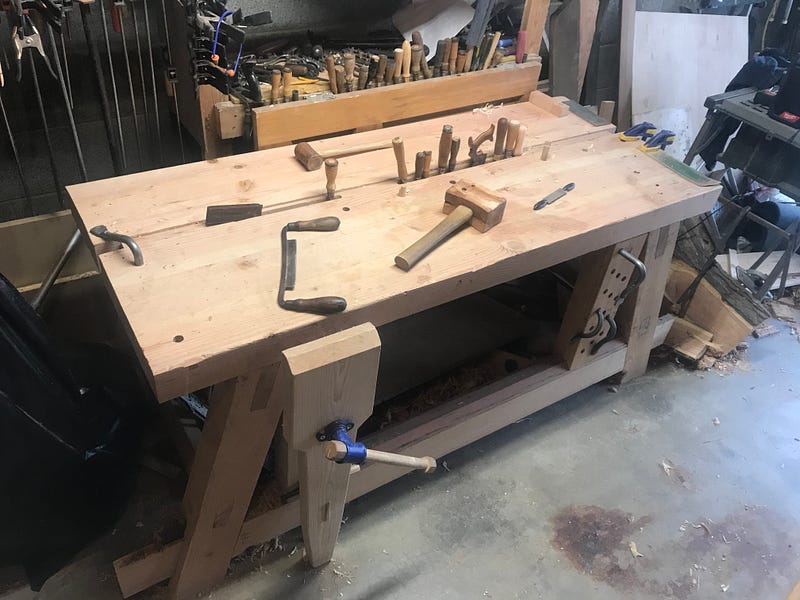
Working with hand tools I make very little noise, very little dust, and the sheer obscene sensual pleasure of turning clean shavings with a wicked sharp steel edge must be felt to be appreciated. I highly recommend it;)


