The Seducing World of Self-Driving Cars
How will Self-Driving Cars disrupt our cities by 2030?
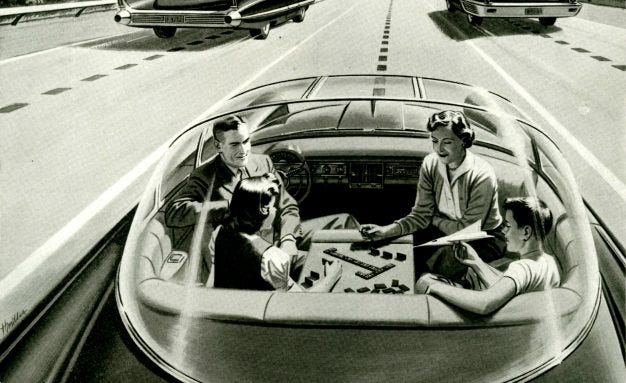
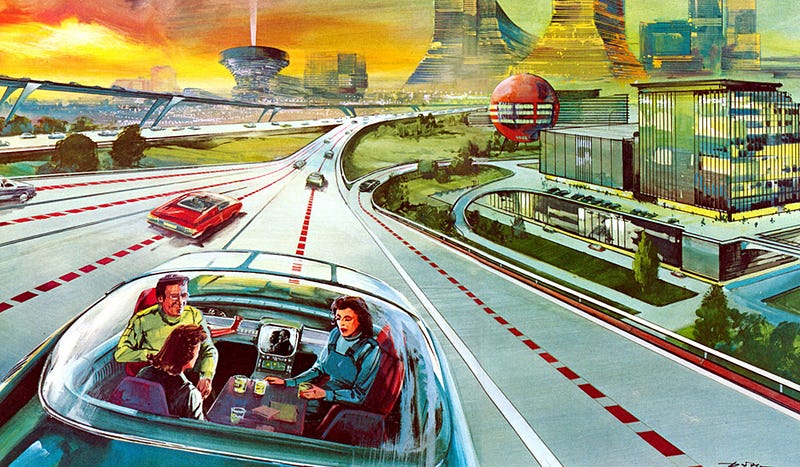
Just over a decade ago, self-driving cars only belonged within a utopic retro-fantasy of the future, along with flying cars and dehydrated pizza. Today, it joins video-calling and smart-watches, a prestigious few technologies to have crossed the chasm between fantasy and reality. We are told that self-driving cars will change everything from transportation to shopping habits. How and why will self-driving cars disrupt our lives?
Today, we find ourselves at the end of the beginning; the socio-technical puzzle pieces necessary for the emergence of a self-driving car economy, have finally clicked.
Prologue: The Perils of Silicon Valley Thinking
At Wonk Bridge, we try to steer away from conventional thinking. We’ve done this by engaging multiple perspectives into spirited conversation. On ‘hype technologies’ like self-driving cars, our approach is to ground analysis in current trends and realities, rather than drinking the Silicon Valley Kool-Aid.
8889km away from the valley, at the 2017 St. Petersburg International Gas Forum, a politically-appointed Gazprom executive sombrely addressed a dark warehouse full of energy professionals. Bragging about the energy giant’s accomplishments point-by-point — pipelines to Germany, Arctic LNG terminals, joint ventures in Central Asia — the speech met roaring applause and a prophetic remark from another panellist; “We will need champions like you in the coming fight”.

The next day, I was taken to a workshop focused on the future of urban transport. A manager from Gazprom’s transport analytics department asked me and a group of other students to imagine changing European oil consumption habits by 2040. Every group found drops of 30–80% in consumption, but the manager had a radically different view. From within the analytics department, he argued that self-driving cars would usher only a 15% drop in consumption. He confidently pointed to European regulatory conditions as the main driver of energy demand and insisted that self-driving cars would be running on gasoline rather than on electricity. This was a radical departure from the Valley’s proclamations of a post-carbon world.
The bottom line is: Someone, somewhere away from the Silicon Valley or the Silicon Roundabout, won’t buy-in to the hype. Let’s try and examine self-driving cars in the same way; relying on existing trends and mapping synergetic potential.
Cogs Assemble — PESTL Analysis
As a futurist, it is far better to predict the future 20 to 30 years on than it is 5–10 years from now because if you get it wrong you’d be on your way out to retirement anyway. Nevertheless, the next 5–10 years will be crucial in shaping the nature of an economy based on self-driving cars. The following PESTL analysis will focus one key trend per category that will influence emergence and market maturation.
Political: Public Debate on Autonomous Vehicles
Conventional low carbon-efficiency vehicles are on their way out. The most obvious marker of this are the political commitments of several large energy consuming countries to divest from petroleum and/or gasoline vehicles in the coming decades. The UK committed to no new carbon vehicles by 2040. France has announced its will to ban all carbon vehicles and to stop all upstream oil operations on its territory by 2040. China, soon the world’s biggest car consumer, will focus on the transportation sector to stick to its benchmark of carbon emissions growth at 40% of its GDP growth. Self-driving cars are thus likely to be green and electric.
Political involvement will be an essential feature of the self-driving car economy. The car’s disruptive impact on our daily lives and the ethical questions raised will become a central debate in politics, even more so than Internet and digital technology did 25–30 years ago. Just as citizens entrust their representatives to make decisions related to foreign policy, social issues, and even the death penalty, they will eventually ask governments to have the final word on the use and legalisation of various features of the self-driving car economy.
Economic: Tech & Transport Convergence
The early 2000s may have fooled some observers into thinking that mobile phones and PCs would leave traditional industries such as transportation (GM, Ford, Renault) or infrastructure (Siemens, E.on) behind. However, the current viability of IoT and Big Data products brings such industries back to the centre of growth and innovation. From Gett to Google, tech companies have partnered with auto and transport giants to gain access to market expertise and manufacturing capabilities.
Unwilling to “miss the train”, auto-giants are making clear commitments to producing electric self-driven cars. This helps car companies capture new “non-driver” customer segments (traditionally reserved to public transport) and maintain market share when governments start cracking-down on conventional carbon vehicles. From an HR perspective, this also means top-engineers may choose to work for GM or Renault instead of Google or IBM, as they used to.
From partnerships and joint ventures to M&As, the most competitive self-driven car will spawn from the best tech-transport collaboration.
Social: Generational Gap
The use of self-driving cars would likely reflect the socio-demographic realties of each market.The most obvious gap will be generational.
The first self-driving cars may cater to wealthy and tech-savvy Gen X car owners. After all, they are today’s holders of wealth and power. However, in ten years that picture will radically change. Millennials, who will be 75% of the working population by 2030, demonstrate a drastic fall in car ownership intent at around 50% (even lower for Gen Z). Self-driving cars may change to becoming a practical service rather than as property to be owned for perpetuity.
In younger societies, Gen Z customers, network-minded and interested in citizenship, may urge their Millennial counterparts to design self-driving cars with specific social or political policies in mind (more on that later!).
In elderly societies (think Northern Europe or Japan), self-driving cars would be essential to the Grey Economy, improving mobility and access to emergency services for the aging Gen X population.
Technological: Battery efficiency
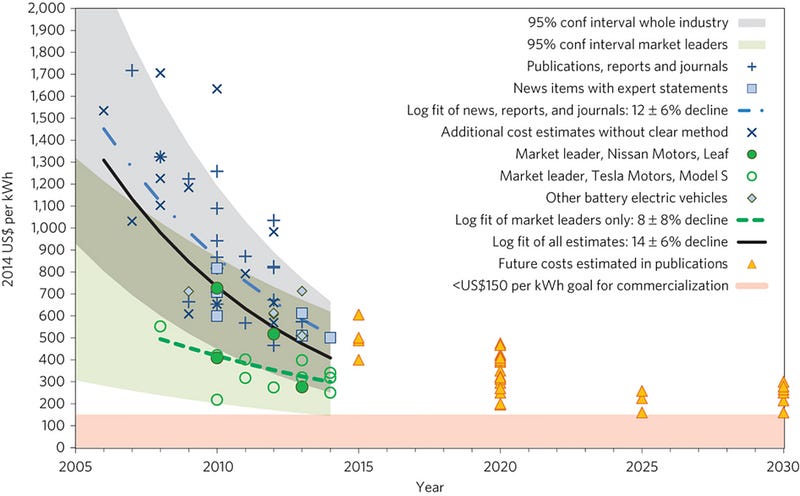
The cost of electric batteries for vehicles continues to decline at a consistent pace, matching the decline in battery costs experienced in the computing industry in the 1990s and 2000s. While industry leaders such as Tesla Motors and Nissan Motors have a cost-advantage due to their superior R&D and manufacturing infrastructure, competitors possessing large-scale manufacturing and R&D capabilities are likely to catch-up to those leaders and help make self-driven cars a mass-produced good at competitive prices.
Furthermore, progress in battery recharging and energy efficiency will increase battery life and thus bring down costs. The next five to ten years could see a two-to-threefold reduction in battery costs, despite the increasing energy consumption of a highly-connected vehicle (with all its sensors and connections).
Legal: Prone to influence
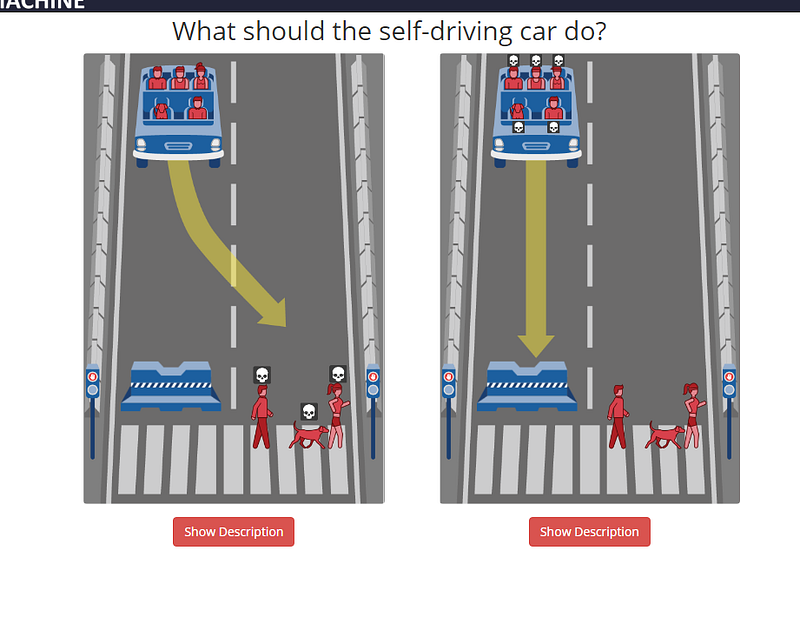
A series of articles have already been written about how self-driving cars force lawyers to provide a definitive answer to “impossible ethical questions” of property ownership and the trolley-problem. The crucial problem is that the legal profession relies on legal precedent to justify its decisions.
Market-logic has an easy answer to the trolley problem: always save the person(s) with the highest lifetime value (LTV) to the company, unless this policy leads to greater risk or lower overall profits for the company.
Individual-logic also has a relatively predictable answer: save yourself and those closest to you, then try to save as many lives as possible (unless you are a saint or a sadist). The individual cannot be given the agency of making such decisions because the individual cannot and should not be blamed for acting irrationally or non-rationally in times of extreme stress such as a car accident.
But in the legal profession, an answer has to be found. Since any progress on the matter will lead to widespread public debate and political interference, the process is likely to be impugned with a heavy dose of political and cultural subjectivity. The next ten years, and events during those years (such as a major self-driven car accident or the persisting trend of vehicular terror attacks), are likely to determine each country’s particular self-driving car laws.
(Update: The German Federal Government has agreed on a set of ethical guidelines for self-driven cars in the country. Generally, it was decided that in the “Trolley-Problem”, self-driven cars hit the person likely to be “least hurt” by a collision.)
Synopsis circa 2030
- Calls for Political Involvement in Self-Driving Economy
- Convergence of Tech Services with Automobile Manufacturing
- Cars tailored to new generations and the elderly segment
- Decreasing Battery Costs
- Prone to political and cultural influence
The immediate advantages of self-driving cars may be associated with the safety and practicality of the vehicle compared to conventional manual cars.
Dropping battery costs and better fuel efficiency are often associated with increased affordability and thus the transition between a B2B to B2C product models.
However, predictively slow legislation on ethical and criminal implications will bring the issue into the centre of political debate and thus in the hands of government.
Evolving habits amongst different generational demographics may encourage businesses to focus on servicing rather than selling cars to customers.
These macro-factors form the reason why I believe self-driven cars will most likely emerge as a “personalised form of public transportation”.

The Role of Self-Driven Cars in the 2030 City
Mechanisation in the 19th. Electrification in the 20th. Robotisation in the 21st. What role will the self-driving car have in a world dominated by artificial intelligence feeding off data? The Economist calls data the new oil; How will car companies take advantage of the car as a source of data? How can urban-planners and municipalities integrate the vehicles in the exponentially complex urban ecosystem? Will other forms of transport beat the self-driving car before its time?
Using our PESTL analysis we conclude that the self-driving car will most likely emerge as a type of personalised public-transport vehicle, closely resembling UBER or taxis today. We conclude that in elderly societies, such vehicles could be used for particular tasks such as “grey mobility” or emergency services. We also recognised the central importance of political institutions in defining the boundaries for the use and extent of self-driving car usage in the urban space.
Let’s take a (very) brief look at the rear-view mirror and discuss UBER. UBER adapted a historically successful model for public transport, the taxi cab. The taxi cab was an easy and flexible way of moving people from any “A” to any “B”, but it was getting expensive and sometimes cabs were hard to come-by in low-density areas. Among other innovations, UBER successfully brought enough vehicles on the road and designed a mobile-app that would optimise the spread of those vehicles across a cityscape — so every customer gets their UBER in no time at all. This optimisation enabled UBER to cash more trips-in with every single day, which in turn helped UBER acquire valuable data about the habits of their customers and particularities of the cities they live in.
Of course the data was used to further optimise the ride-sharing gig, but UBER also launched UBER Movement. I invite you to watch the video below:
The entire transportation industry benefits from data provided by UBER Movement, yes. But what does this have to do with self-driving cars?
Self-driving cars in 2030 will be much better at collecting and utilising movement data than even UBER is at present. While cities may not be able to track every single car within its limits, they will have the IoT monitoring capabilities to improve city traffic, increase parking spaces, and even manage gentrification over-time. Understanding where people live, travel, work, and have fun is only the beginning of effective municipal planning. Until now, cities could only indirectly influence intra-city movement via transport infrastructure (buses, train, toll fees, parking charges) and regulation (Transport for London vs. Uber 2017, anyone?). Self-driving cars and the data they will bring will give cities the ability to directly manage cities, by providing incentives and disincentives for movement at the vehicular-level.
Problem 1: Gentrification and Impoverishment
Below is an interactive map of Central London’s patterns of gentrification. Gentrification is a central political issue as it means residents of gentrified areas find themselves no longer able to afford housing or living. Rather than leaving to areas of declining economic status like Southern Lambeth, Lewisham, or Northern Hackney, these residents often choose to remain in gentrified areas to live in relative poverty. Poverty isn’t good for cities: it means lower consumer spending, lower working productivity, and lower satisfaction with the municipality.
Problem 2: Congestion and Parking Deficit
In the UK alone, traffic congestion costs the economy over 4.3bn pounds a year or close to 500BP per commuter. This number does not even include the opportunity costs for businesses located in areas of high traffic and parking congestion. But parking lots are expensive to build and maintain, especially in metropolitan areas! In Central London, parking lot prices often rival housing prices, with some surpassing 100,000BP per space. Cities will be spending the next decade renovating or recreating urban infrastructures for carbon transition. They will be strapped for cash and unable to build extra parking spaces at pace with the increasing demand. Self-driving cars will have to be closely integrated with the city’s smart parking infrastructure, to ensure that passengers can reach their destinations without causing congestion. The drawings below demonstrate different methods of dealing with these problems.
1. Time-based
Most commonly seen in the form of parking meters, time-based management starts off the premise that all drivers should have access to parking regardless of their situational contexts. Access is limited through time-restrictions (5-min drop-off parking, or fixed-time fares) and through pricing strategy (spaces in high demand and limited supply will be more expensive). This system encourages use of public transport but also discourages those living beyond easy access to public transport and those most elastic to price fluctuations to travel to popular areas. It can therefore hurt businesses in popular areas, while marginally supporting those found in residential areas.
2. Vehicle-Switching
Already in practice from Beijing to Paris, vehicle switching is most commonly used in short-periods of time to reduce air pollution. The measure is often taken by governments in periods of emergency, and requires the diversion of thousands of police officers and other resources simply to enforce the measure. In cities unaccustomed to the system, extra resources are required as citizens often have trouble understanding a system that bans them from driving their cars to work or into the city. In Paris on March 17th, pollution levels hit a record-high and odd-even license plate switching came into force. After one day, 4000 fines, and tens of thousands of non-abiding cars, the government announced an improvement in the air quality and ended the vehicle-switching measure. The costs of running such a system over even the course of a week would prove highly inefficient.
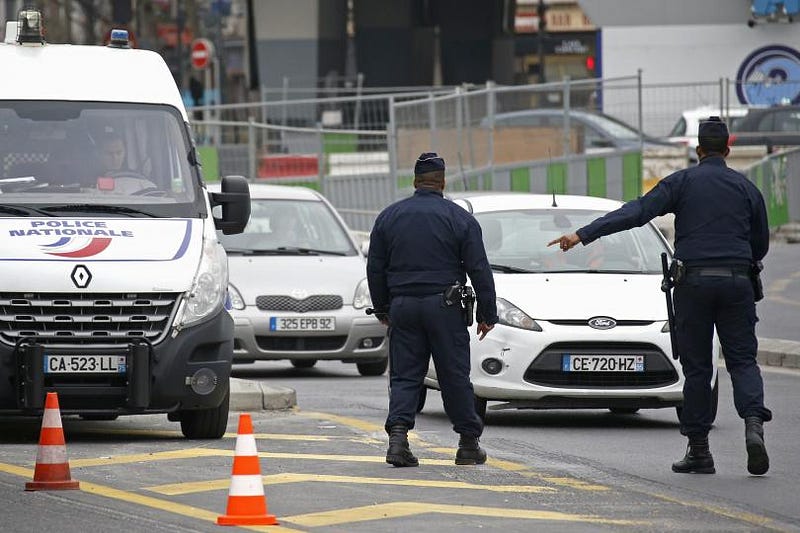
When self-driving cars enter the population, it is likely that they would be algorithmically forced to respect vehicle-switching regulation. However, these measures are not nearly as useful in improving congestion and urban traffic in a city, as they are for lowering pollution. Given the arbitrary nature of discrimination, there is no clear benefit (in this regard) for the government to separate odd and even plated cars into two groups.
3. User-Based
Self-driving cars would allow us to acquire much richer demographic data on users. Useful demographic data could include:
- departure location (where are they coming from?)
- arrival location (where are they going?)
- distance (how far off?)
- estimated time to arrival (how long will they take?)
- order of orders (who ordered the car first?)
- car-type & make-up (are they in an SUV? a sedan? a sports-car?)
- travel history (they usually travel this route? if so, have they be reliable?)
- household make-up (are they a family? single? teenagers? elderly?)
A number of decisions can be made by self-driving services and municipalities with this data. Take this map of “Alpha City”
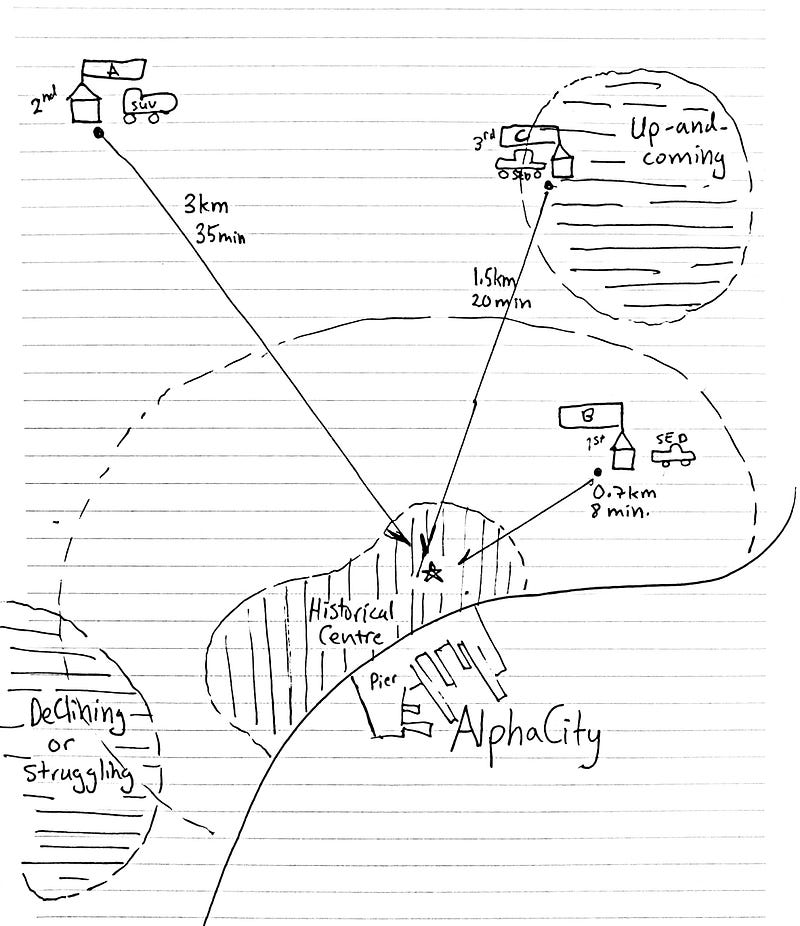
Houses A, B and C all want to visit a location in the historical centre of Alpha City (marked with a star). Alpha City is like many contemporary cities, with areas of high growth prospects (Up-and-coming), high congestion (Historical Centre), and areas in need of traffic (Declining or struggling).
- House A: ordered an SUV car second, lives outside the city at 3km (or 35min) from the destination.
- House B: ordered a sedan first, lives in the city at 0.7km (or 8min) from the destination.
- House C: ordered a sedan third, lives in an up-and-coming neighbourhood at 1.5km (20min) from the destination.
If the parking space is limited, which house gets priority?
Without much thought, you could say that House B gets priority because it ordered the car (and therefore the parking space) first. Then comes, house A and C.
If distance and time are your main parameters, then does House A deserve priority given it had to travel the furthest? Or does House B, because it will take less time to execute the trip and thus free the vehicle up for more trips?
If vehicle make-up is important, then should the SUV or the sedan come first? Say the destination is a restaurant with limited car-space, perhaps it might accept the SUV because it wants to retain that customer segment. Or maybe it rejects the SUV in favor of the sedan, in order to free up space in the parking lot?
Location is bound to be important. Do we encourage longer trips to destinations in order to broaden the market for local businesses in popular areas like the city centre? Or do we discourage long commutes in favor of equivalent/alternative destinations closer to home? Should House C be going to the historical centre if it could access the same brand of restaurant in the up-and-coming neighbourhood? Should House B be using the self-driving car at all if it only takes 8mins (or, 20 mins walk) to reach the destination?
4. Market-based
In this model, government intervention is minimal. Parking space allocation is left to market dynamics only. While this is highly unlikely given the political implications of self-driving cars, the example is revealing. Parking spaces in this model work like advertising auctions on Google. That is, depending on the bids and specific requests of participating organisations, ad-space is sold at varying prices. More popular areas or under-serviced areas will come at a high price, because they will be in higher demand by the customers of the particpating organisations (who will try to secure assets most-prized by their customers). The result? Let’s get back to a close-up of our map:
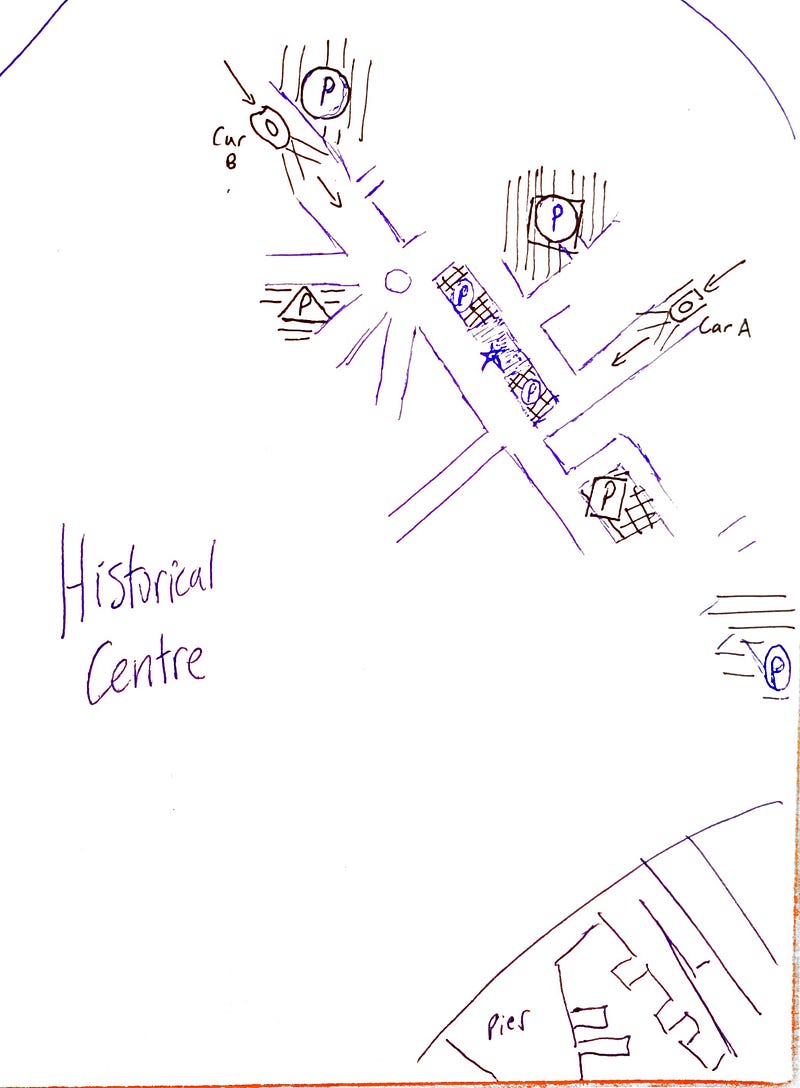
The destination is surrounded by a number of parking spots (marked with P). Spots are surrounded with squares, circles and triangles, drawn to represent different companies servicing/owning each spot. Spots closer to the destination are more expensive, because they are more in-demand. As you can see, some spots are serviced by more than one company (a circle and a square). When self-driving car users choose a destination, they will only have access to the parking spaces available to their car. Since parking spaces are auctioned, some companies will prevent others from accessing their spaces and visa versa. Others, due to the high cost of a parking space, may choose to share the financial burden with another company, hence making those available to multiple companies.
To ensure control over parking spaces in the city, self-driving car services may seek vertical integration by partnering up with parking-space realtors or with self-driving cars manufacturers. Those companies would spend time securing joint ventures and M&As with firms (or governments) owning fixed parking assets. To ensure market share and to lower exorbitant supply-chain costs, firms will seek to vertically integrate with both car manufacturers and parking-space owners. They might even seek to spearhead urban development in entire sectors of a city in return for a monopoly over built parking spaces in the sector. Customer segmenting may occur to allow for increased price discrimination: “premium parking spaces” may be offered to customers willing to pay. In a mature market, entire companies may be built on the idea of “premium self-driving car experiences” (from manufacture to parking space allottement). Unfortunately, effectively creating barriers in the city could be considered as discrimination, and may accelerated ghettoisation.
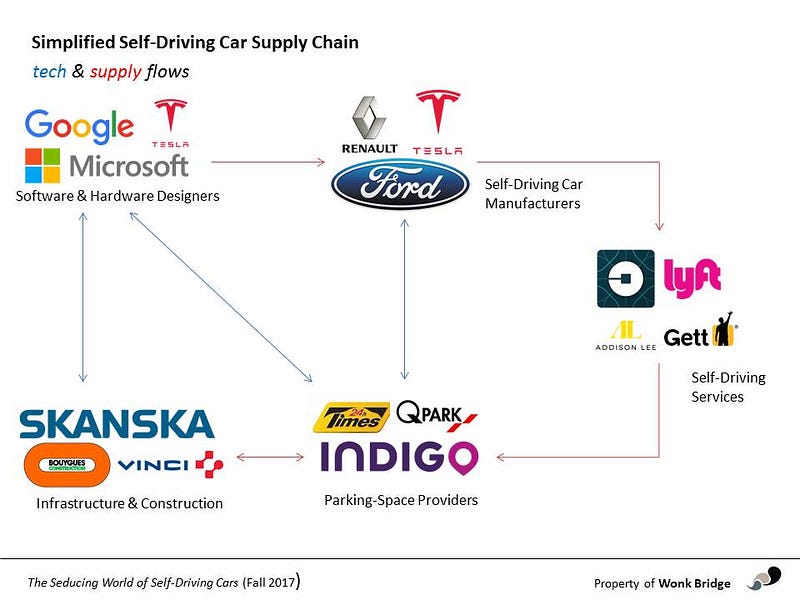
Luckily for the consumer, the fate of the self-driven car will not be left to the invisible hand. Governments will most likely place themselves at strategic locations along the supply chain: managing parking-space allotments, establishing manufacturing standards to ensure all cars can use all parking-spaces, and creating incentives for self-driven car users to visit desired areas of the city.
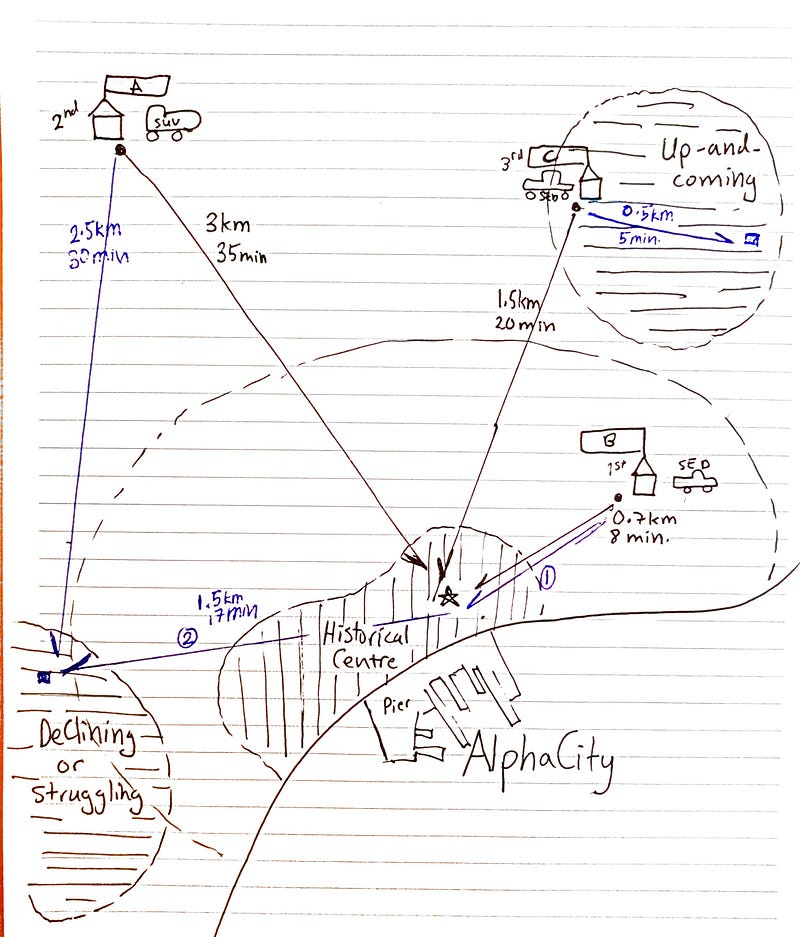
Users would be incentivised to visit target regions of cities in-app; discounts and bundle-pricing schemes could be introduced to reduce congestion while increasing purchasing behavior and directing traffic. In the above map, the app suggests House A to visit a similar location (say, a similar restaurant with high reviews) in an area in need of growth. The location is closer and cheaper for House A to get to. Since House B lives close to the starred location, the app suggests that House B goes to another destination afterwards (say, a coffee spot for dessert). House B will pay for both trips (1 and 2) in a bundle (as discount compared to two trips). This lowers the wastefulness of short-trips and encourages purchasing and mobility. House C meanwhile, finds out that the starred restaurant has a branch in its local district (Up-and-coming). Instead of being environmentally unfriendly and taking the car, it is encouraged to walk and enjoy the sunny day.
Governments and municipalities will take full advantage of the self-driven car ecosystem to drive revenues in strategic areas of the city such as: driving traffic towards commercial islets in impoverished areas (marked “declining or struggling”), helping residents in rapidly gentrifying areas (marked “up-and-coming”), lowering costs in widely popular areas (marked “historical centre”), encouraging residents to explore the whole city rather than just some districts.
This system aligns the interests of a city’s key stakeholders:
- Residents — will save on transportation costs, and use this extra spending power to consume products & services. This could increase the overall quality of life, work, and services across the entire city.
- Government & Municipalities — another tool used to influence the mobility and behaviour of city residents in line with political and urban developmental goals.
- Self-Driving Car Manufacturers & Services— will benefit from governmental regulation in the domain of standardisation, preventing technological/equipment-based market segmentation.
- Local businesses — will benefit from widespread development across growing, mature, and declining areas of the city. Increased mobility will expose businesses to new customers.
- Other Public Transport — such as buses, trains, and subway systems will, of course, lose relative market share. However, such systems will have the opportunity to radically lower their costs and increase efficiency. As self-driven cars divert residents towards less frequented areas of the city, public transport can service additional demand for routes into popular locations (usually historic city centres or business districts) and divest from unprofitable routes outside city centres.