
The Secret to Success is to Build the Foundation For It
A key lesson from nature: everything comes in its time.
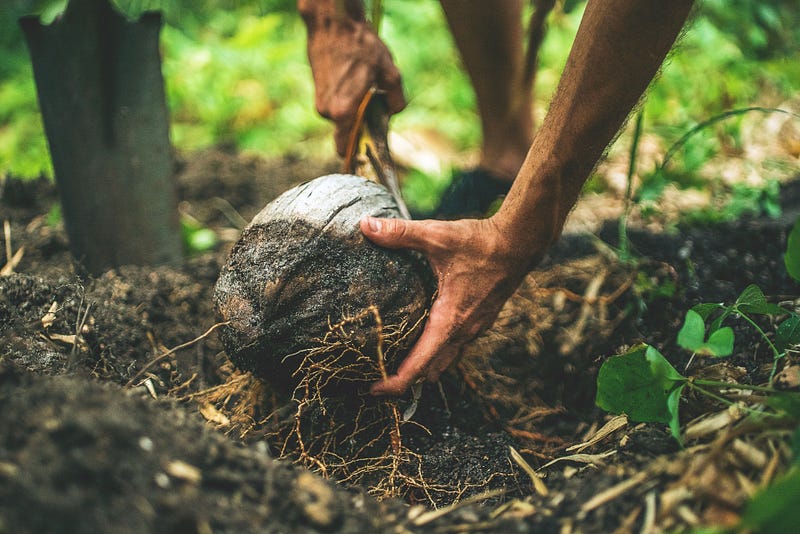
If you’re twenty-something, my message to you is this: there’s no rush. In one of the best books I’ve read in the past 12 months, The Wealthy Gardener, the author says that life can be divided into three equal acts:
- 0–30. Spring. That’s when you plant the seeds for your future.
- 30–60. Summer. That’s when you work hard to make the crops grow. You save money, work hard, and build your life.
- 60+. Fall. That’s when you reap the harvest and enjoy apple ciders.
You probably get the gardening analogy by now.
But too many young people (me included) don’t see life like this. We believe that life is something to be rushed through. We think that we have to ‘make it’ as quickly as possible so that we can enjoy it later on.
We are impatient. We rush. We hesitate. We want everything fast.
And we kill our potential as a result.
The Secret To Success
There’s a quote that I stumbled upon recently:
The secret to success is to build the foundation for it.
I don’t quite remember where or when I saw it, but I love it.
You’ve got to build your foundation.
Maybe it’s saving money. Perhaps it’s building a platform — such as an insightful blog, or a business. It has to be something.
When you’re twenty-something, you’re living through (hopefully) the most challenging part of your life. The gap between what you ‘want’ and what you ‘can’ is at it’s maximum. As you grow older, this gap will shrink, because your ambitions will lower and your abilities will increase.
But the best part about being young is that you’ve got the most precious resource at your disposal: time. You can use it to build your foundation.
Small Things Make The Biggest Difference
If you want to become an author, you’ll need that foundation.
Publishers will want you to have a ‘platform.’ It’s not like the 1800-s, where you could just write a book and become famous out of nowhere.
Today, you need what’s called an ‘author’s platform’ — fame, followers, something that will help the publisher promote your book. There are just too many books nowadays.
Warren Buffet (who doesn’t need introduction) is known for his ‘snowball’ analogy. He has a biography written about him, with the same name.
Small things done daily, accumulate into significant results. For example, if you’re becoming 1% better at anything each day, you’ll become ~37 times better at it by the end of this year.
Why? Compound effect (1.0¹³⁶⁵ = 37.78)
Warren Buffet was patient. He started making (and saving) money at 12 years old, selling newspapers. His work ethic helped him build his foundation.
But I am not talking about killing yourself with 14–16 hour days. That’s not sustainable, and people who tell you they work this much, lie.
I am talking about a different kind of work ethic: long-term patience. The belief that it will all turn out to be OK in the future if you stick with what you are already doing. And if you build the foundation for your future success.
Those Who Rush — Lose
I have a theory, and it’s just that — a theory — so feel free to disagree with me.
I believe that early success is bad for you.
It’s terrible for you because once you achieve early success, you freeze. You don’t grow anymore. Why would you? You’re already successful.
Notice that all the people you admire — Seth Godin, James Altucher, Steven Pressfield, Tim Ferriss, entrepreneurs like Elon Musk, Jack Dorsey, etc. — they’re all in their thirties, forties, fifties, and sixties.
They didn’t sell themselves short by becoming an early success at something superficial. Of course, some of these people went on and built hugely successful businesses in their twenties — but that’s not the ‘normal’ way of things.
Who would you rather be: someone who sells online courses and blogs for a living, or someone who writes thoughtful books, gives TED talks, and changes people’s lives?
The former is easy. It takes 2–3 years to get to that level.
The latter is hard. It’s not possible when you’re twenty (again, usually). It takes time, patience, money, and an enormous drive to make an impact. And it needs a foundation to be built.
But if you rush to become successful now, you’ll sell yourself short.
Lesson From Nature
Let’s go back to the gardening and nature analogy for a second from The Wealthy Gardener book.
In nature, everything comes in its own time. Apples don’t grow in April. They grow in September — and that’s when you eat them, make ciders and apple pies.
When you’re in your twenties, you are still in the Spring stage of your life.
Respect that. Use this time for what it’s made for — to build the foundation for your future success. Don’t rush to reap the harvest in May.
You’ll have time to build. And you’ll have time to enjoy yourself.
The critical lesson from nature that we, over-rational humans can take, is that everything should come in its own time.
So take your time. Don’t rush. And build the foundation for your dreams.
You can achieve all of your dreams if you build the right platform.
Thanks for reading! Join my mailing list and receive weekly book recommendations from me.