
The Secret To Getting What You Want
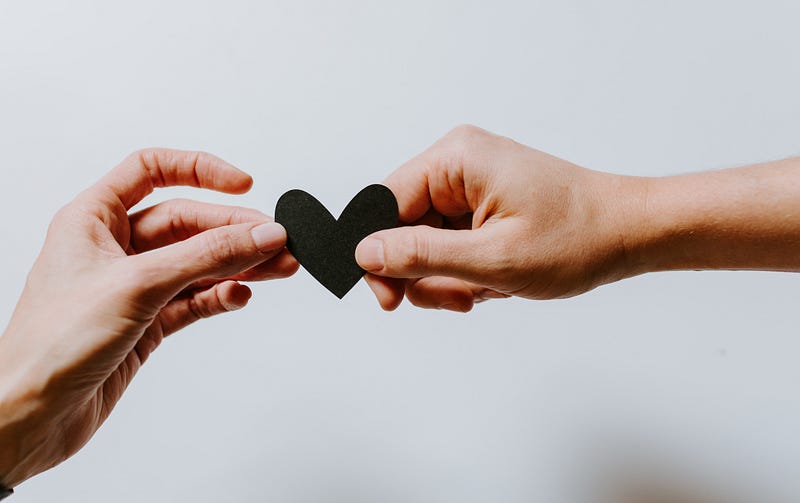
Let me start by saying two important things, that were said by other people. First: “Katarina, if you never ask, you’ll never get”. Second: “fierce independence is a trauma response”.
Some of us as children learn to minimize our neediness so as to not be a burden to our parents. I was one of them. This has continued throughout my life where I asked for very little and eventually, I became one of those strong independent women. This means I didn’t ask for help, physical or emotional, and I was proud of it.
Throughout school and university, I never went to a teacher asking for help or explanations. I believed I can find them myself, and I could. Independence is something I admire. It builds character and inner strength.
But extreme independence? It is a trauma response and life could be much easier without it. Asking for help is a spiritual quest — it needs a humbling of the ego. The ego that was build as a response to an environment where support was not readily given or where the child was brushed aside when in need. That inner child needs your love and the assurance that it doesn’t have to always be strong. That it can rely on other people — people are dependable.
Asking for help and helping is the beginning of friendship and community. It connects people together. I was the independent one looking at people supporting each other and wondering why I didn’t have a string of people connected to me in the same way.
The thing about humans is that they like people who accept help. Helping someone creates a bond with them. Katarina had acquaintances willing to help and I didn’t — because I didn’t need anyone, anyway.
Truth is, they were probably willing to help but I did not see them as sources of support that I could tap into.
It was in the first year of graduate school that I met Katarina. Katarina found it very easy to ask for help and she got a ton of it from people around her. She was a privileged white girl who knew how to ask. I probably needed support more, but I did not ever ask.
How was she finding it so easy to get people to support whatever she needed to get done? Can you hold these things for me while I am away? Can you drop me at the airport? And people said yes. At that point, those people were my ‘friends’ too but I would not have asked them. I would have thought “don’t bother people, you can do it yourself — pay for a taxi goddammit”.
One of those times we were hanging out, Katarina told me one of the greatest ideas I needed to hear in my life. She passed it down straight from her father who told her since she was a child “Katarina, if you don’t ask, you don’t get”. She was raised in an environment where it was encouraged for her to ask and express her needs with the chance that those needs would be met.
Why was that such a revelation to me?
After all, how would you know if people are nice and kind if you never ask for help? How would you get anything without asking? My thought was that there is an invisible mechanism in the universe that rewards people who are good — you don’t need to ask. If I ‘really’ needed anything, it would be there.
It is so much easier just asking though. What does it cost? Not much — maybe a slice of my ‘pride’. It is something good to lose. So, I am learning to ask for help and depend on others.
How do you know it is trauma? It is trauma because you feel ashamed to reveal that you are human enough to need support sometimes and if someone says “no” it is taken as a personal rejection. Katarina, though, would simply move on and ask someone else.
Written as a response to the prompt “How easy or hard do you find asking for help when you need it?”


