
The Secret Origin of James Bond’s Style
There’s a very good chance that most men, at some point or another, have stood in the mirror when dressed to the nines and said, “Bond, James Bond.” Or maybe it’s just me.
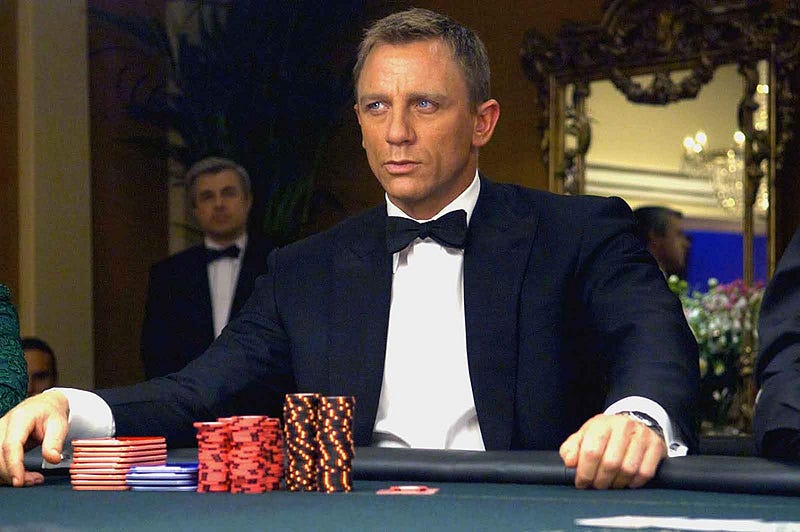
This little quote has been ranked by the American Film Institute (AFI) as the 22nd greatest film quote of all time film. With the character himself ranking as number 3 in the all time film heroes. Created by Ian Fleming in 1953, James Bond has remained in film and literature as a dominant figure in popular culture.
The variety in which he is presented, by novelists continuing from Fleming and the various actors portraying Bond on screen, prove which elements remain elemental and consistent with who James Bond is and why he is needed. He’s the essence of the masculine, a gambler, and a man of imbecile style and sophistication.
The sense of style is important, not only to the appeal of the films, but as a representation of Bond’s inner strength and competence. As noted by Jeremy Black in James Bond and Politics, “Style meant competence, competence ensured style. Competence was enhanced by presence, the presence reinforced by the accoutrements and accessories of the Bond persona.”
If it was only about the clothes Bond would’t be the icon he is today, they bespeak of the the confidence and competence of the protagonist in how he approaches the challenges of his life, be it a cocktail party or the countdown of a nuclear bomb.
We associate this component to the character so much we often forget it could have easily been lost in the transition from literary hero to icon of the silver screen.
Secret Origin
The original image of Bond was not as well dressed as we commonly imagine. Ian Fleming’s creation shared many of the author’s own idiosyncrasies, including his own taste in clothing.
In the books, Bond is described as wearing navy blue suit once or twice. Sometimes even with a short sleeved shirt beneath his suit jacket. Yet the clothes themselves are not as relevant to the stories. It’s a discrepancy between mediums which is understandable.
In books, we populate any blank spaces of the story with our mental images. Characters are given faces by our imagination, potentially far different ones than the authors themselves may have intended. The world itself is constructed by us in its visual elements.
Films are different. As a cinematic medium the images must be curated by the production team to create the feeling and images they want the audience to literally see in front of them. As such, the cinematic appeal of Bond the clothing choices matter far more than whatever is described in the books.
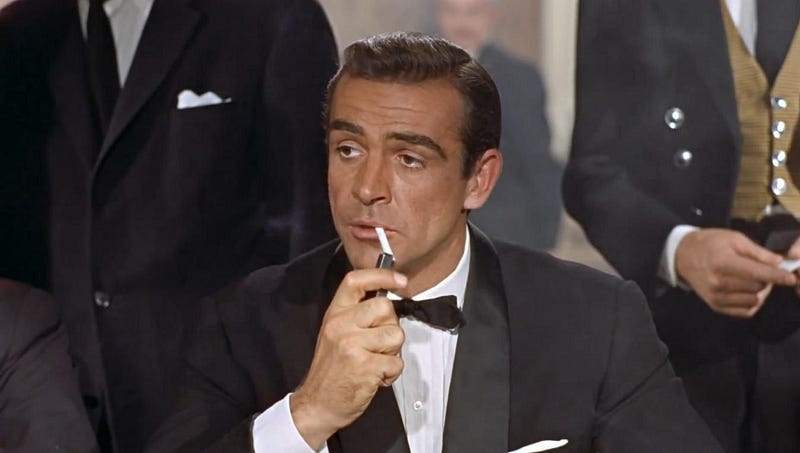
When the time came for Bond to make his proper appearance in film, with the Production of Dr. No in 1962, with director Terence Young, who would indelibly leave his personal mark on James Bond both as a character and film series.
Terence Young
Bond director of On Her Majesty’s Secret Service, Peter Hunt, commented in the making of documentary of Majesty’s that Terence Young was his Bond. In an ideal world, he would direct Young as the famous 007.
Out of context, these remarks seem odd given the relative lack of recognition and fine features which usually accompany the actors chosen for the role of the British super spy. Young doesn’t even have many credits as a director remembered outside the Bond franchise itself.
This comment however, illustrates the significance Young had on the franchise in its creation as a film series. If we can credit Guy Hamilton, director of Goldfinger (1964), for setting the tone and tropes of the Bond series, it is Terence Young we can credit for the tone and style of Bond himself.
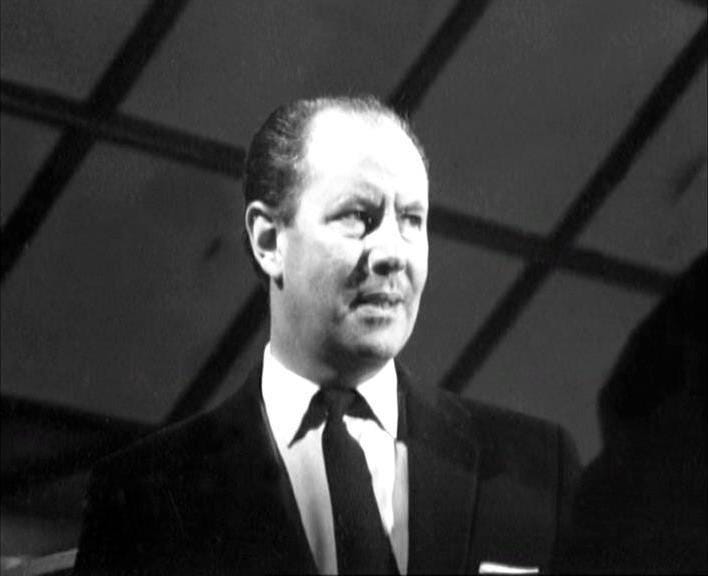
Like many involved in the production of the Bond franchise, Terence Young was a WWII veteran. A not insignificant effect upon the world view of the filmmakers, it is an element intrinsically connected to the Bond of the books, the outlook of the British empire in a post-WWII world. Importantly also, Young himself worked in intelligence work during the war, allowing him an insight into the real espionage work which the common man didn’t have.
When Sean Connery, a bodybuilder, was cast in the role of James Bond, he was not the picture of pristine sophistication we associate with the tuxedo clad gentleman spy. An Edinburgh man with a working class background, he didn’t possess the refined elegance imagined by Fleming as integral to the character.
Connery was a clay vessel with the looks and charm needed for the character, all he needed was a little patient molding. Terence Young, took to the task with detailed eye, little knowing he was shaping an image which would remain for over fifty years in the public consciousness.
Taking Connery to his own Savile row tailor was the least of Young’s contributions. Not only did he impart his own sense of style in the dress of Bond, but also coached Connery in the physical mannerisms and characteristics he should employ when portraying the character onscreen. The proper way to talk, walk, hold his hands and how to eat and drink the best which could be offered.
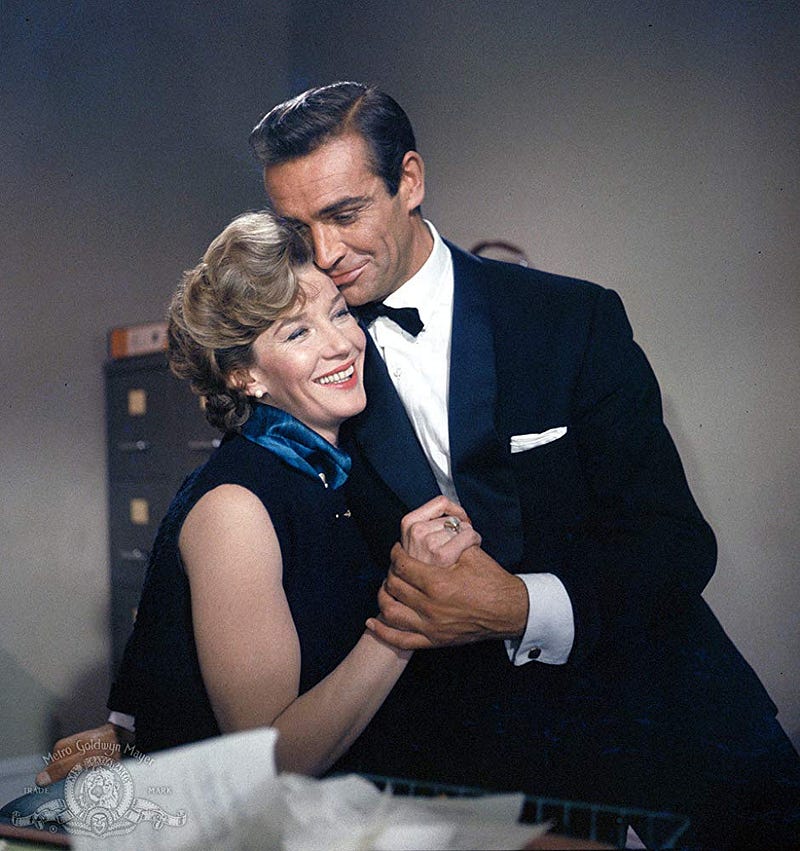
Lois Maxwell, the original Miss Moneypenny, said it became apparent to everyone involved Connery was portraying an impression of Terence Young. A character choice which would set the standard by which every other iteration of Bond has been judged by ever since.
Bob Simmons, stunt man in many of the Bond films said, “A lovely man Terence. A gentleman. Whatever he does, he does it with style. In fact, he is my idea of what James Bond should be. Elegant in dress, urbane in manner, sophisticated, mischievous, a man of seasoned wit and courage.”
With style such an important element of the Bond persona as we know it today, it is a shame to overlook those who played such an important role in constructing the character we know as James Bond. Terence Young should be remembered not only as the director of early Bond, but also the template for suave sophistication we associate with the character.