avatarPavle Marinkovic

Free AI web copilot to create summaries, insights and extended knowledge, download it at here

3101

Abstract

p id="0d06">Interestingly, music and language might be sharing brain resources. This is portrayed more clearly in people with musical backgrounds:</p><ul><li><b>People with musical training have an edge when it comes to picking up the nuances of language</b> (Anvari et al., 2002; Slevc & Miyake, 2006; and Magne et al., 2006). They show heightened accuracy in perceiving phonetic or prosodic contrasts in languages, both native and foreign. <i>Meaning:</i> your brain is more attuned to the subtle differences in speech sounds, like picking up on the rise and fall of intonation in a sentence.</li><li><b>Musicians are better at picking up emotional cues in speech:</b> adult musicians outperform non-musicians in identifying emotions such as happiness, sadness, fear, and anger in spoken sentences (Thompson et al., 2004) <i>Meaning</i>: musical training doesn’t just improve your ability to process musical notes but makes you more sensitive to the acoustic cues that convey emotions in speech.</li></ul><p id="cfa2">And for both language and music, the earlier we start learning it, the more it shapes our brain.</p><p id="3b88">Let’s see how we can leverage how our brains are wired and use language to improve our musical skills.</p><h1 id="421c">Let’s rethink brain training</h1><p id="7ff7">A joint <a href="https://academic.oup.com/cercor/article/32/1/63/6322318">study</a> between the University of Helsinki and the Beijing Normal University wanted to see <b>how learning music or a foreign language (English) influences how the brain processes sounds in children</b>.</p><p id="2a28">The researchers took a bunch of kids aged 8–11, split them into two groups, and put them through a year-long boot camp. One group got music training, and the other got English language lessons. They used something called an “auditory event-related potential (ERP) recording” (i.e. a high-fidelity brainwave tracker ) to see how well these kids’ brains could pick up and process different sounds before and after the program.</p><p id="4c63">The results were unexpected.</p><p id="70b6"><b>The kids who got English lessons showed better improvement in processing music-related sounds than the kids who learned music. But, the music group did better in picking up the pitch. </b>However,<b> </b>the improvements were specific to certain auditory features (like pitch and melody) rather than generalized across all auditory functions.</p><p id="4aee">It’s like they trained for a marathon only to find out they’ve become better sprinters instead.</p><p id="580f">The <i>lesson </i>is that language learning, not just music training, can tune up our brain’s sound system. But music training is better if you want to fine-tune the basics like pitch.</p><h1 id="2509">Do certain native speakers have an advantage?</h1><p id="a9c2">A doctoral <a href="https://www.helsinki.fi/en/news/culture/music-and-native-language-interact-brain">study</a> at the University of Helsinki <b>tested how well people can distinguish sound features based on their mother tongue</b>.</p><p id="8df9">For instance, was a native En

Options

glish speaker better at processing sounds than a Spanish one?</p><p id="2f39">The researcher found that the <b>language you grew up speaking shapes your sensory processing, especially with sound</b>.</p><p id="1bd3">And <b>some mother tongues prepare you better for this</b>. For instance, if you’re a Finnish native speaker, certain brain areas are more efficient at processing the duration of sounds than as a German native speaker. In other words, Finnish are naturally better at picking up on the subtle differences in how long a sound lasts.</p><p id="47cf">So what happens when you <i>transfer</i> this ability into music?</p><p id="8fec">One key aspect of being a good musician is having a sharp sense of timing — knowing when to hit the notes and for how long. This is where processing the duration of sounds becomes critical. <b>You can more easily perceive and replicate precise rhythms and tempos in music</b>. You can stay on the beat or adjust your playing in response to subtle changes in tempo.</p><p id="51b0">It’s like having an audio <i>upgrade, </i>thanks to your mother tongue.</p><p id="b124">The main takeaway is that <b>the brain can develop superior abilities in certain aspects of sound processing based on specific experiences</b>, such as being exposed to a particular language from a young age.</p><h1 id="e752">Connecting the dots</h1><p id="c8f0">We’ve seen how our language skills fine-tune our musical abilities.</p><p id="8618">Both studies show that <b>language greatly influences how we process sounds and music</b>. Think of it as your native language sets up the hardware, and then music or foreign language training updates the software.</p><p id="b8d2">With our language development, we’re improving our musical skills and our whole auditory system.</p><p id="700c">It’s all about <b>developing the brain’s sound studio</b>, the auditory cortex, which allows us to master a foreign language or nail that violin solo.</p><p id="7cfe">But without the right neural set-up, we would be like trying to cook without a stove. No matter how much you try, you won’t be getting that wonderful tune out of the instrument.</p><p id="271b" type="7">Want to learn more about the sound verse?</p><p id="d185"><b><i>Join <a href="https://soundawareness.substack.com/">my newsletter</a> to explore everything related to music and sound, from the effects on our psyche to the technologies that use sound to improve our lives.</i></b></p><div id="f611" class="link-block"> <a href="https://readmedium.com/what-happens-when-you-blend-psychedelics-and-music-in-therapy-2fdb792f07bb"> <div> <div> <h2>What Happens When You Blend Psychedelics and Music In Therapy?</h2> <div><h3>Going beyond pink elephants</h3></div> <div><p>medium.com</p></div> </div> <div> <div style="background-image: url(https://miro.readmedium.com/v2/resize:fit:320/0*IK9Wz-Aj8Kn2QckF.jpg)"></div> </div> </div> </a> </div></article></body>

The Secret Language Connection to Music You Never Knew About

For anyone trying to learn a new language or an instrument
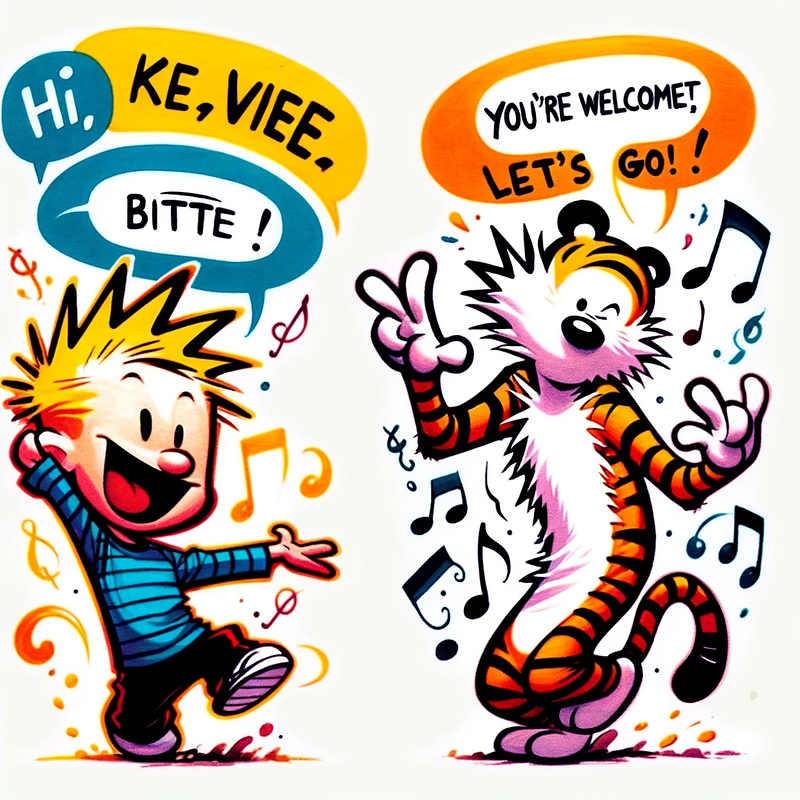
AI-generated image with Dall-E

In 1959, the Russian composer Vissarion Shebalin suffered a stroke that made it hard for him to talk and understand language (i.e., Aphasia). Despite this, his ability to compose remained intact.

However, the language of his music began to change.

Before the stroke, Shebalin’s compositions had intricate structures, elaborate orchestrations, and clear thematic developments. After the stroke, his works were more simplified and direct. The complexity in harmony decreased, and his music became more concise and accessible.

His language impairment influenced his musical expression, hindering his ability to process and create complex structures.

Listen to his early work handling complex structures and traditional forms in his Symphony No. 1.

And now listen to Symphony No. 5, completed in 1962 (3 years after his stroke).

Do you hear a more streamlined approach with less complex thematic developments?

Shebalin’s case challenged the notion that music and language are entirely separate in the brain.

Music and language are more alike than we might think. They both have rules and structures, kind of like grammar. Pitch in music is like phonemes in speech. Rhythm is also crucial in both.

Interestingly, music and language might be sharing brain resources. This is portrayed more clearly in people with musical backgrounds:

  • People with musical training have an edge when it comes to picking up the nuances of language (Anvari et al., 2002; Slevc & Miyake, 2006; and Magne et al., 2006). They show heightened accuracy in perceiving phonetic or prosodic contrasts in languages, both native and foreign. Meaning: your brain is more attuned to the subtle differences in speech sounds, like picking up on the rise and fall of intonation in a sentence.
  • Musicians are better at picking up emotional cues in speech: adult musicians outperform non-musicians in identifying emotions such as happiness, sadness, fear, and anger in spoken sentences (Thompson et al., 2004) Meaning: musical training doesn’t just improve your ability to process musical notes but makes you more sensitive to the acoustic cues that convey emotions in speech.

And for both language and music, the earlier we start learning it, the more it shapes our brain.

Let’s see how we can leverage how our brains are wired and use language to improve our musical skills.

Let’s rethink brain training

A joint study between the University of Helsinki and the Beijing Normal University wanted to see how learning music or a foreign language (English) influences how the brain processes sounds in children.

The researchers took a bunch of kids aged 8–11, split them into two groups, and put them through a year-long boot camp. One group got music training, and the other got English language lessons. They used something called an “auditory event-related potential (ERP) recording” (i.e. a high-fidelity brainwave tracker ) to see how well these kids’ brains could pick up and process different sounds before and after the program.

The results were unexpected.

The kids who got English lessons showed better improvement in processing music-related sounds than the kids who learned music. But, the music group did better in picking up the pitch. However, the improvements were specific to certain auditory features (like pitch and melody) rather than generalized across all auditory functions.

It’s like they trained for a marathon only to find out they’ve become better sprinters instead.

The lesson is that language learning, not just music training, can tune up our brain’s sound system. But music training is better if you want to fine-tune the basics like pitch.

Do certain native speakers have an advantage?

A doctoral study at the University of Helsinki tested how well people can distinguish sound features based on their mother tongue.

For instance, was a native English speaker better at processing sounds than a Spanish one?

The researcher found that the language you grew up speaking shapes your sensory processing, especially with sound.

And some mother tongues prepare you better for this. For instance, if you’re a Finnish native speaker, certain brain areas are more efficient at processing the duration of sounds than as a German native speaker. In other words, Finnish are naturally better at picking up on the subtle differences in how long a sound lasts.

So what happens when you transfer this ability into music?

One key aspect of being a good musician is having a sharp sense of timing — knowing when to hit the notes and for how long. This is where processing the duration of sounds becomes critical. You can more easily perceive and replicate precise rhythms and tempos in music. You can stay on the beat or adjust your playing in response to subtle changes in tempo.

It’s like having an audio upgrade, thanks to your mother tongue.

The main takeaway is that the brain can develop superior abilities in certain aspects of sound processing based on specific experiences, such as being exposed to a particular language from a young age.

Connecting the dots

We’ve seen how our language skills fine-tune our musical abilities.

Both studies show that language greatly influences how we process sounds and music. Think of it as your native language sets up the hardware, and then music or foreign language training updates the software.

With our language development, we’re improving our musical skills and our whole auditory system.

It’s all about developing the brain’s sound studio, the auditory cortex, which allows us to master a foreign language or nail that violin solo.

But without the right neural set-up, we would be like trying to cook without a stove. No matter how much you try, you won’t be getting that wonderful tune out of the instrument.

Want to learn more about the sound verse?

Join my newsletter to explore everything related to music and sound, from the effects on our psyche to the technologies that use sound to improve our lives.

Music
Language
Research
Psychology
Learning
Recommended from ReadMedium