
What do Elon Musk, Tara Westover and Jeanette Walls have in common?

Most adults of today grew up in an age where parenting wasn’t as much a science as it is today. Children were not as much individuals as a mild nuisance that needs to be “put under control”. Love was tough. The display of emotion was considered weak. Tenderness, if at all, was the job of a woman. The biggest lessons on how to live and love came to children from movies, where love was presented as one big gesture that sets all things right. Family memories were made one catchy dialog a time. The Result — A whole generation of adults that spend their entire lifetimes getting over the systematically induced childhood trauma.
It is hardly surprising that today, parenting is all about over-compensating the trauma induced by parents of the bygone era. What constitutes good parenting these days is summarized by these platitudes —
“Every child is a winner”
“You are a princess”
“You are in trouble? It is definitely someone else’s fault”.
Is either coddling or shutting-off a child playing a role in the development of effective faculties of the child?
Let us start by asking some basic questions:
Why do some adults, having endured tougher childhoods than most, come out, if not unscathed, bright and successful? What is the secret ingredient?
I think we all agree that the best gift we could have received before we started assimilating life in all its blemished glory is a tool that helps to say “I can go on”. Knowingly or unknowingly, both Good and not-the-best parents pass it on to their children.
Let’s talk in the context of the following Biographies of some achievers of the day.
What sets them apart?
Elon Musk

Elon Musk needs no introduction. A founder of multibillion-dollar companies in extremely different fields, he dreamed up Tesla, SpaceX, and co-founded Paypal. A less famous fact as noted by Biographer Ashlee Vance is that Musk has his share of childhood experiences he would best like to sweep under the carpet. He doesn’t talk about his dad or his childhood experiences while growing up with his dad. He has vowed not to let his five children (with his first wife) ever meet his Father Errol Musk, with whom he grew up after his parents divorced.
Jeanette Walls
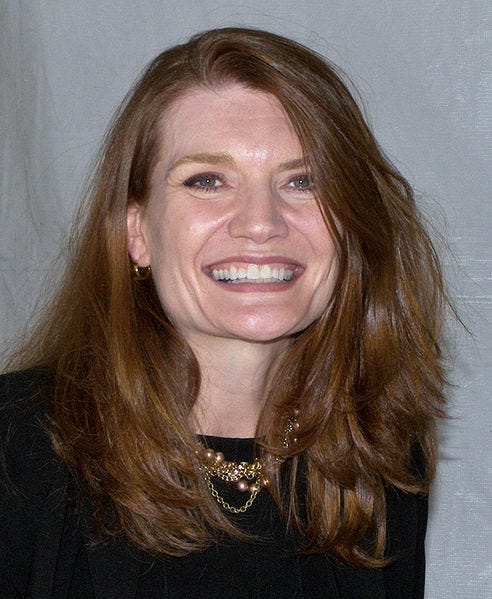
Walls lived her childhood as a nomad and was in a large part homeless. Her unusual parents with an eccentric lifestyle hopped from one city to another escaping poverty and sometimes law. She grew up on the run and barely made out alive in multiple circumstances. She is now a columnist for MSNBC and the author of a New York Times Bestselling Autobiography called Glass Castle that stayed on the chart for over 8 years.
Tara Westover
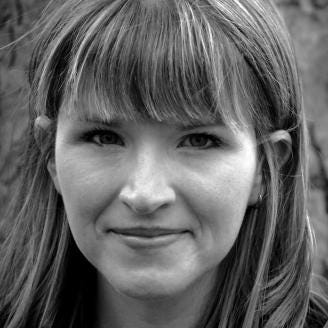
Tara Westover got her first real textbook as a teenager and never put pen to paper or attended school before going to college. She grew up in a family that believed apocalypse is around the corner and lived as such. They were off the government records and lived without hospitals or schooling. She is now a Cambridge graduate and the author of a New York Times Bestselling Autobiography — Educated, which is also one of Bill Gates’ favorite books (says he).
None of the above remarkable individuals seems to have had a rainbow-unicorn-flower garden childhood. Aside from the fact that they all had traumatizing childhoods, what else sets them apart? See if you can guess:
Elon Musk as described by Biographer Ashlee Vance was born into a very well to do and adventurous family in South Africa. He had already poured himself through two entire encyclopedias before high school out of sheer curiosity. He convinced his reluctant and Luddite father to buy him a Computer at 10 and taught himself BASIC programming language in an unbelievably short time. His grades were never the best in class but his enthusiasm for what interested him was extraordinary even by the global standard. He taught himself what he craved for despite being bullied and beaten to unconsciousness by his peers.
Jeanette Walls’ father was not merely an eccentric drunk but also an oddly loving parent. Jeanette’s father taught her skills that were beyond her age. She was forced by her circumstances to teach herself cooking at three, to survive in a desert without supervision while she was barely 10 and pick up skills to survive bullies in the extremely shady neighborhoods where the family always ended up.
As a child, Tara Westover spent hours teaching herself all kinds of skills. At times motivated by sheer personal will and at times because she needed them to survive her extraordinary circumstances. These ranged anything from what should have been her right to learn as a child, to bizarre things for a girl of her age. Examples being the ability to read and sing, operate heavy machinery in a scrap metal yard, helping new mothers in birthing, even canning fruit for a possible apocalypse.
If you haven’t noticed already, what the parents of these extraordinary minds gave them, knowingly or unknowingly was not hours of practice. It was not unlimited resources to buy the moon, not a vision and mission that never swayed. It was the tenacious ability to teach themselves! They were people that grew up free to be tormented by their idiosyncrasies.
This obsessive zeal to learn appears naturally in every child. Children constantly find themselves in dogged pursuit of comprehending the world they live in. This pursuit is interrupted, alas in the form of aiding, by adults who interfere with the free-flowing thought process and contain it into preconceived conventions. The right way to teach a child is, ironically, to let her be. It might seem counter-intuitive to today’s style of excessive coaching, after-school tutoring, and multiple hours of structured teaching. What characterizes a good method of learning is that it is self-taught. A child needs space, time, and self-application before an adult needs to interfere and feed along with his intelligence, his ignorance of the child.
The parents of these extraordinary minds gave them, knowingly or unknowingly the tenacious ability to teach themselves!
As anthropologist Yuval Noah Harari says in his book Homo Deus, modern schools are built along with the model of the industrial revolution — In squared classrooms that all look alike, children in uniform who appear alike move from classroom to classroom on the sound of a scheduled bell. It is no coincidence that a system built for aiding the assembly-line culture looks exactly like a mass-manufacture factory. This system needs a gradual upgrade to the discoveries and needs of the current world, which makes scientific and experimental discoveries around parenting common knowledge.
To underline the bottom line of the text, children are naturally curious and intelligent beings that, if let and aided by the resources and surroundings, would find their way. Self-learning is the key ingredient for an individual to develop at a young age to be able to apply one’s self fully and completely. Creating a safe environment where this can happen is the best a parent can do to aid the growth of the child and her zeal to learn.


