
The Secret for Eternal Life: Axolotl
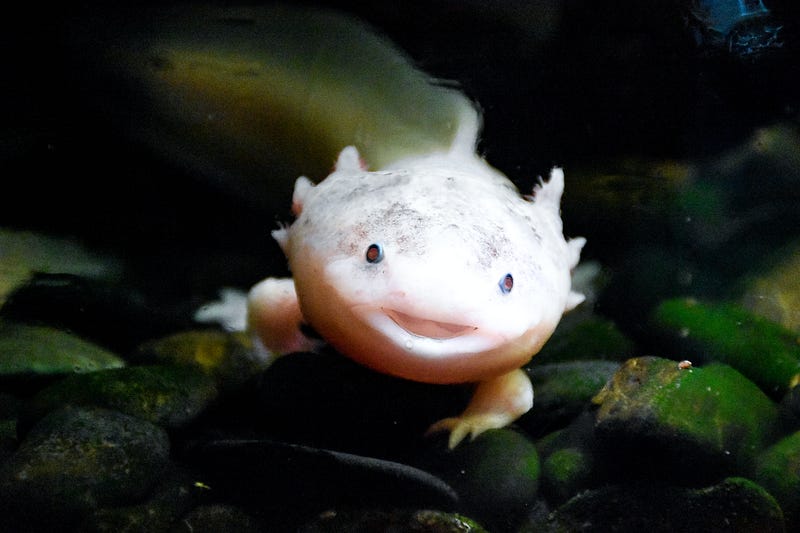
Hello, nature enthusiasts! Imagine a creature that has defied the very laws of life and evolution. A creature that has chosen to remain in its juvenile form throughout its life, retaining its youthful vigor and ability to regenerate lost body parts. This isn’t a mythical beast or a science fiction creation. This is the Axolotl, a creature so revered by the ancient Aztecs that its name translates to “water god.”
The Peter Pan of the Animal Kingdom
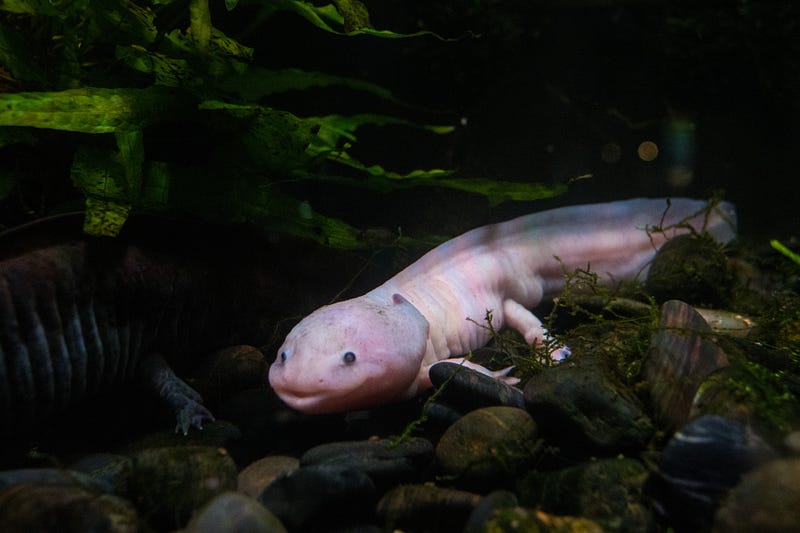
Axolotls, often referred to as “Mexican walking fish,” are not fish but amphibians. They are known for their strikingly unique trait of neoteny — retaining juvenile features into their adult life. Unlike most other amphibians, axolotls bypass the metamorphosis stage and remain aquatic with external gills, a trait that has intrigued scientists for years. But what exactly made axolotls halt their evolution process? How can they regenerate almost any part of their body, from limbs to spinal cord, and even parts of their heart and brain? Could the axolotl hold the secret to eternal life for humanity? Let’s dive into the world of scientific research to find out.
Research: Unraveling the Axolotl Enigma
While there isn’t a specific paper that directly answers why axolotls stopped their evolution process, several research studies provide insights into their unique biology and potential reasons behind their evolutionary standstill.
In the paper Living with the Past: Evolution, Development, and Patterns of Disease by Peter D. Gluckman and Mark A. Hanson, the authors discuss how early life environmental factors can influence the risk of developing chronic noncommunicable diseases in adulthood. This concept, known as ‘developmental plasticity,’ sheds light on the axolotl’s ability to adapt to its environment by retaining its larval traits.
Another study titled A major developmental transition in early xenopus embryos: I. characterization and timing of cellular changes at the midblastula stage by John W. Newport and Marc W. Kirschner, investigates the timing of the midblastula transition (MBT) in Xenopus embryos, a major developmental transition. This research provides insights into the axolotl’s halted metamorphosis, as MBT is a critical stage in an organism’s development.
Lastly, the paper Reactive Astrocytes: Production, Function, and Therapeutic Potential by Shane A. Liddelow and Ben A. Barres, reviews the production, function, and therapeutic potential of reactive astrocytes in the mammalian central nervous system. This is particularly relevant to axolotls, known for their remarkable regenerative abilities, including the ability to regrow entire limbs and parts of their heart and spine.
The Axolotl’s Evolutionary Standstill Simplified
In simple terms, axolotls have stopped their evolution process as a survival strategy. By retaining their juvenile traits, they can remain in water and avoid terrestrial predators. Their unique biology allows them to adapt to their environment and regenerate lost body parts, making them incredibly resilient.
The axolotl’s ability to regenerate is particularly fascinating. Unlike most other animals, axolotls can regrow entire limbs, their spinal cord, and even parts of their heart and brain. This is likely linked to their neotenic state, as their bodies are in a constant state of growth and development, allowing them to heal wounds and replace lost body parts with remarkable efficiency.
This extraordinary regenerative ability of axolotls could potentially hold the key to advancements in human medicine. By studying and understanding the mechanisms behind axolotl’s regeneration, scientists may be able to develop new treatments for human injuries and diseases, possibly even unlocking the secret to human regeneration.
The Immortal Beings of the Water World
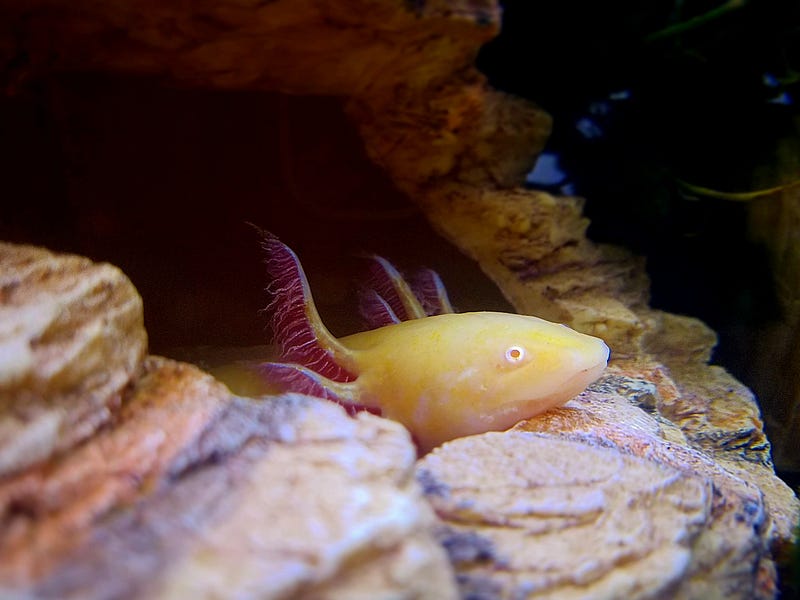
In conclusion, axolotls, these immortal beings of the water world, are more than just fascinating creatures. They are a testament to the adaptability of life and a symbol of hope for future advancements in human medicine. Their unique biology and extraordinary regenerative abilities have not only challenged our understanding of evolution but also opened up new possibilities in the quest for human longevity.
The axolotl’s story is a reminder of the infinite potential that nature holds. As we continue to unravel their secrets, who knows what we might discover? Could these ancient beings indeed hold the key to eternal life for humanity? Only time will tell. As we delve deeper into understanding the axolotl, we are not just exploring an amphibian, but a creature that might one day change the course of human health and longevity.
Your support has been instrumental in my journey, and I’m truly grateful for it.
- Stay connected and receive updates directly in your inbox, by subscribing to my email list
- How I express myself musically? Give it a listen:
Your engagement helps me to continue sharing valuable content. Thank you!
Sources:
- Newport, John W., and Marc W. Kirschner. 1982. “A Major Developmental Transition in Early Xenopus Embryos: I. Characterization and Timing of Cellular Changes at the Midblastula Stage.”
- Liddelow, Shane A., and Ben A. Barres. 2017. “Reactive Astrocytes: Production, Function, and Therapeutic Potential.”