
The Second Wave Is Here. German Government Decides on New Lockdown
So far, Germany has been luckier than other European countries. The infection rates were lower than in France, for example. But now the pandemic’s exponential spread is back, and the economy must be shut down again.
As recently as the summer, many Germans believed that the pandemic would soon disappear. The number of infections continued to decrease, and more and more relaxation of corona measures was granted.
But the experts warned that this apparent relaxation was only a snapshot. It was expected that the numbers would rise again in the cold autumn when people’s activities would shift more and more into closed rooms. There were urgent warnings against too much loosening of the measures.
But politicians could not bring themselves to consistently enforce or even tighten the rules they had issued. Too great seemed to be the fear of the loudly protesting corona deniers, thousands of whom protested in the streets and flooded the social media with conspiracy theories.
Violations of the obligation to wear masks were not consistently punished, and large private celebrations were not sufficiently controlled. Although Chancellor Angela Merkel warned early on that the number of new infections could rise to over nineteen thousand per day by the end of the year, the German states’ state premiers ignored her warnings.
As a result, today, at the end of October, we have almost 17,000 new infections in one day and another lockdown.
Timely and consistent action could have prevented many of the harsh measures that have now become necessary.
The rules of the new lockdown
Starting from 02.11.2020, all restaurants, bars, clubs, gyms, sports facilities, massage practices, swimming pools, theaters, and other cultural facilities will be closed again. No more than ten people from a maximum of two households may gather in public. Private parties are prohibited with immediate effect.
People should limit all contacts as much as possible. In old people’s and nursing homes, rapid corona tests are to be used to enable people to continue to visit their relatives. Employers are asked to allow as much home office as possible.
Schools and kindergartens are to remain open as long as possible, in contrast to the first lockdown. All stores will also remain open this time. However, there are stronger restrictions on the number of customers allowed. Each customer must have at least ten square meters of space in a store. This means that only ten customers are permitted in a store that is one hundred square meters in size.
A catastrophe for the gastronomy and cultural sector
The new lockdown is aimed at maintaining economic life as far as possible. For this reason, schools and kindergartens will remain open. The aim is to prevent tens of thousands of parents from once again being unable to work because they have to look after their children at home. Closures of production facilities and stores have not been decided for the same reason. This time, the economy takes precedence over truly adequate protection of the population.
To limit the number of personal contacts, nevertheless, the government could think of nothing better than to shut down all cultural and social life. The economy is supposed to get off scot-free for the most part, while culture and gastronomy are supposed to pay the bill.
Hope for gastronomes and artists?
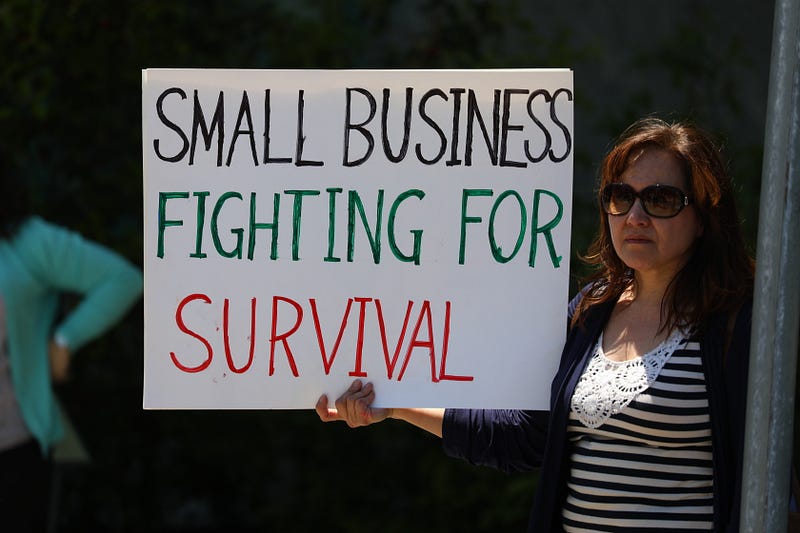
Following loud protests by restaurateurs, artists, and solo self-employed persons, the government has promised extensive financial aid.
Entrepreneurs directly affected by the lockdown are to receive up to 75% of the turnover of November 2019 as non-repayable emergency aid upon request.
That sounds like a fair deal. However, it remains to be seen whether the bureaucracy will manage to get these payments off the ground quickly enough. Many self-employed people have been up to their necks in it for weeks. There is concern that the announced aid may come too late for many.
Those who go bankrupt today have nothing to gain from funds that will flow in a week or two. Despite the announced aid, industry experts predict that up to two-thirds of all pubs, bars, discotheques, and restaurants will have to close for good.
Even though the planned help may save many self-employed people from bankruptcy, it comes much too late for many of them. When billions were spent in the first lockdown to save airlines and other large corporations, the small self-employed were largely ignored. Instead of non-repayable grants, most of them only received loans that they will have to pay back at some point.
Conclusion
Given the exponential increase in the number of infections, the German government could, of course, not remain inactive. But the severity of the measures could have been much less drastic today if the rules had been enforced more consistently in the summer. Many loosening came too early, and the reaction to the rising numbers came much too late.
The current measures are being carried out on the backs of those who have made the most effort to contain the infection figures. Restaurant operators and club owners have invested massive amounts of money in purchasing air filters, plexiglass panels, patio heaters for outdoor dining, and other equipment to protect their guests. The reward for these efforts is now a new lockdown.
No doubt, Germany had to act. But earlier, more courageous action would have made many of the bans now in place unnecessary. Now those who have been most disciplined in complying with the restrictions are suffering.
I hope that the government will do everything it can to save as many livelihoods as possible.
René Junge a published author writing on ILLUMINATION.
Receive weekly updates, and don’t miss any of my articles.
subscribe here http://bit.ly/ReneJunge