
The Science of Living Forever (or a Really, Really Long Time)
The modern quest for immortality, which began 30 years ago, aims to cure aging. But are we any closer after billions of dollars of research? And is there an upper limit to how long we can live?

Thirty years ago, scientists found a genetic quirk that doubled the lifespan of a lowly worm. The discovery, announced on Dec. 2, 1993, kickstarted the modern quest for human immortality or, at the very least, extreme longevity. The effort, championed by serious scientists and hype-prone futurists alike, has accelerated dramatically of late as vast fortunes pour into so-called “anti-aging” research aimed at developing a pill or therapy or mix of potions that would extend human life for decades or even centuries, or as idealists have framed the pursuit: forever.
And so, 30 years into this modern search for the fountain of youth, I set out to investigate a few key questions:
- Can aging be cured?
- How long can humans really live?
- What’s the true status of longevity research?
- Why aren’t we living longer yet?
- Would we even want to live forever?
Big money bets on aging reversal
The field of longevity science, at times overhyped and always intermingled with far less sexy fundamental research into age-related diseases, has long been funded by arguably stodgy universities, grants from the federal government, and R&D budgets at large pharmaceutical companies.
But the ultra-rich are funding the dream of immortality, or at least extreme longevity, through a surge of investments in small biotech companies that aim to utterly stop or even reverse aging of the human body and brain, should such a thing be possible.
More than $1 billion in venture-capital funding was invested in the top 50 longevity-focused startup companies in 2020. In 2021, a single new player in the field — Altos Labs — snagged $3 billion of funding, some of it from Jeff Bezos. More than a dozen billionaires like Bezos, Google co-founders Larry Page and Sergey Brin, and PayPal cofounder Peter Thiel have poured notable chunks of their vast fortunes into the quest for immortality.
Big investments seek even bigger payoffs. And that’s exactly what the wealthy are promising.
“There are all these people who say that death is natural, it’s just part of life, and I think that nothing can be further from the truth,” Thiel has said.
Framed more humbly by countless front-line scientists, longevity research down in the laboratory trenches seeks to prevent, slow or halt the progression of specific intractable diseases like cancer, arthritis or dementia, which in effect would allow many people to live longer (lifespan) and in better health (healthspan).
John Cooke, MD, leads cardiovascular science at Houston Methodist Research Institute. Cooke is embedded in one of the most prominent lines of longevity research, studying the effect on aging by the erosion of telomeres, the protective tips on chromosomes, thread-like structures that pack the blueprints of life, in the form of DNA, that directs the ongoing creation of fresh cells to keep us alive and well.
I asked him how far the science of human longevity has progressed these past 30 years, and when we can expect practical, significantly applicable breakthroughs.
“We have come a long way,” Cooke said. “Today we know much more about the mechanisms of aging. The fundamental insights into how human cells age will most definitely lead to novel therapeutic avenues for age-related disease in the near future.”
The definition of “near” remains to be determined. But in many ways, it’s happening now, with dribs and drabs of new revelations about how and why we age and how to outfox eons of evolution that confine us to a mortal existence.
Cooke’s team and other researchers have “reversed many of the signs of aging in human cells,” he said, including doubling the lifespan of certain human cells. “There are already data indicating that much of the dysfunction observed in aged cells in vitro can be reversed. Can this work be translated to individuals with age-related diseases? Yes, I think so.”
So… why is life expectancy declining?
Aubrey de Grey, a big thinker once considered in some circles as the “prophet of immortality,” claimed nearly 20 years ago that if you could survive another 25 years, the medicine and technology would be in place to allow you to live to be 1,000 years old. In 2017, de Grey said the first person to live for a millennium was already alive. Most recently, he declared the inflection point for such a breakthrough is 15 years away.
Shifting goalposts aside, how in the world could any of this be possible?
A common refrain among the most optimistic longevity proponents is that aging can be cured, which would mean — in effect — that people could stay a certain age for a very long time, or the aging process or parts of the process in individual cells and DNA, could be reversed, restoring an organ or an entire person to an earlier, healthier stage in life. If that prospect calls to mind Benjamin Button, Brad Pitt’s Hollywood character born as an old man who aged into childhood, then yes, you’ve got the rough idea, at least in its most extreme form (and it’s hard to fathom anyone wanting that life, right?).
Many longevity researchers, however, would be pretty thrilled just to add a few healthy years, or maybe a decade or two, to the typical person’s life.
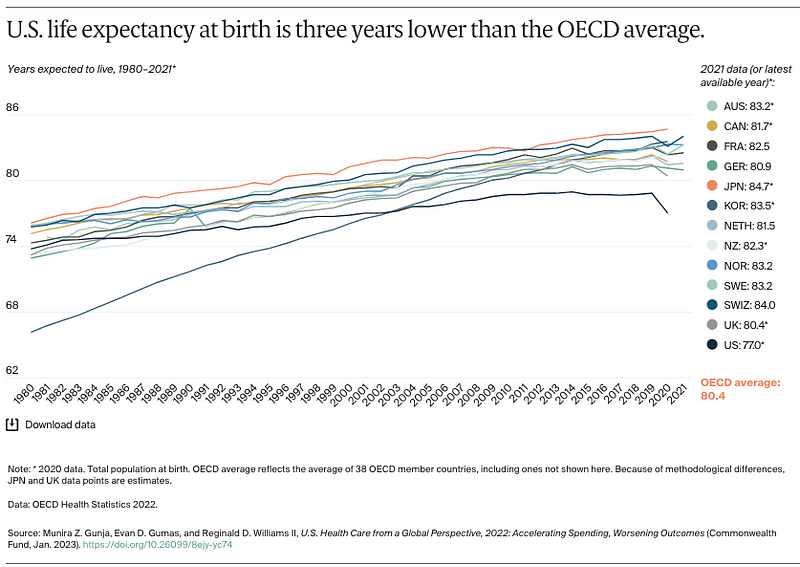
Yet after a century of life-extending advances in health and medicine that have fueled a near doubling of life expectancy since 1900, and even 30 years into this worm-inspired round of anti-aging science, average life expectancies in the world’s wealthiest countries have leveled off. In the United States, a hub of longevity research, life expectancy has been relatively flat for a decade and is now declining.
Here’s what many people don’t realize:
The remarkable extension of life expectancy in the last century is deceiving. It was not primarily an increase in lifespans, meaning how long any given person can live. It was derived mostly by increasing how long most people do live, on average.
In 1900, the leading cause of death in the United States was tuberculosis, spread readily amid filthy, crowded living and working conditions. Contaminated water and milk — before the advent of modern sewage systems and water sanitation, and dairy pasteurization in the 1920s — helped spread TB and many other deadly diseases. Solutions for these problems, as well as vaccines for infectious diseases like whooping cough in 1914 and diphtheria in 1926, then polio, measles, mumps, and rubella in the 1960s, meant countless children who would have died in infancy or adolescence lived to old age. Great advances in heart surgery and other medical techniques continued to extend average lifespans.
While all these advancements drastically changed the math of life expectancy — particularly for the well-off with access to excellent healthcare — they had less effect on how many years any given individual might hang around, the maximum possible lifespan.
Inevitably, the upward trajectory of life expectancy began to slow around the world in the 1950s and ’60s.
As a higher percentage of the population reached age 60, 70 and beyond, the disease and mortality landscape totally changed. We grew older, more frail, developed more chronic pain. New leading causes of death emerged, with heart disease and cancer topping the list and Alzheimer’s disease sneaking into the Top 10.
Given the most common ways people in wealthy countries die now — via failures within the body and mind linked at least partially to aging, rather than infectious diseases that science has figured out how to prevent or cure — it may take a lifetime to crack the complex longevity code enough to extend lifespans by a decade or two, let alone centuries or more.
Sure, understanding of the aging process has greatly improved over the past three decades. But meanwhile, we’re all missing a huge factor in human longevity: Key snippets of the longevity code — healthy behaviors already known greatly increase the potential years any given person might live — are embraced by only a fraction of most people in the United States and other developed nations.
Figuring out how and why we age
Back to that fateful worm: In 1993, microbiologist Cynthia Kenyon and her colleagues announced in the journal Nature their discovery of the mutation of a single gene in the roundworm C. elegans that doubled its lifespan, apparently by boosting its resistance to disease. As Kenyon told the story later, the discovery came at a time when biologists were realizing that in nearly all organisms, from yeast to humans, aging was driven by similar molecular mechanisms. “Furthermore,” she wrote, “the remarkable differences in lifespan that one sees between different species could potentially have arisen by changes in regulatory genes.”
(Giant tortoises and bowhead whales can live to around 200 years old. A species of Greenland shark, as well as quahog clams, can survive up to five centuries. Corals endure for more than 4,000 years. None of them match the durability of a species of jellyfish that’s able to revert to a polyp stage, kind of like the tadpole phase of a frog’s life, and then turn back into jellyfish, essentially achieving immortality, if they don’t get eaten.)
Optimism skyrocketed for the possibility of making similar gene-based discoveries in humans that would greatly extend our time on this planet. Scientists around the world ramped up research into ways to slow, stop or reverse aging in other creatures, including the requisite rodents, and also dogs and monkeys, and less often and only more recently, in people.
While tremendous progress has been made in the intervening three decades, nothing close to a silver bullet has been discovered. It’s become clear that the waters of perpetual youth will not flow from any single miracle medication, therapy or behavioral change.
“We are in a sort of renaissance around longevity research, and exciting new advances are made in the field every day,” said Calen Ryan, PhD, a research scientist at Columbia Mailman School’s Butler Aging Center. “These advancements have only reinforced the idea that aging is complex and multi-faceted, unlikely to be addressed through any one intervention in isolation.”
The human body and brain age because our cells and the machinery inside them wear out or cease performing their intended functions effectively. For us to stay healthy, old cells need to divide and create healthy new cells. They do this by making copies of their chromosomes, which hold the DNA, which is like the operating system for your being.
The amazing and complex process is ultimately flawed.
Each cell division shortens the ends of chromosomes, capped by those protective bits called telomeres. Think of telomeres as the plastic caps on the ends of shoelaces. When the telomeres get too short, the shoelaces fail — the cells can’t divide again. This is called senescence; the cells may keep functioning at a reduced level, but begin to cause inflammation that leads to illness. It’s akin to cells in a battery that can no longer be recharged: System failure is just a matter of time.
However, it’s not clear if we age and die because of sheer wear and tear on all our body parts and cells, or if death is programmed by evolution. The “programmed” theory, called “antagonistic pleiotropy,” holds that aging is a side effect of genes that evolution has selected for fertility first — we’re programmed foremost to reproduce early in life, immortality be damned. While both processes may be at work, researchers who lean into to the wear-and-tear theory aim to engineer solutions to our natural decline, to identify and fix the bugs or work around them. The programmers aim to reprogram our genetics, essentially rewriting the root operating system.
Either way, longevity researchers focus on myriad ways to repair organs and cells and what’s inside them, or to slow or even reverse their decline. In a recent paper, 21 scientists from several research institutions laid out the “hallmarks of aging,” including cellular senescence, microbiome disturbance, inflammation, and 11 other suspects for longevity sleuths to chase down.
Some of the most important findings in the field, however, don’t involve any fancy new drugs or technologies.
Research published earlier this month by Ryan and colleagues, for example, found that simply reducing calorie intake by 25% — not exactly a stretch goal given how Westerners overeat these days — slowed the pace of biological aging among healthy adults by 2% to 3%, representing a 10% to 15% reduction in mortality risk. Read: longer, healthier life. Rather than wait to see if people stay healthy across time or get sick and die prematurely, the study used “methylation biomarkers” in DNA from blood samples to analyze the pace of biological aging — a technique also used in rodent studies.
Similar studies have shown calorie reduction improves a variety of health markers that predict risk of heart disease, cancer and dementia. Eating less could extend the lifespan and healthspan of the majority of the U.S. population, right now, should people wish to accept the challenge.
We don’t have to eat less to live longer and healthier. Among other longevity-inducing behaviors that are largely ignored by or unattainable for much of the population:
- Eating well. Modern Western diets are atrocious, fueling dramatic increases in type 2 diabetes, chronic pain, dementia and other debilitating and deadly diseases. Eating junk food actually causes people to consume more calories. And by foregoing fruits, veggies, beans and other healthy foods, a person slashes their prospects for long life.
- Moving more. Solid research shows moderate physical activity — 22 minutes a day is a good minimum — extends lives and improves health outcomes along the way. That level of daily effort, via a brisk walk, for example — can lower the risk of heart failure by 63%, a study last year found.
- Sleeping better. Getting sufficient, quality sleep dramatically lowers the risk of everything from heart disease to dementia, by rejuvenating the brain and all the cells in the body and reducing stress and anxiety.
If everyone could do a reasonable job of all these things, a whole lot of people would live several years longer. There’s zero doubt about that.
I want my miracle drug
Lifestyle changes are hard, however. And our life-shortening habits are deeply ingrained in how we eat, work, play and worry.
More than half of all calories consumed in the United States and the U.K. are from highly processed junk food. Roughly 76% of U.S. adults don’t achieve the recommended minimum physical activity level. Around one-third of U.S. adults don’t get enough quality sleep. Extreme stress has become a daily companion for more than a quarter of Americans.
We want pills!
The promise of miracle life-extending drugs right around the corner resonates in the media and with the public. The more they tout “anti-aging” or “reversing aging” or the prospect of outright immortality, the better. In reality, increasing human lifespans in any significant way is likely to involve a mix of scientific breakthroughs and good old-fashioned smarter living — stuff we already know works but most of us shun or are prevented from achieving, whether due to lack of time, energy, money or a range of social and circumstantial disadvantages.
“While pharmacological interventions will no doubt become more prominent in the anti-aging landscape in the coming years, I think it would be a mistake to forget about things like exercise, proper nutrition, clean air and water, and healthy social relationships,” Ryan told me. “These more fundamental behavioral and environmental factors no doubt form the bedrock for living long, fulfilling, and healthy lives.”
Meanwhile, most Americans could live a lot longer starting almost immediately if cultural norms and a substandard healthcare system didn’t work against us. A new report from the Commonwealth Fund reveals that the United States spends far more per capita on healthcare than any other high-income country — nearly twice that of second-place Germany.
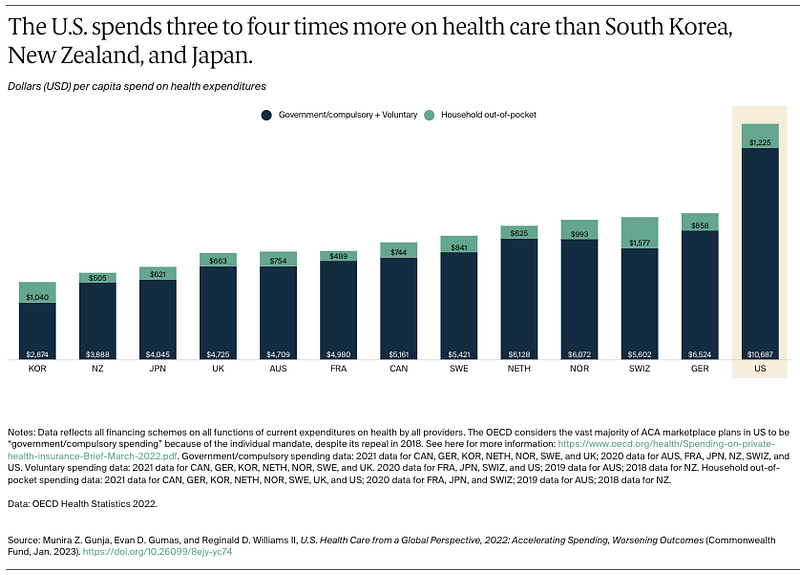
Yet the costly U.S. approach to healthcare — relying heavily on emergency rooms for basic care and scoring a near-failing grade for disease prevention — is a statistical failure. Among the wealthiest countries, the United States is the only one without universal health coverage, and it has the…
- Lowest life expectancy at birth
- Highest death rates for avoidable or treatable conditions
- Highest maternal and infant mortality rates
- Highest rate of people with multiple chronic conditions
It’s fair to ask: Can a pill, or even multiple longevity potions, reverse the trends of rising obesity, diabetes, insomnia, persistent pain, depression, dementia and other chronic diseases and actually allow longer lives that are worth living?
To infinity! (or at least 150 years)
The prominent Harvard scientist David Sinclair, among anti-aging’s most avid and visible proponents, bursts with hope on the podcast circuit. Sinclair has made a career of the quest for adding decades to the human lifespan, as a scholar and author of the 2019 book Lifespan: Why We Age — and Why We Don’t Have To, and by co-founding multiple biotech companies.
Sinclair claims that by experimenting on himself, he’s become biologically 10 years younger than his actual age. And he looks the part, wrote Catherine Elton in Boston Magazine after interviewing the scientist and riding in his Tesla to visit one of his companies. “At the same time, Sinclair is one of science’s most controversial figures, regarded by many as a slick salesman who overhypes his work and its potential,” Elton wrote.
Much of the criticism centers around Sinclair’s scientific objectivity, since he has a strong financial interest in promoting the possibility of really long life. Sinclair says the first person who’ll live to be 150 has already been born, what with science on the cusp of halting or even reversing the molecular processes of aging.
“Over the last 20 years, there have been a number of molecules that have been found to retard the aging process, at least in animals, and potentially a couple of drugs that are in humans,” Sinclair is quoted in the Harvard Gazette. “That made me optimistic that somebody who might make it to 150 has already been born… We’re exploring the possibility that when we reset the age of the body, diseases like Alzheimer’s and cardiovascular disease go away.”
The idea might sound outlandish until you consider that a child born today, who might naturally live to be 100, has a full century of future discoveries ahead that could help her live even longer.
“A child born today will live into the 22nd Century, when it is possible [that] age reversal will be possible,” Sinclair told me.
Still, the prognostication that 150 is currently within reach, or that we’ll ever achieve immortality, are stretch goals that, for now, remain beyond the expectations of many scientists.
Consider what Jeffrey Flier, a former Harvard Medical School dean who has been critical of the hype, told Kaiser Health News in 2019: “If you say you’re a terrific scientist and you have a treatment for aging, it gets a lot of attention. There is financial incentive and inducement to overpromise before all the research is in.”
I asked Sinclair what he would say to scientists who criticize his exuberance.
He said “a considerable amount” of what he wrote in Lifespan has already come true: a pandemic, home testing, bio-monitoring. Also, he said, in addition to the billions pouring into research, there are more than 25 clinical trials of medicine in progress now, aiming to slow or reverse aging.
“If anything, I was too conservative,” he said. “In our research, and in labs around the world, it is now commonplace to reverse aging. For example, we can reverse blindness by rejuvenating the eye.”
Recent research on mice by two separate groups, one led by Sinclair at Harvard, the other by the company Rejuvenate Bio, got a fair amount of this attention, generating another round of optimistic “aging reversed in mice” headlines. But as often follows such bold claims — reversing aging is far different from slowing the aging process, after all — scientists not involved in the research were cautiously optimistic. “I would say it is provocative — possibly a breakthrough,” Steven Austad, PhD, who studies the biology of aging at the University of Alabama, Birmingham, told the online news site Science. “But it will need to be replicated and the mechanism explored before we can say for sure.”
John Cooke, the Houston Methodist longevity researcher, reminds us that the many advancements in the field — and some of them are truly amazing — indeed require further research and more testing in animals, and then, critically, testing in human clinical trials, before any of it adds up to significant extension of human lifespans and healthspans.
“Down through the ages, unscrupulous people have taken advantage of people’s natural fear of disability and death,” Cooke told me. “Accordingly, healthcare providers nurture a healthy skepticism for claims regarding any new therapy until it is rigorously tested in randomized clinical trials. Also, it is important to calibrate one’s enthusiasm for exciting pre-clinical studies, because studies in mice and worms often do not translate into improving the human condition.”
And therein lies perhaps the most significant near-term benefits of longevity research: the ongoing, mostly gradual development of remedies and even cures for debilitating and deadly diseases.
It would seem patently wonderful if money invested by billionaires or intensive research funded by universities or the U.S. National Institute on Aging cures maladies or generates helpful treatments — and the results are shared with the non-ultra-rich. Imagine living to a ripe old age of 80, or even maybe 100 or 110, without losing your mind or spending years in chronic pain. It’s easy to envision life being better if, say, one could avoid dementia or cancer or irritable bowel syndrome until some final night when the last breath slips quietly away during sleep. Such improvements in healthspan do seem highly likely. And beyond the headlines, longevity researchers are publishing results on potential remedies for lesser-known diseases — breakthroughs that can shed light on how to thwart aging more broadly.
Progeria, for example, is a rare disease that causes children to age rapidly. Most don’t live beyond age 13, losing their hair, becoming old-looking, and often dying of heart attacks or stroke. Scientists have been trying to figure out how to correct a genetic mutation that causes progeria.
Cooke’s team took a different approach. They zeroed in on the fact that the telomeres — those protective tips on chromosomes — are shorter in kids with progeria. Using a technology called RNA therapeutics, they triggered certain cells to do their job better, to produce a protein called telomerase, which lengthens the telomeres. While the research is ongoing, its implications go beyond one disease.
“We all have telomere erosion over time, and many of the things that happen to these children at an accelerated pace occur in all of us,” Cooke said. “What we’ve shown is that when we reverse the process of the telomere shortening in the cells from these children and lengthen them, it can reverse a lot of the problems associated with aging.”
Nonetheless, fending off all human ills to the point that we survive beyond some reasonable biological ceiling — and do so in good physical, mental and emotional health such that we can enjoy those infinitely extended years — would require a monumental set of breakthroughs.
Thirty years and billions of dollars since Kenyon’s breakthrough on worms, ultimate success still seems a ways off.
The odds of dying
The degree to which human lifespans can be extended depends on a big theoretical unknown: whether there’s practical shelf life that would dictate a maximum possible expiration date for human beings, or if there’s a “mortality plateau,” which would mean once we’ve avoided or survived the many ills of existence, we reach a plateau after which there’s no cap on longevity.
The latter idea gains some support from a statistical curiosity dubbed the “Gompertz law of mortality.”
The odds of dying roughly double every eight years through much of adulthood, according to calculations made in 1825 by British actuary Benjamin Gompertz. The odds a randomly selected 33-year-old person will die within a year are about one-in-1,500. Eight years later, at age 41, the odds double, to 1-in-750. And so on. The pattern is different for men and women, and it’s changed over the two centuries since, as life expectancies have improved. But it still holds roughly true across many countries and even with the latest U.S. actuary tables.
Gompertz’ law — more of a guideline, really — breaks down compellingly at a certain point, and this is what offers hope for extreme longevity:
If you make it to age 80, the odds of dying each year stop rising so fast. Live to 105 and you reach a statistical plateau, where the chances of kicking the bucket each year level off to about 50/50, according to a 2018 study published in the journal Science.
“If there is a mortality plateau, then there is no limit to human longevity,” said Jean-Marie Robine, a demographer at the French Institute of Health and Medical Research who wasn’t involved in that research.
Best we know now, those odds eventually get you, however.
Consider the longest documented life so far: Jeanne Calment of France, who died at age 122 in 1997. Across industrialized nations, only about one person in 6,000 lives to be 100 or older, and one in five million survives past 110. Analyzing all the data on these so-called “superagers,” scientists used complex probability calculations to estimate the odds that a human might eventually live to be…
124 years old: 99% 127: 68% 130: 13% 135: “extremely unlikely”
“Our research provides evidence of an existing theory of no absolute cap to longevity, but a practical cap,” study leader Michael Pearce, a doctoral student in statistics at the University of Washington, told me when the study was published in 2021. “Even though we leave open the possibility that someone could live to extraordinary ages like 150 or 200 in the coming centuries, it is very, very unlikely.”
Fear of an endless future
Regardless what science makes possible, it’s hard to imagine the emotional, social and economic strains that would ensue if humans lived a mere two or three decades longer, on average, let alone forever.
Would we get supremely bored? Would we handle stress and anxiety better or worse? If medicine promised eternal life and good health, would we settle into decades of binge-watching other immortals on Netflix while munching nothing but Doritos? Would we value life differently? Where would we put everybody? Would we keep making babies well into what used to be called old age or would we have to stop all procreation? What about relationships? (I can’t imagine my wonderful wife, patient as she is, putting up with me for a whole ’nother century.)
To see what others think about all this, I conducted a non-scientific straw poll with 349 respondents on Mastodon, asking one simple question:
If you could live forever, would you even want to?
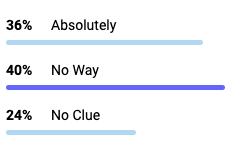
I also invited related comments on Mastodon and on Facebook. Here are a few that’ll give you something to ponder for years and years (disclosure: I know two of these people personally):
“The inevitability of death is what makes life worth living.” — Henry
“Would we need to extend the years everyone should continue to be in the workforce, in order to pay for those not contributing?” — Marianne
“Imagine you have people with all the prejudices they grew up with and they never die. Or you have someone who is a dictator and they get to live forever and be dictator forever. Or you have Congress where you have 80 and 90 year olds holding office forever but now they never die so nobody new can take over.” — Avram
“At what stage of our life we end up living? Forever old? Forever teen? Forever 30–50 years old?” — Pablo
David Sinclair takes a different perspective on the fate of the economy. He figures that longer, healthier lives would be a net positive for the economy economist Dean Baker has argued similarly).
“Extending lifespan by one year would add $86 trillion of value to the U.S. economy, while 10 years would add $365 trillion,” Sinclair estimates. “The extension of healthspan would provide enormous wealth because people will stay healthier and more productive for longer, rather than be a burden on the economy.”
Good news: Death remains inevitable
Not to worry, folks. While the fountain of youth may soon start trickling your way, full-on immortality won’t happen anytime soon.
Even Sinclair acknowledges that much. “Absent immortality, which I don’t believe we’ll have any time within the next few thousand years, we’re all going to die,” he said last year, while also acknowledging that getting really old isn’t exactly the goal. “It’s all about extending youth, not extending old age.”
And if you’re already old, well, sucks to be you, the culture of anti-aging would suggest. Which brings me to…
The mere quest for immortality, or aging reversal, or anti-aging or however it’s presented, packs its own potentially negative consequences right now.
The idea that aging is a disease that can be cured, that we should all wish for an anti-aging breakthrough to live forever, or at minimum much longer than nature intended — and presumably while young and dynamic — exacerbates ageism and creates pointless fear of aging. It can lead to excessive popping of unnecessary vitamins and dubious supplements and the outlay of billions of dollars on anti-wrinkle creams and dangerous cosmetic surgeries and a cultural fear and loathing of being old which, by the way, just creates anxiety that makes us grow old faster.
“Human death is inevitable,” says Fernando Colchero, PhD, an associate professor of statistics at the University of Southern Denmark. “No matter how many vitamins we take, how healthy our environment is or how much we exercise, we will eventually age and die.”
Perhaps, though, the inevitable can be delayed a bit longer, and maybe that’d be a good thing. “Medical science has advanced at an unprecedented pace,” Colchero says, “so maybe science might succeed in achieving what evolution could not: to reduce the rate of aging.”
I asked Cooke whether he thinks there’s a natural limit to human lifespans, or if there might be a “mortality plateau” that could allow lifespans to be extended by decades, or even centuries, or possibly to the point of immortality.
“I don’t know about centuries,” he said. “But I do believe that the healthy lifespan can be extended by decades, using a multi-pronged approach that addresses the major processes involved in aging.”
You, me and all the billionaires and longevity researchers alive today are going to die, probably before some of us might wish to. Meanwhile, my money is on making the best of our time here and now, even as hair falls out as fast as wrinkles emerge and the joints start to creak, while embracing healthy behaviors that offer the best shot at living a long life and staying as healthy as possible to the natural end.
Note: This article was updated Feb. 16 to include additional comments from David Sinclair based on questions I’d asked him and the answers he provided after initial publication.
Your support makes my health and wellness writing possible. You can sign up for emails when I publish on Medium, or join Medium to directly support me and gain full access to all Medium stories, get my health news briefs on Mastodon, or check out my book: Make Sleep Your Superpower: A Guide to Greater Health, Happiness & Productivity (paperback or Kindle version). — Rob