
The Science of Hooking You onto Something
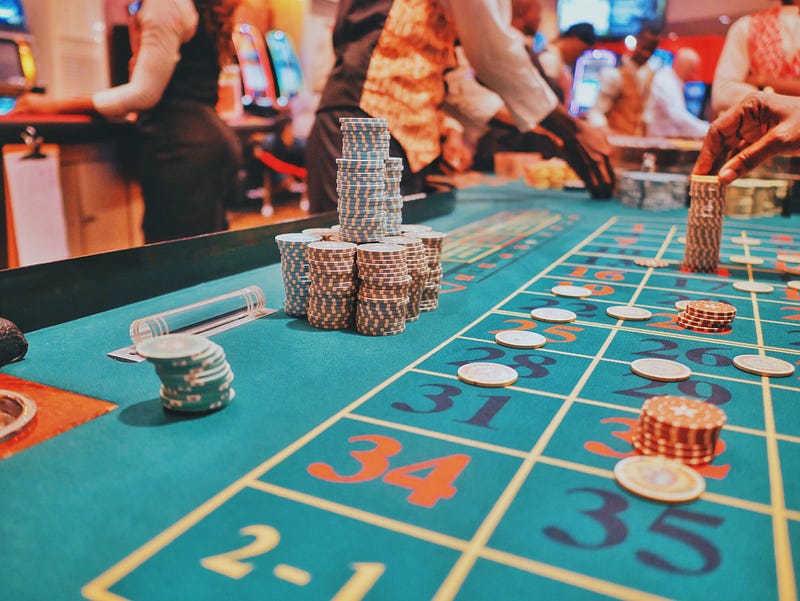
I dislike gambling because I always lose. I thought about this as my uncle and I sat at a roulette table.
He waited for the ball to be spun first, then he would put a chip on 17. Every time. He picked tables with more players so the casino couldn’t target him. If a few high numbers came out, the area would turn cold; you must look elsewhere.
I stood there scratching my head. He told me how he always won because his system worked.
I looked at the nicely dressed personnel, expensive furniture, and shiny decoration. Everything in Vegas reeks of expensive; yet, somehow, everyone’s a winner.
I took my wallet out reminding myself that I will only play until the restaurant reopened. Two more hours to go.
While betting, I asked passersby which numbers they liked and bet on those. I tried randomizing my choices. So, I let the seconds on my watch decide my fate. If possible, I would flip the numbers. I would bet on 25 because the second read 52.
I used the minute hand too. If it was an even, I chose black; if it was odd, red.
It made no sense whether I picked this or that number. If, instead of numbers, there would be Chinese characters written. The results would be all the same. Why break my head over which number to pick?
Soon after, I was wiped out. I had just enough time to drink a Jack and Coke.
“That had to be the most expensive whisky,” said my uncle grinning and raking up more chips. I laughed and, for the first time, agreed with him.
All this made me ponder. What is it about the human mind that compels us to bet on arbitrary rules? What makes us hooked on something and why do we gamble?
Even if you don’t gamble, can Medium use some of these strategies to keep us writing?
Conditioning and Our Reward System
If an outcome is pleasant, we repeat that action hoping to provoke it.
Our brains release dopamine when a decision is coupled with a pleasurable outcome; dopamine reinforces this behavior.
Reward Schedule
If we put a dollar or two into a vending machine, we would expect to get something in return. If we don’t, we could try once more and then never more. This behavior goes quickly extinct.
If we put a dollar in a claw machine or toy crane, it will take longer for this behavior to go extinct. We could easily return to this same machine until the amount of money we put in exceeds the price of a few toys.
Why is that?
A behavior is more likely to be repeated if the reward is on a variable schedule. In other words, a variably rewarded behavior is more resistant to extinction.
Let’s say we put a rat in a box with a lever. We then train the rat to pull that lever. Sometimes the rat will get a treat, other times it won’t — at random intervals. The rat will pull that lever for a longer time and more constantly than if we reward it at a fixed interval.
We humans, like following a trail of breadcrumbs, let ourselves be led this way. When gambling, we are hooked on those small breadcrumbs, turn a blind eye to our losses, and keep following the trail toward our trap.
Extra Reinforcement
Faster Pace
What makes newer video games more entertaining? They are faster-paced. In this same manner, gambling is evolving into a faster-paced game.
Online poker games now have a function where if you fold your hand, you are immediately seated at another table where you are dealt a new hand.
While in Vegas, I played two simultaneous roulettes. One was spinning, while I bet on the other one. That was vastly more entertaining; and sure enough, I played longer on that one.
“Speed of play has been identified as a key structural characteristic in gambling behaviour, where games involving higher playing speeds enhance the experience of gambling.”¹
Beating The House
Ganging up with family and friends at the casino is fun — especially if winning. Somehow a dollar from the casino is worth more than a dollar from another player.
In our attempt to beat the house, we find patterns. Our minds are exceptionally fast at finding patterns from a small sample size. This short-sightedness is detrimental when gambling. Even more so when we rely on these heuristics to “consistently” beat the house and ignore the odds.
License to Dream
We gamble because we buy the possibility of a big win. Take for example lottery players, some of them check the winning numbers a few days after they have been announced. In an attempt to squeeze a few more days of dreaming, they hold on to the ticket; a license to dream.
Peer Praise-sure
I remember the first time everyone complimented me on a relatively big win. I stood there unsure of what to say. All I did was put chips on top of a random number. Aside from the legality of it, a five-year-old could do it.
I thought about saying the only well-played game would be a never-played game, but I didn’t want to be a killjoy. So, I just replied thank you, smiled, and commented on a well-played round the others had made.
This praise from our peers contributes to the release of more dopamine. It feels good to be praised.
Casinos love winners too. You never see casinos being sour losers. They, in fact, take pictures of big winners and show off big checks.
And I sure love seeing people win too. Sitting at a table where everyone is winning is fun. The contagious excitement energizes you. Even dealers love winners because it means more tips.
How Do Casinos Win Then?
When playing roulette and betting red vs black, it seems that it is a 50–50 proposal. But there are two additional green numbers (0 and 00). These two numbers give the house a small edge. An edge that could make the richest man go broke in the long run.
For the casino, it is not a matter of whether they will win or lose. It is a matter of keeping you there, seated and betting.
They make you feel like royalty surrounded by luxury. They take a long time to bring you free drinks, congratulate you, and have fun with you. All this while you play a game stacked against you.
We aren’t our allies either. We lie to ourselves and minimize our losses.
We may win here and there, but in the long run, we are doomed to lose. And it is okay as long we are aware of this and play moderately.
A Quick Word on Compulsive Gaming
Everyone has their reasons to play. But it can turn into a problem when gaming overrides our better judgment.
Having financial problems because of gambling; maybe finding yourself constantly thinking about playing; or maybe you need bigger and bigger bets to create the same high; these are all worrying signs of a gambling problem.
There are a lot more signs. Here is a link with a couple of screening questions.
Take care and play responsibly.
Medium May Be Doing This
I sometimes wonder whether Medium does the same with us. They reward us on a variable schedule.
I used to wonder how the algorithm works. Whether length, day of publication, or certain topics would be printed on more screens.
I assume that part of the algorithm is influenced by AI. This complicates trying to figure out what is going on. AI seems to operate behind a black box. Just like we don’t know how our mind works, AI suffers from this same problem. We don’t know exactly how it works.
Anyways, I am not saying I have any evidence, but it does feel that every few articles do way better than others — on a variable schedule.
That is how they keep us here, writing and grinding.
Works Cited
1. Harris, A., Gous, G., de Wet, B. et al. The Relationship Between Gambling Event Frequency, Motor Response Inhibition, Arousal, and Dissociative Experience. J Gambl Stud 37, 241–268 (2021). https://doi.org/10.1007/s10899-020-09955-0


