
The science of good decision-making
(Introduction to Economics, Lesson 7)
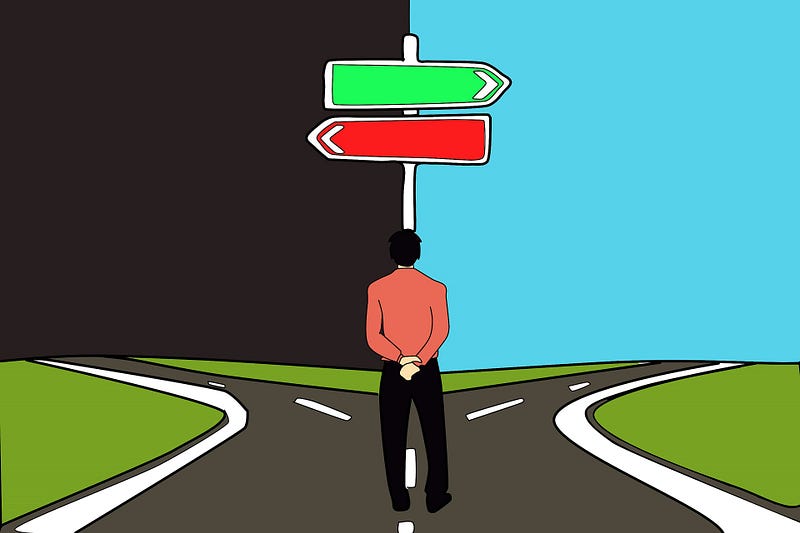
Economists are fascinated by people’s decisions. We look at the decisions people make and wonder whether they — and the societies they live in — could have been better off if they had made different decisions.
In order to learn to make better decisions, it would seem sensible to start by asking: What makes a decision a good decision? One possible answer to this question is that a decision is a good one if there were no better options available. This brings us to one of the most central and important concepts in all of Economics: Opportunity Cost.
The idea behind ‘opportunity cost’ is that every decision we make, every option we pick, has a very real cost. We’re not talking about money here, of course — we’re talking about something much more important. We’re talking about lost opportunities.
Every day, we face choices. We have to decide between alternative options. And many of the most important decisions we have to make are about how we use our scarce and valuable resources.
For example, we have limited reserves of oil and we are also limited in terms of how much we can extract and refine each year. We have to decide how each barrel of oil will be used. Some projects get the oil they need, but we don’t have enough oil for every project we can think of — so, somewhere along the line, some other projects are going to lose out.
When we use oil to fuel our car on the school run each morning, when we could have walked the kids to school, we’ve effectively taken that oil away from someone else or from some other purpose. That fuel could have been used to take vaccines to a poor community in the developing world. Thanks to our decision to use that fuel for the school run, that poor community may have to go without. An important opportunity will have been missed.
When an option is chosen, that option may bring us many benefits — but, at the same time, we are missing out on the alternative options that we turned down and we are foregoing the benefits that the best one of those options could have brought us. The concept of ‘opportunity cost’ is simply that we might judge an option by asking whether a better one is available.
The ‘opportunity cost’ of a decision is equal to the value of the benefits you miss out on as a result of choosing one option over another. If the benefits from an alternative option would have been more valuable than the benefits you’d receive from the option you actually chose, then perhaps you made a poor decision and chose the wrong option!
As a simple example, the real cost — the opportunity cost — of going to the cinema last night and watching a film was not five pounds (or however much a ticket costs now). The real cost of going to the cinema is the benefit I (and, indirectly, others) would have received if, instead of going to the cinema, I had, for example, read a book.
I’m not talking about a book that I would have read anyway. If I didn’t go to the cinema, then I could have read an extra book — an additional book that I otherwise wouldn’t have read. If I could have read such a book that would have been far more entertaining and far more educational than the film I watched at the cinema, then going to the cinema doesn’t seem like a very good decision. I could have spent my time more wisely.
Our societies generally obsess about financial costs — looking at how much things cost us in terms of the money we spend. But, compared to opportunity cost, financial costs are insubstantial and almost meaningless. For example, we might say that the financial cost of providing a hospital bed is five hundreds pounds a day. But what does this really mean? What does it mean in human terms? Not much really!
Now let’s think of that hospital bed in terms of opportunity cost. A hospital can only treat a limited number of people at any one time. It has, as we describe it, a limited number of ‘beds.’ Not everyone gets the operation or treatment they desire, so a decision to treat one patient is, effectively, a decision to deny treatment to someone else. The true cost — the opportunity cost — of providing a patient with a hospital bed for a day is that some other person has to go without a day’s treatment. Some such people will die as a result of not having had that treatment. Others will merely suffer additional pain and discomfort. This seems especially tough if the person who got treatment only needed treatment because they smoked too much, drank too much or ate too much!
Opportunity costs can be very, very real and painful costs.