
The Science Behind Baking Those Sinful Goodies: Know Your Ingredients.
Find out how simple ingredients reacts chemically to make those delightful baked goodies.
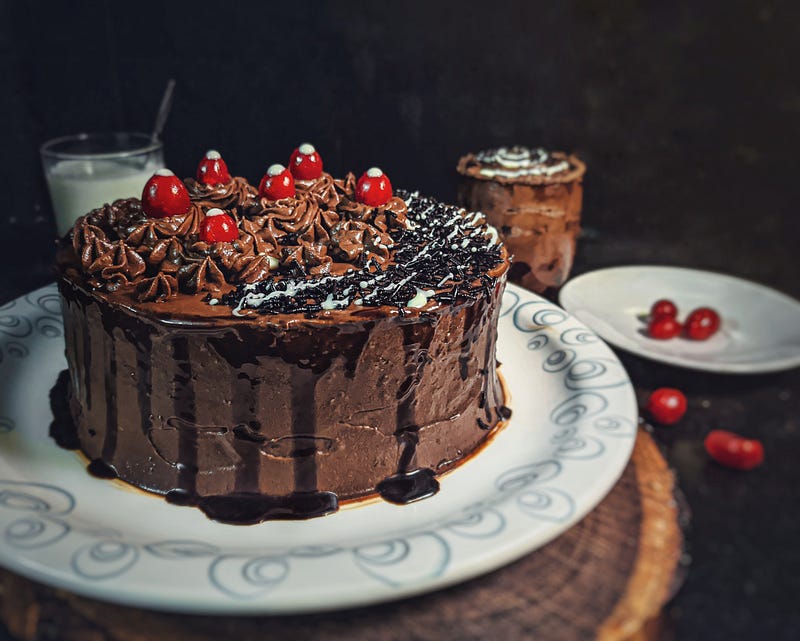
When you bite into a piece of delicious chocolate cake or when you bake those heavenly cookies, have you ever wondered about the reason why a combination of such simple ingredients like flour, sugar, eggs, butter can give such delicious results?
What happens behind the scenes that transform the almost tasteless ingredients into such mind-boggling delicacies?
Let’s unravel the science behind the art of baking.
What is Baking?
It is a method of preparing food using dry heat, usually from an oven, to combine certain ingredients to make bread, cakes, and cookies. In an oven, dry heat is transferred from the outer surface to the center. The heat transforms the dough into baked food that has a hard exterior and a soft interior.
The ingredients of baking-
The primary ingredients used in baking are:
Flour-
It provides the texture and density to the baked products. Without flour, your bread or cake will not have a shape or structure. When flour is combined with any liquid, it forms an elastic-like substance called gluten. It provides the base in which the leavening gases can work their magic in making the final product of baking.
Sugar-
Besides providing the apparent sweetness and flavor in baking, sugar also makes the gluten moister and tender. It increases the baked good’s shelf life by keeping them soft, tender, and hydrated for a long time. Adding sugar with yeast activates the yeast before baking to help the batter rise.
Butter-
It provides a creamy taste and flavor to the baking products. When sugar is creamed with butter, the sugar cuts into the butter, causing a buildup of tiny air pockets to leaven the cake. Butter also adds to the taste of the baked goodies making you crave for more.
Eggs-
It is a leavening agent and helps in getting the perfect texture while baking food. The yolk in the egg has fat that adds flavor to the baked items and leaves a glistening smooth outer lining.
Salt-
Any food without a bit of salt will taste bland. Salt balances the sweetness of the cake. It is also a primary ingredient in savory baked food. Where yeast is used for baking, adding salt helps in moderating yeast’s effect to not rise too quickly.
If yeast rises too quickly, the baked product will lack the proper texture in the final product.
Baking Soda/Baking Powder-
They are leavening agents that combine with gluten and starch release CO2 that help the baked items rise. To have perfectly baked food, the proportion of these two items must be very accurate. They are not interchangeable in a recipe as they give slightly different results. Make sure to add them if and when the recipe requires and at the exact proportion as needed.
Baking Soda Vs. Baking Powder-
Baking soda is Sodium Bicarbonate, while baking powder usually has an acidic component like cream of tartar and a starch (a drying ingredient) added to it.
If only pure baking soda is added, the mixture must be baked immediately as the chemical reaction starts happening almost immediately, causing bubbles to appear in the baking mixture. If left idle, the mixture will not rise, resulting in flatter baked products.
Baking powder has an acidic component which allows it to be left a while before baking. The double element releases CO2 at a slower rate, allowing you to take your time with the baking process.
Now that you know the science that works in the background while you make your lovely cakes, you must be wondering how the entire process works as a whole?
Here is how the entire scientific process of baking happens right from when you assemble the ingredients until you take the delicious cake out of the oven.
Step-1
Mixing Sugar and Butter-
When you mix sugar and butter at room temperature, the sugar crystal cut into the soft butter trapping tiny air pockets in between. The air trapped in the layers makes the mixture look soft and fluffy.
Step-2
Add in the Eggs-
Eggs hold the mixture together by adding protein to it. The protein layer binds the mixture and forms a shiny coating that prevents it from collapsing while baking in the oven.
Step-3
Fold in the Flour-
The flour gives body to your cake. It has gluten that, when combined with butter, eggs, and sugar, helps in providing a structure to the cake.
Step-4
Add Baking Soda/Baking Powder
Add the baking soda to the mixture immediately before putting it in the oven. If adding baking powder, you can add it in Step-3 with other dry ingredients like flour, cocoa powder, or any other flavor you might want to add.
Baking powder/baking soda acts as a leavening agent that, when mixed in the dough, releases CO2, helping the mixture rise in the oven.
Step-5
In the Oven
As the batter gets heated up in the oven and the temperature reaches 300-degree F, the Maillard Reaction occurs. It is a chemical reaction between sugar, amino acids, and proteins that leads to an outer browning of the baked product called the crust.
Step-6
Final Product
After the entire heating and the subsequent cooling process, your cake gets finally ready to be savored.
Resources:
https://pepper.ph/science-baking/
https://www.thespruceeats.com/baking-ingredient-science-481226


