
The Scandalous Life of Augustus Caesar’s Rebellious Daughter
Julia was exiled by her own father.
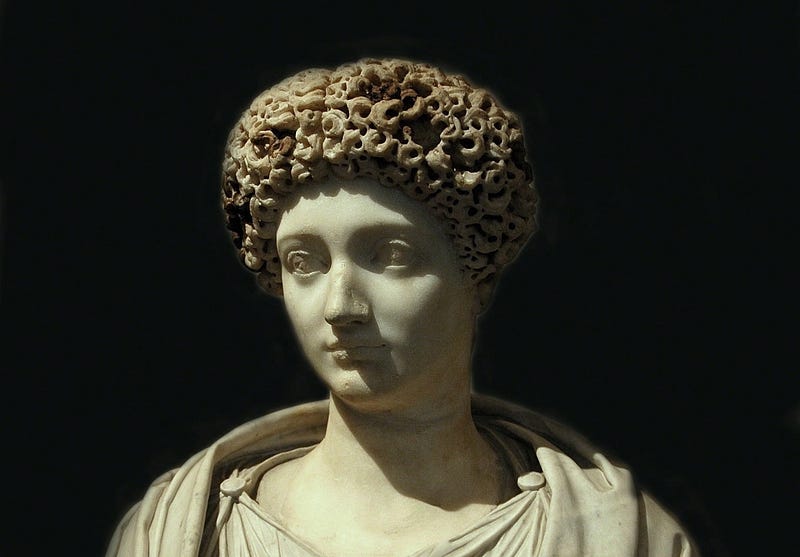
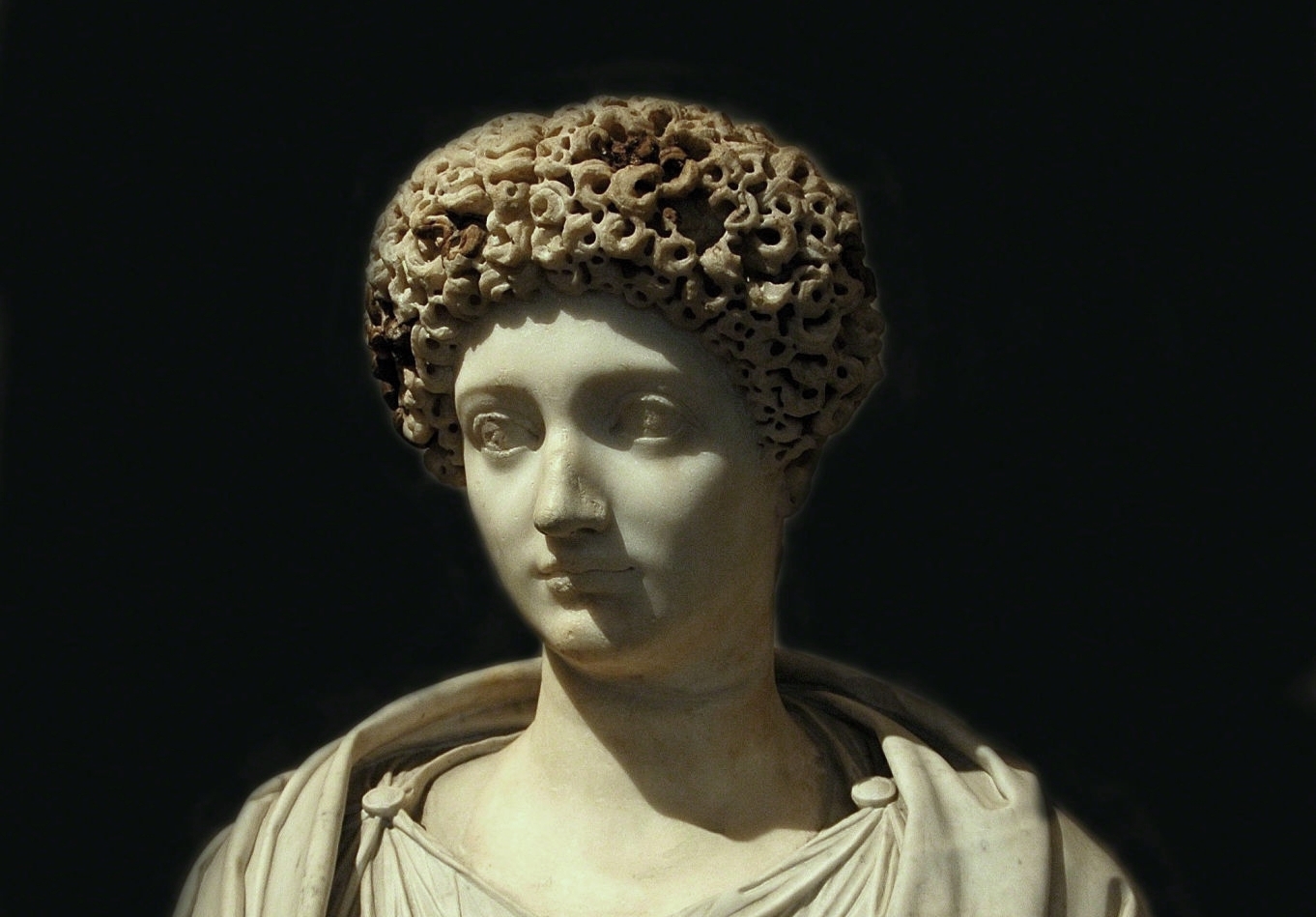
In an earlier article about how far Ancient Rome spread, I discussed how it went from a kingdom to a republic and then finally an empire in 31 BC. This was when Julius Caesar’s great nephew and adopted son, Augustus Caesar, declared himself the first emperor of the Roman Empire.
Augustus had unwavering popularity and a prosperous reign. However, one of the big problems he faced in his life was deciding on an heir to his throne since he would have no sons, and his only child was his daughter Julia. As fate would have it, Julia would turn out to be a rebellious and problematic child who caused great trouble for her father.
Augustus Caesar was married thrice in his lifetime. His second wife was Scribonia. Scribonia was integral to Augustus’ plot to seal an alliance with the Roman military leader Sextus Pompeius. Since Scribonia was related to Sextus, Augustus forced her to divorce her husband. He then proceeded to divorce his first wife in order to marry Scribonia in 40 BC.
The marriage was, by all accounts, not a happy one. Eventually, Augustus would end up divorcing her too, citing her “shrewish disposition” as the reason he could not put up with her anymore in a divorce letter. She received this letter the same day she gave birth to their daughter Julia, roughly one and a half year after their wedding.
Augustus may not have wanted anything to do with Scribonia anymore since he was already in love with his future third wife, Livia, but he gladly took Julia to raise her as his daughter.
Julia Became a Widow When She Was 16
Soon after the divorce, Augustus married Livia. When she moved into his household, she began to care for baby Julia.
Some sources claimed Livia hated Julia, but this claim is difficult to confirm. Livia had two sons from her first marriage, Drusus and Tiberius, who joined Augustus’ household after their father died in 36 BC.
Julia lived a comfortable childhood in a fancy villa on the Palatine Hill overlooking Rome. Evidence suggests that Julia got along well with her two step-brothers and that she may have taken a liking to Tiberius.
As was common in the era, Augustus was already considering marrying Julia off once she reached adolescence. Since she was the emperor’s only child, it was important for Augustus to find her a husband as his potential heir. Thus, she was not allowed her choice of husband. Augustus wanted someone from the Julian bloodline as his heir.
Therefore, he sought out none other than his nephew, Marcellus, son of his beloved sister Octavia, who was quite influential and loved in Rome. Marcellus and Julia had known each other their entire lives since they were cousins and roughly the same age, too.
Marcellus was allegedly a talented and well-tempered young man. However, their marriage was short-lived as he soon fell ill and died in 23 BC, only one or two years after their marriage. He left behind no children. So, at the mere age of 16, Julia had become a widow; not for long, though.
Julia Cheated On Her Husband While He Was Away
General Marcus Vipsanius Agrippa was a lifelong friend of Augustus to whom he owed his military victories.
We have reason to believe that Agrippa had a bit of a rivalry with Marcellus before he died when Augustus favored him as his heir. Once Marcellus passed, Augustus married Julia to Agrippa.
Agrippa was more than twice as old as Julia, and the two were very different from each other. He was a seasoned war general and an older man who was often away on military campaigns. Julia was young, friendly, extroverted, and intelligent. She enjoyed parties and the company of poets.
Nevertheless, the pair would have five children together. Since Agrippa was away so frequently, Julia would take on other lovers during this marriage, allegedly cheating on him whenever she was pregnant to not give him a child out of wedlock.
At the age of 51, Agrippa unexpectedly passed away, leaving Julia a widow again at age 27. Their fifth son, Postumus, was born after Agrippa’s death. Augustus adopted her elder sons from the marriage, Gaius and Lucius, and chose them to be his heirs.
But since they were only boys, Augustus sought out a capable young man to be his second-in-command. Eventually, he landed on his stepson, Tiberius. He ordered Tiberius to divorce his wife in order to marry Julia.
Tiberius was deeply upset by this, but Augustus insisted that it was politically necessary. As expected, the marriage turned out disastrous. They were briefly happy together when their child was born, but the baby soon died, as newborn children often did back then.
By 6 BC, the couple had separated as Tiberius resigned from military and politics and left for Rhodes. Once again, Julia the Elder was alone. Only this time, she would continue living alone for nine years.

She Was Involved In Many Scandals
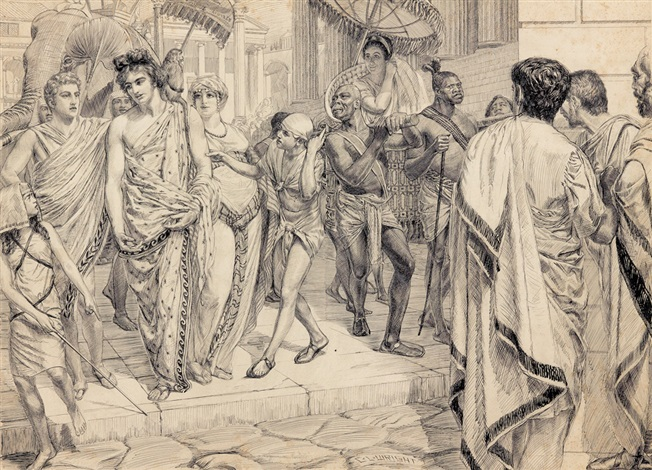
During this time, she lived a scandalous life. She had many affairs with different men, attended parties, got drunk, and was anything but a “virtuous” Roman woman. Augustus knew about her behavior, of course, but did little to stop her; that is, until 2 BC when she crossed a line.
One night, she and her companions got very drunk and took their parade to the Forum Romanum. There, they partied on the rostra (the platform from which orators delivered moral legislation and speeches), and their activities included all sorts of indecent displays and sexual relations.
By morning, all of Rome knew of the scandal. Augustus was furious with Julia, and his reaction reflected it. Julia was arrested for adultery and treason. She was accused of having affairs with several men, including Appius Claudius Pulcher, Sempronius Gracchus, Antonius Iullus, and Cornelius Scipio. Many of them were exiled or forced to commit suicide.
Julia herself was exiled to the small island of Pandateria, where she lived in seclusion. Male visitors or wine were prohibited from entering the island, and any visits had to be approved by Augustus personally. Some sources say that Julia may have been involved in plots to conspire against her father, which is why his reaction towards her and her lovers was so harsh, but perhaps that is a topic for another day.
Pandateria was a massive secluded rock in the middle of the ocean. She spent her days there until Augustus decided to mitigate her punishment and, in 4 AD, allowed her to move to Rhegium on the mainland.
Soon, Augustus died, and Tiberius became the emperor. This only made things worse for her as he restricted her allowance and put her under house arrest. Julia the Elder died in 14 BC, but not without leaving a legacy behind the Julio-Claudian dynasty.
The successor to Tiberius was her grandson Caligula, and the dynasty’s last emperor was her great-grandson, Nero. She may have lived a turbulent life that ended in disgrace, but Julia the Elder is the reason why we call the first Roman dynasty of emperors Julio-Claudians.