The Salt Lake City Cemetery and Racism
Japanese Americans Faced Discrimination
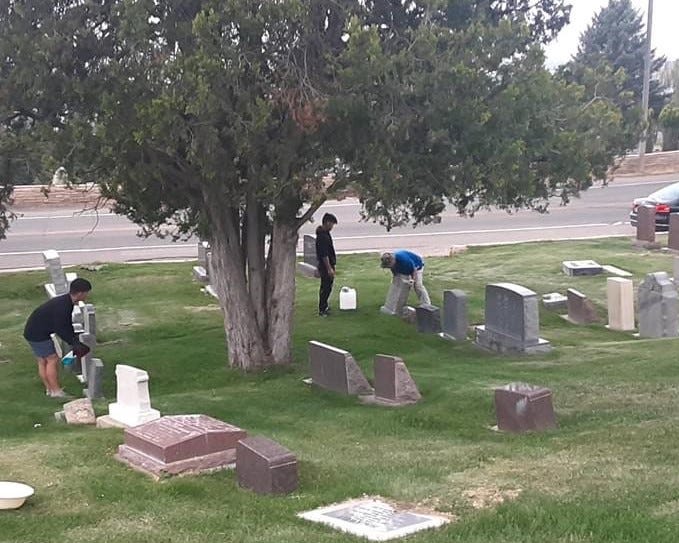
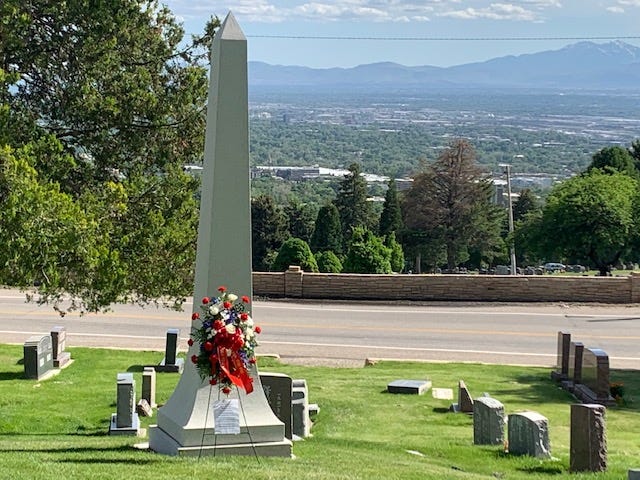
There is a section of the Salt Lake City cemetery which has been designated as the Japanese section of the cemetery. It is now a beautiful area by the road which has a view of Salt Lake City below. When the Japanese people were first allowed to have graves there, however, that section was considered to be the undesirable part of the cemetery. There are Chinese graves adjacent to the Japanese section. Because of undeclared racism against Asians, which existed in Utah from the early 1900’s through the 1950’s and perhaps beyond, the people of Asian descent who died were not allowed to be buried in what was considered the better portion of the cemetery.
Immigrants from Japan began to arrive in the United States in larger numbers in the early 1900’s after a small number came in the late 1800’s when Chinese immigration had been halted with the Chinese Exclusion Act of 1882 . Although most of the Japanese settled on the west coast of the continental United States or in Hawaii, there were a small number who moved to Utah and other inland states. The earliest Japanese immigrants to Utah worked in mines or as laborers on farms. Some became merchants and established a Japan Town in Salt Lake City.
Eventually, some of the Japanese immigrants were able to buy land and own their own homes, farms, and businesses. They married and started families so Utah became their home. Their children born in this country were American citizens, but the immigrants were not allowed to become naturalized citizens until 1952 when the law was changed.
The Japanese immigrants and their families lived relatively peaceful lives in Utah although they were not totally accepted in a culture which was different than from where they had come. Their physical appearance and their language were strange to the general population. Most of the immigrant men and some of the women tried to learn limited English as much as they could. Their children went to regular schools and became educated in the American way of life.
Then when World War II began, President Franklin D. Roosevelt signed Executive Order 9066. This allowed the military to remove any people from certain areas of the country. The order was not deemed to be necessary in Hawaii where there were around 150,000 people of Japanese descent living. It could have been used against other people such as Germans and Italians, but it was a racist action which was enacted only against those of Japanese heritage who were living in the west coast states.
Utah and other inland states where some Japanese people lived were not directly affected by the Executive Order so the people living in those states were not removed from their homes and placed in camps such as were those on the west coast. The incarceration of 120,000 innocent people into camps was later deemed to be purely an act of racism, prejudice, war hysteria, and a failure of political leadership.
All the Japanese people, whether immigrants or American citizens, were immediately considered to be enemy aliens. Those who had been serving in the military of the United States were mostly relieved of their duties. Later when the United States wanted more young men to serve in the military, those of Japanese background were asked to join the segregated unit which became known as the 442nd Regimental Combat Team. They were joined by Japanese American young men of the 100th Battalion from Hawaii.
Some young men from Utah and other inland states also joined the 442nd as well as the Military Intelligence Service in the U.S. Army. Japanese Americans who had been released from the Army when the war started joined the 442nd Regimental Combat Team. Some young Japanese American women also joined the women’s corps of the Army. All these young people wanted to prove their patriotism and loyalty to the United States. However, they faced much racism before, during, and after their military service.
More than 800 young men of Japanese heritage lost their lives fighting for the United States during World War II. Those from Utah who died during military service have their names etched on the monument which was erected in the Japanese section of the Salt Lake Cemetery. The tall, white monument was placed by the Japanese community in Utah after the end of the war.
Although Japanese Americans and other Asian Americans have not experienced racism in recent years to the degree that it is still prevalent against African Americans, some overt racism has been evident. Now racism has reared its ugly head again to those of Asian backgrounds. With the coronavirus pandemic, there have been racist rants and discriminatory acts exhibited against Asian Americans. This has been fueled by certain people in the current administration. Most people do not distinguish among the various ethnicities of Asian heritage so they are targeting all Asians when they are blaming the Chinese for the coronavirus.
Unfortunately, racism is still going strong. It should have disappeared by now because people have been proclaiming for years that they are not racist and are against racism. Hopefully, the peaceful protests going on throughout the world against racism and police brutality toward Black people after the killing of George Floyd will do some good this time. It is past time to curb racism. The fight for equality and justice must be won.