
Fiction
The Sad Story of The ill-Fated Bridge Over Troubled Waters
Another tale coming to you from the future
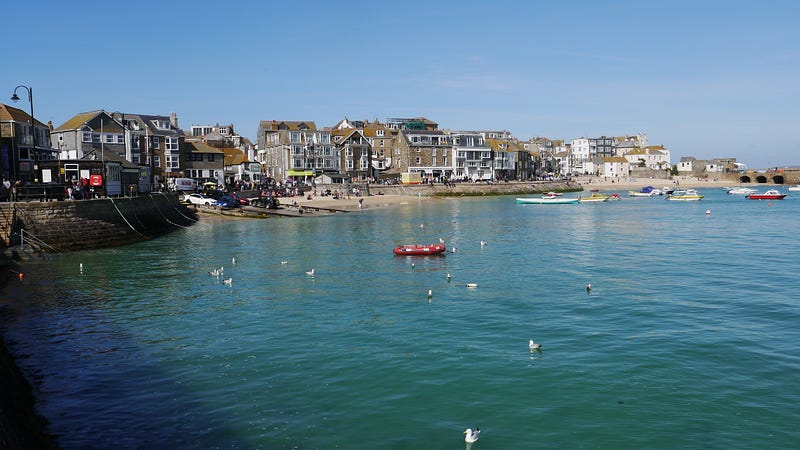
Ten years ago, my home was what I would call inland.
The day I felt it appropriate to change the name of my home from Hill View to Harbour View was the day I realised that things really had changed. Once 12 nautical miles up the river from the harbour, said harbour gradually moved upriver to my doorstep.
Climate change, they said.
I mean, I am not complaining or anything but it’s a bit odd, to say the least.
Besides which, new rivers formed and divided the little town completely, so I needed to travel by paddleboard to go for afternoon tea at my neighbour’s place. She happened to be my best friend too, and I felt very cut off from her, since I am only a fair-weather paddleboarder.
That was when the moment of inspiration hit me. I needed to build a bridge. Not just a bridge across troubled waters but a bridge across troubling, deeply troubling waters.
Troubling because no one knew how much higher they might rise, and whether or not I might need to rename my home again — this time to Octopus’s Garden View, or something not dissimilar.
But there was another reason these waters were troubling…
The division, created by the risen waters forming a treacherous river estuary right through our town was causing social and political havoc in the community. Suddenly, our town had an East Side and a West Side. Everyone was arguing about whether or not vessels should be allowed on the water; whether or not we should be allowed to cross without special permits, and who, if anyone, could take control of the situation.
With the new policies instigated by Klaus Schwab of the World Economic Forum, now that we “owned nothing” and everything was conveniently borrowed, we had zero clue about whether we were just borrowing these troubled waters and could do what we like with them, or if they were simply owned by no one and to be touched by no one.
That was when I decided to take matters into my own hands.
I borrowed some of Mother Earth’s resources and built a bridge
Whatever the World Economic Forum says, Mother Earth had explicitly told me that I was free to borrow her resources, as long as I used them with kindness, compassion, and love. The purpose had to be for the community.
Our community desperately needed bridges built and no one else was taking any initiative. Because, well, initiative was a little frowned upon by then.
I know, it was really defying convention, but I felt it had to be done, and so I began by laying the foundations. Following that, I continued building up and over, until the bridge across troubling waters was finished.
I did it quietly, unannounced, because I didn’t want to add to the troubles of these troubled troubling waters. I did it silently in the dark of night so that no one would see me, or come and disturb me. And then, one day, it was complete.
Now I could go and visit my neighbour without my paddleboard or needing to wear a wetsuit. I could wear my Sunday best and we could sit together, squabbling over whether the cream should go on top of the scone or the scone on top of the cream.
We could gossip about the silly people wanting to create official permits for crossing the waters, and we could gaze out onto the beautiful harbour, beneath which the troubling waters lay.
But then, the real trouble began
It was not long after the bridge was completed that the true problems started.
Now, everyone began fighting over whether the East Side or the West Side owned the bridge. They argued over where the official border between the two sides lay, and the disagreements fell to details as small as a millimetre of bridge.
Of course, now they wanted to know who was responsible for building this bridge and I knew it wouldn’t be long before I was found out.
In addition, it turned out that the bridge had attracted trolls. Not only social media trolls but the real kind who live under bridges. It seemed they especially loved bridges over troubling waters.
It was Mr. Billy G. Gruff who confirmed that these rumours of trolls were real, and that was when I made my decision.
It was time for me to go
I packed my bags and boarded the most beautiful and sturdy-looking yacht in the harbour.
I still felt a slight awkwardness about taking things that didn’t belong to me but I kept remembering Klaus Schwab’s reassurance that we no longer own anything and everything is just borrowed. Thank you Klaus, for allowing me to t̶a̶k̶e̶ borrow this luxury yacht for my own use.
If someone wants it back, they can come and find me on the Greek Island that I will also be borrowing to live out the rest of my days. Not that it’s theirs to claim back anyway.
Bye-bye ‘Bridge Over Troubling Waters’. You did me a big favour and got me out of that hell-hole.
And so, blissfully unaware of what fate lay before my little home, Harbour View, or my poor neighbour who I abandoned with her Sunday scones, or the townspeople still fighting over their borders and permits, I landed on my borrowed Greek Island to begin my new life.
Key takeaway: Goats never lie.
Thanks for reading my nonsense! If you aren’t yet a Medium member and would love to have unlimited access to read the work of all your favourite writers, please consider joining through my referral link.