
The Sad Story Of Danny Chen
He died of suicide after being harrassed because of racism
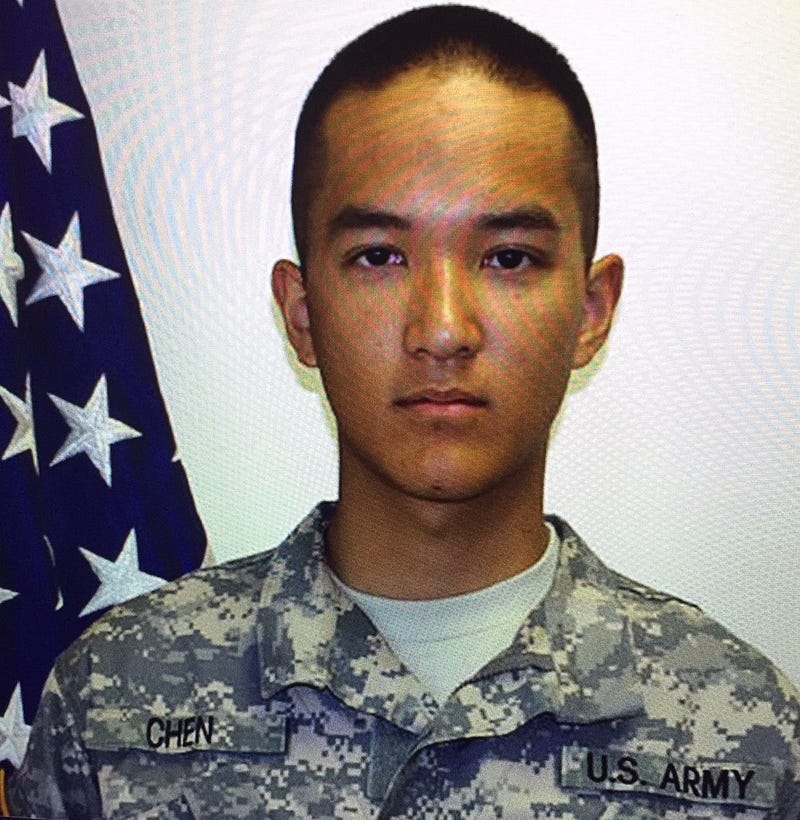
He was mistreated in the U.S. Army
Danny Chen was born in Chinatown, Manhattan, New York City. His parents had immigrated to the United States from China. His father worked as a chef, and his mother was a seamstress. After being raised in Manhattan and graduating from Pace University High School in 2010, Chen received a full scholarship to Baruch College in Manhattan.
Since Danny’s father worked long hours in Chinese restaurants, it was his mother who was the main force in his life. Danny was their only child, born in 1992, five years after she had immigrated to New York and three years after her husband had come. Danny was a good son who was obedient, studious, and devoted to his parents.
His mother wanted him to attend college and possibly become a pharmacist. She did not want him to join the army. He enlisted before telling her because he knew she disapproved, but she supported him. Danny had wanted to do something different. He dreamed about being in the army. He wanted action and adventure.
He had no friends or relatives who had been in the army. He didn’t have anyone to tell him about how he could expect to be treated. He seemed to want a steady income and the preparation for being a New York City policeman later, which he thought the army would provide.
Chen had basic training at Fort Benning, Georgia, which he completed in April 2011. He was then assigned to Fort Wainwright, Alaska. He turned nineteen while in Alaska. This was a period of awaiting deployment, which was in August 2011 to Kandahar Province in Afghanistan.
Although he had been very anxious to serve his country in the U.S. Army, Chen was not treated well by his fellow soldiers and the officers. He was the target of ethnic slurs and physical attacks on a regular basis in the months before his death. He was called names and kicked, among other abuses. There had always been some racism against him because he was a Chinese American, but it was worse in Afghanistan. The abuse occurred on a daily bais. He was singled out and harrassed presumably for being of Asian descent.
Chen was allegedly pelted with stones and forced to crawl across gravel not long before his death. Being dragged across gravel left him with bruises and cuts on his back. Some of the harrassment was reported to officers, but nothing was done. That was an injustice.
When he could seemingly no longer take the abuse, Chen died of a self-inflicted gunshot to the head on October 3, 2011. He had entered the tower for his shift at about 8 am. He was asked by the soldier he was relieving if he was okay because he apparently had distress. He answered, “No sweat,” and the other soldier left. A gunshot could be heard from inside the tower at 11:13 am.
An article in New York Magazine on January 6, 2012, by Jennifer Gonnerman told the story of Pvt. Danny Chen. She described some of the racism that Chen faced during his military service. Here are some excerpts from that article:
Inevitably, basic training produced dropouts. By mid-March, many of the recruits Chen had started with were gone, unable to keep up. “People here are leaving left and right now, everyone is getting stress fractures and broken legs,” he wrote. “All of the weaker people have either left or gone home for 30 days to heal. Now I’m the weakest one left.”
Chen stood out in another way, too. “Everyone knows me because I just noticed, I’m the only Chinese guy in the platoon,” he wrote home. His fellow recruits called him Chen Chen, Jackie Chan, and Ling Ling. But, he added, “Don’t worry, no one picks on me … I’m the skinniest guy and weigh the least here but … people respect me for not quitting.”
The article further stated:
When he arrived, Chen was at the bottom of the social hierarchy: a newcomer to his unit, a lowly private, still just a teenager, in a combat zone for the first time. And the only Chinese-American in his platoon. In a meeting with Chen’s parents on January 4, Army officials said that his superiors had considered him not fit enough when he arrived, and singled him out for excessive physical exercise: push-ups, flutter-kicks, sit-ups, sprints done while carrying a sandbag. Such punishments resemble the “smokings” that drill sergeants mete out at basic training to correct mistakes. But, in Chen’s case, it wasn’t long before this campaign of “corrective training” escalated into sheer brutality.
There were eight men charged in connection with Chen’s death. They are all white and range in age from 24 to 35. They allegedly harassed and humiliated Chen from almost the day he arrived. He was belittled regularly with racial slurs. He endured severe physical abuse.
Chen should not have been harrassed and faced with racism every day of his military service. He was not a small man and was six foot four. He worked out, but he was thin. The mistreatment he endured, which finally became too much, was not because of his size but was due to racism.
Of course, Chen’s parents were devastated by his death and the injustice he suffered. Losing their only son in that manner was heartbreaking.
Chen received a full military funeral at a cemetery in Valhalla, New York, on October 13, 2011.
Most of us have seen war movies where army officers are mean and cruel to recruits. Some of us have served and have seen such action firsthand. This type of racism and harrassment should not be allowed to continue in the U.S. Military. It is unfortunate if it does.
[Source: Wikipedia, New York Magazine]