
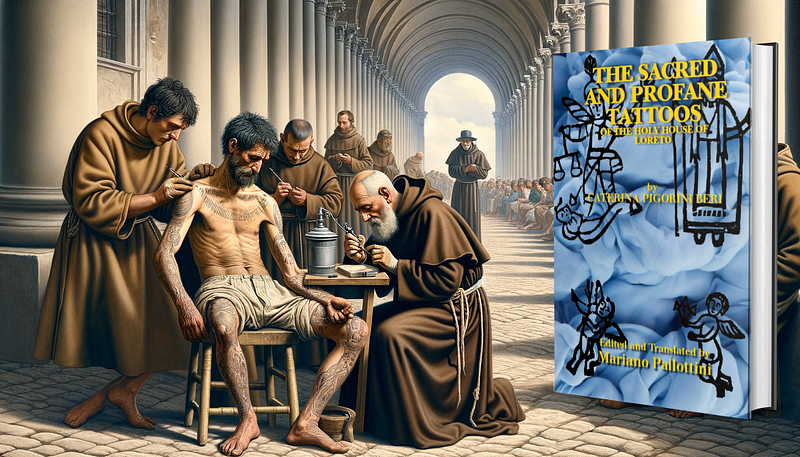
THE SACRED AND PROFANE TATTOOS: OF THE HOLY HOUSE OF LORETO by Caterina Pigorini Beri
Reviving an enthralling anthropological journey through rituals, loves, and superstitions in the Piceno area from the Middle Ages to the 19th century.
The work “THE SACRED AND PROFANE TATTOOS: OF THE HOLY HOUSE OF LORETO” by Caterina Pigorini Beri, published in 1889, offers an extraordinary anthropological perspective on a unique custom widespread among the populations of Piceno from the 13th to the 19th century: the sacred tattoo linked to the Marian cult of the Loreto Sanctuary.
Through meticulous ethnographic analysis, the author reconstructs the origins and evolution of this practice, relating it to the history and popular traditions of the region. This sheds light on the social and spiritual role of tattooing in those rural communities where religiosity, peasant culture, and historical events deeply intertwined.
After describing the widespread phenomenon among men of tattooing mottos, religious symbols, and crosses on their arms, Pigorini Beri identifies the main root of this practice in the cult of St. Francis’ stigmata, introduced to the region by the Franciscans. The custom then evolved to include other Marian symbols and those of Christ’s Passion, up to the more specifically Loreto-related symbols associated with the legendary translation of the Holy House.
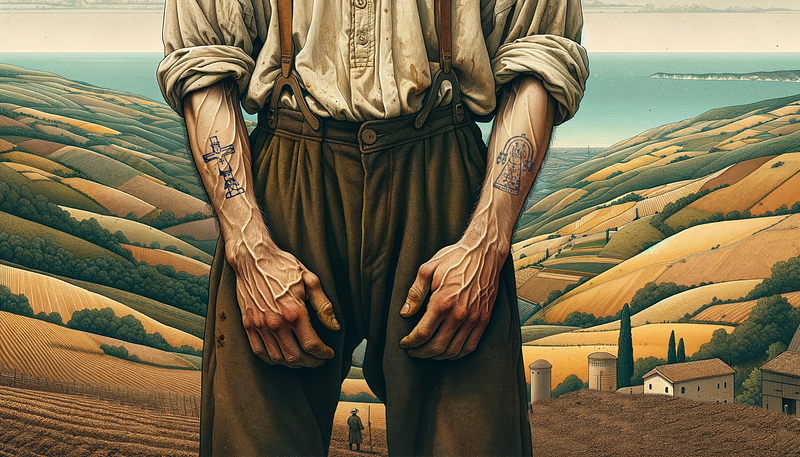
Also of great interest is the analysis of the “love” tattoo and those practiced by sailors, denoting the composite nature of this ceremony, halfway between sacred and profane. Beliefs, superstitions, and ancient traditions emerge, which the author merits not for prejudging but for observing with a scientific eye, in an attempt to understand the complex psychology of those populations.

There are also curious notes on the tattooing techniques used and even the publication of an entire collection of wooden matrices for imprinting designs on the skin, requisitioned years earlier by the authorities. A valuable contribution, therefore, not only for anthropologists and historians of popular traditions but also for anyone wishing to delve into a unique cultural and spiritual aspect of our peninsula between the 19th and 20th centuries.
In the rural populations of the Marche hinterland between the Middle Ages and the 19th century, the practice of sacred tattooing was deeply rooted and had significant socio-spiritual meaning. In those communities, strongly permeated by a syncretism between peasant culture and religious beliefs, tattooing primarily had an apotropaic and propitiatory function.
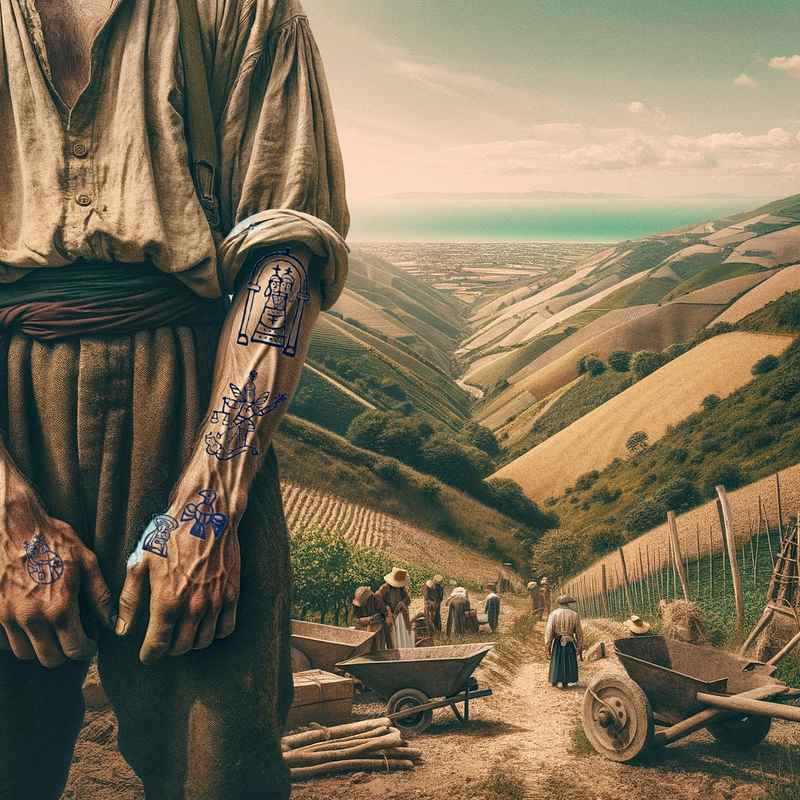
Inscribing Christian symbols on the skin, such as crosses, pierced hearts, images of saints or the Virgin of Loreto, served on one hand to protect oneself from “evil”, misfortunes, diseases, in short, to ensure what we would today call “good luck”. On the other hand, it represented a vow, a spiritual pact with the divine, a way to earn grace and supernatural help in the small and great tribulations of existence.
It is no coincidence that the tattoos mainly reproduced the stigmata of St. Francis, the mystical event par excellence, or scenes from the Passion of Christ. The pain inherent in marking the skin was somehow offered and donated to God, in exchange for material and spiritual benefits.
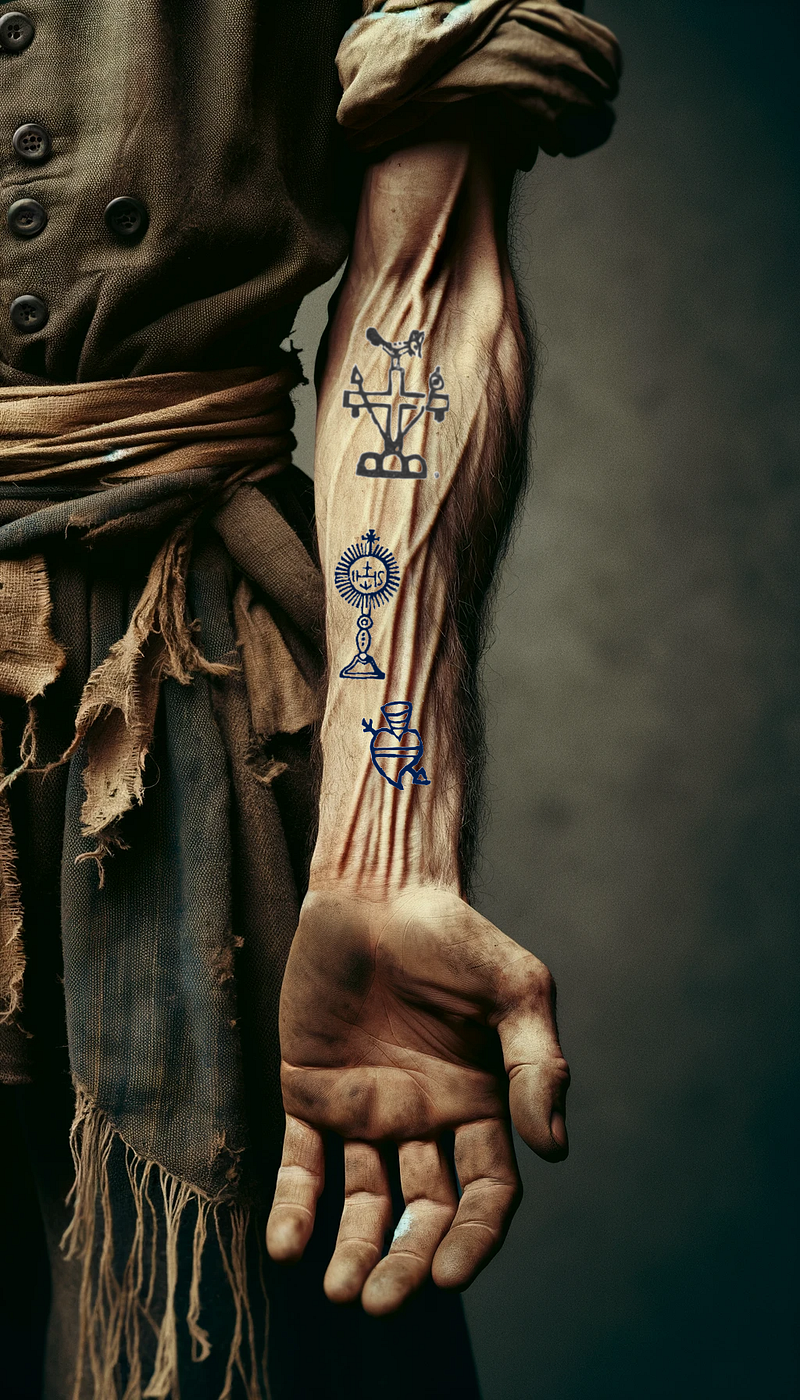
Furthermore, in a rural society often plagued by famines, diseases, and foreign invasions, the tattoo also guaranteed to receive a Christian burial in case of sudden death away from home, a function far from secondary.
That’s why the sacred tattoo represented much more than a simple body ornament: it was experienced with deep religious and inner participation, to the point of transcending the boundaries of the sacred and “contaminating” itself with earthly love, as evidenced by the widespread couple tattoos.


