avatarJames Marinero, MSc, MBA

Free AI web copilot to create summaries, insights and extended knowledge, download it at here

2847

Abstract

billion each year on specific telecom equipment in the late ’90s with the technical objective of controlling the flow of information and news. And of course, its people.</p><p id="fe68">The GFW examines every byte of traffic that enters Chinese cyberspace and compares it to a blacklist. Most web traffic into China passes through three choke points, which filter out any undesirable information.</p><h1 id="e6ed">Too late, but is it enough?</h1><p id="58fa">Copying the Chinese approach in Russia is probably beyond Putin’s reach. It’s too late and would require too many people.</p><p id="b759">Even if Russia did have the manpower, introducing barriers into a network that has been inherently open for many years would not be simple. Controlling an internet countrywide requires two aspects: being distinct from the rest of the world and restricting access within.</p><p id="c358">That’s arguably a no-go for Russia. It would be like herding cats. But Putin is undoubtedly trying.</p><h1 id="6a69">Opportunities abound for Russian entrepreneurs</h1><p id="70bd">And what’s going to be interesting is the report I read (sorry I can’t find the link) that Russian tech entrepreneurs are rushing to fill the gaps left by the Western social media and internet technology firms.</p><p id="3caf">Russia already has a Facebook equivalent — vKontakte (ВКонтакте) but there are huge opportunities behind the scenes for new software like Twitter (but no worldwide reach). And hardware.</p><p id="5262">This has been compounded by the recent Russian controls on the purchase of foreign hardware and software:</p><blockquote id="e73c"><p>Russian President Vladimir Putin has banned the purchase of foreign software — be it standalone applications or code shipping in equipment — for significant critical infrastructure projects, with limited exceptions.</p></blockquote><blockquote id="66cb"><p>From here on, organizations must seek approval before they can buy in overseas software for this level of infrastructure. Putin also prohibited public agencies and other customers from using foreign software as of January 1, 2025, in a bid to promote Russia’s technological independence. — <a href="https://www.theregister.com/2022/04/01/russia_bans_foreign_software/?td=rt-3a"><i>TheRegister.com</i></a></p></blockquote><p id="6f12">They can’t realistically make the changes happen until 2025, but for sure this is going to increase Russia’s internal IT market activity.</p><h1 id="40cb">Chinese chips may not be on the menu</h1><p id="cd29">In the meantime, will Chinese chips help them build the Great Russian Firewall?</p><p id="68c7">That too is fraught with difficulty:</p><div id="eeb7" class="link-block"> <a href="https://www.scmp.com/tech/tech-war/article/3172943/chinese-tech-firms-see-warning-shot-us-sanctions-singaporean-firm">

Options

<div> <div> <h2>Chinese tech firms see warning shot from US sanctions on Singaporean firm</h2> <div><h3>With fresh US sanctions last week on 21 entities, including a Singaporean electronics wholesaler, risks to Chinese…</h3></div> <div><p>www.scmp.com</p></div> </div> <div> <div style="background-image: url(https://miro.readmedium.com/v2/resize:fit:320/0*2P4vwApAwbQ9LkiJ)"></div> </div> </div> </a> </div><p id="b6bc">As I said earlier, building the Great Russian Firewall will be like herding cats.</p><p id="9e0d">Truly a splinternet.</p><p id="2033"><i>About me: If you follow me I guarantee variety in your inbox! I write on a wide range of topics including humor, tech and travel, together with daily news events and the minutiae of my daily life living on a boat. I also write techno-thrillers…and about…</i></p><p id="8324"><b>…herding cats and building walls around people</b></p><p id="b253"><a href="https://ko-fi.com/jamesmarinero"><i>Buy me a coffee?</i></a><i> Or maybe <a href="https://jamesmarinero.gumroad.com/">buy an inexpensive book in my Gumroad store</a> — we both get something that way?</i></p><figure id="a748"><img src="https://cdn-images-1.readmedium.com/v2/resize:fit:800/1*0chfaohu-z_vrO8sI4wdJA.png"><figcaption></figcaption></figure><p id="6470"><i>Or, if you enjoy reading stories like these and want to support other writers and me, consider signing up to become a Medium member. It’s $5 a month, giving you unlimited access to incredible stories on Medium. If you sign up using my link below, I’ll earn a small commission at no extra cost to you.</i></p><div id="5c20" class="link-block"> <a href="https://james-marinero.medium.com/membership"> <div> <div> <h2>Join Medium with my referral link - James Marinero</h2> <div><h3>As a Medium member, a portion of your membership fee goes to writers you read, and you get full access to every story…</h3></div> <div><p>james-marinero.medium.com</p></div> </div> <div> <div style="background-image: url(https://miro.readmedium.com/v2/resize:fit:320/0*zPbc_wuQPJzR4Af9)"></div> </div> </div> </a> </div><p id="528b"><i>You can follow me on <a href="https://www.facebook.com/james.marinero/">Facebook</a> <a href="https://twitter.com/jamesmarinero">Twitter @jamesmarinero</a> . On <a href="https://www.pinterest.com/jamesmarinero">Pinterest</a> you will find many of my research photos from around the world. Check out my <a href="https://www.jamesmarinero.com/">website</a> where I occasionally have a free book on offer.</i></p></article></body>

Geopolitics, Isolationism and the Internet

Putin’s Building a Firewall for the Russian Splinternet

Putin, a fractious fascist, is fracturing fraternal free flow of information in Russia with a state-controlled internet being defended by a tightening state-run firewall. But will a cheap Chinese copy actually work?
Putin’s dream fro Russia? Author Graphic

What is it?

The Russian splinternet is a term used to describe the current state of the Russian internet, which is a fragmented and segmented network. This fragmentation has been caused by a variety of factors, including the government’s tightening control over the internet, the existence of numerous cyber-crime gangs, and the large number of Russian users who use VPNs to access blocked websites.

Consequences

This fragmentation has had a number of negative consequences for Russia.

  1. Firstly, it has made it difficult for businesses to operate online in Russia, as they need to navigate a maze of different networks and platforms.
  2. It has made it difficult for the Russian government to censor content or track down criminals. 3.
  3. It has resulted in a proliferation of fake news and disinformation.

On March 4, 2022, when people in Russia attempted to access Twitter, many failed. Anyone attempting to visit Twitter from within Russia over the previous six days experienced their internet connection slow down dramatically, no matter how fast it was.

Then blackout ensued.

When Twitter went down, the Russian government demonstrated how seriously it considered social media’s ability to spread dissidence about Ukraine.

It also showed how far Russia had come in building a “splinternet,” a technical term for internet infrastructure that effectively separates a country from the rest of the world’s network infrastructure. By allowing Russia greater control over discussions and dissent, it will be increasingly possible to control the flow of information.

But the Chinese led the way.

Copy China?

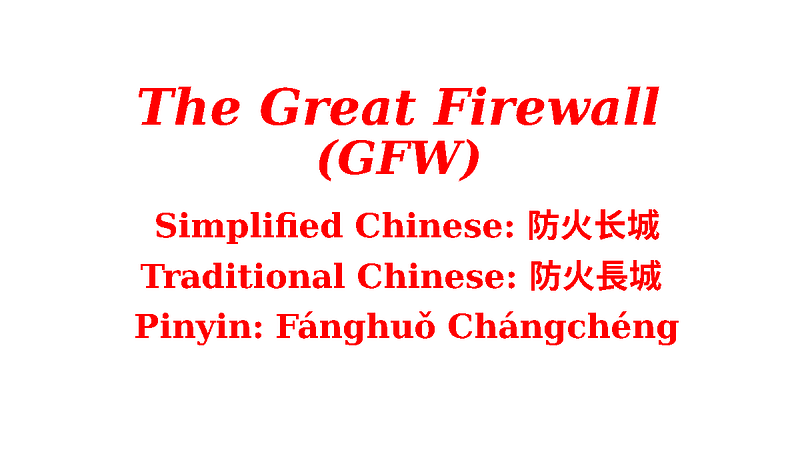
The Great Firewall of China is a technical structure that Putin would love to emulate.

More than 20 years ago, the far-seeing, future-fearing, Chinese government launched an ambitious project to construct its own version of the internet, employing a large number of technology experts and spending enormous sums of money.

It’s been estimated that China was spending up to $20 billion each year on specific telecom equipment in the late ’90s with the technical objective of controlling the flow of information and news. And of course, its people.

The GFW examines every byte of traffic that enters Chinese cyberspace and compares it to a blacklist. Most web traffic into China passes through three choke points, which filter out any undesirable information.

Too late, but is it enough?

Copying the Chinese approach in Russia is probably beyond Putin’s reach. It’s too late and would require too many people.

Even if Russia did have the manpower, introducing barriers into a network that has been inherently open for many years would not be simple. Controlling an internet countrywide requires two aspects: being distinct from the rest of the world and restricting access within.

That’s arguably a no-go for Russia. It would be like herding cats. But Putin is undoubtedly trying.

Opportunities abound for Russian entrepreneurs

And what’s going to be interesting is the report I read (sorry I can’t find the link) that Russian tech entrepreneurs are rushing to fill the gaps left by the Western social media and internet technology firms.

Russia already has a Facebook equivalent — vKontakte (ВКонтакте) but there are huge opportunities behind the scenes for new software like Twitter (but no worldwide reach). And hardware.

This has been compounded by the recent Russian controls on the purchase of foreign hardware and software:

Russian President Vladimir Putin has banned the purchase of foreign software — be it standalone applications or code shipping in equipment — for significant critical infrastructure projects, with limited exceptions.

From here on, organizations must seek approval before they can buy in overseas software for this level of infrastructure. Putin also prohibited public agencies and other customers from using foreign software as of January 1, 2025, in a bid to promote Russia’s technological independence. — TheRegister.com

They can’t realistically make the changes happen until 2025, but for sure this is going to increase Russia’s internal IT market activity.

Chinese chips may not be on the menu

In the meantime, will Chinese chips help them build the Great Russian Firewall?

That too is fraught with difficulty:

As I said earlier, building the Great Russian Firewall will be like herding cats.

Truly a splinternet.

About me: If you follow me I guarantee variety in your inbox! I write on a wide range of topics including humor, tech and travel, together with daily news events and the minutiae of my daily life living on a boat. I also write techno-thrillers…and about…

…herding cats and building walls around people

Buy me a coffee? Or maybe buy an inexpensive book in my Gumroad store — we both get something that way?

Or, if you enjoy reading stories like these and want to support other writers and me, consider signing up to become a Medium member. It’s $5 a month, giving you unlimited access to incredible stories on Medium. If you sign up using my link below, I’ll earn a small commission at no extra cost to you.

You can follow me on Facebook Twitter @jamesmarinero . On Pinterest you will find many of my research photos from around the world. Check out my website where I occasionally have a free book on offer.

Russia
Internet
Sanctions
Splinternet
Free Speech
Recommended from ReadMedium