
A New Era Of Conflicts
Russian Invasion Of Ukraine🇺🇦
“Il est défendu de tuer; tout meurtrier est puni, à moins qu’il n’ait tué en grande compagnie, et au son des trompettes.” — Voltaire
Translation : (It is forbidden to kill; therefore all murderers are punished unless they kill in large numbers and to the sound of trumpets.)
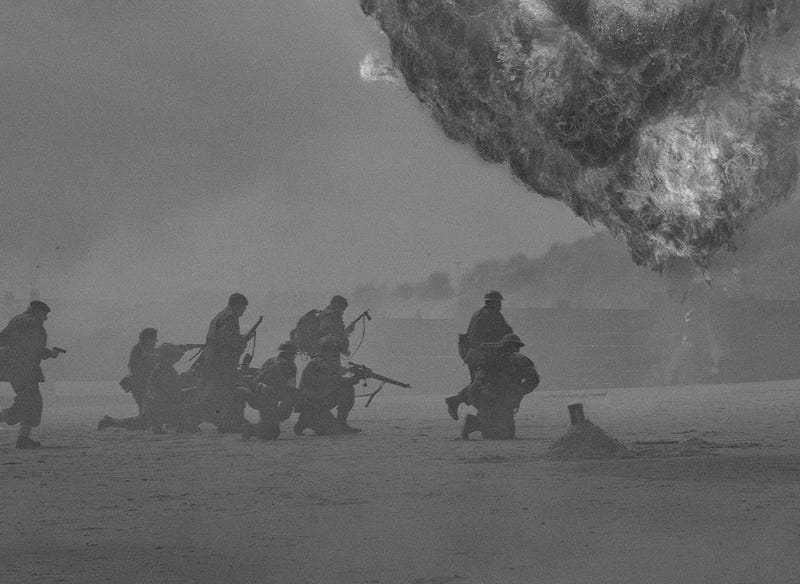
When have people mindlessly killing each other ever solved any of the problems that sadly plague our society? War can never be a solution to the problems that exist in this onerous world, instead, it is an exacerbation. The wars are always started by old men and fought by younger men, it doesn't matter what the reason might be for starting a war, but it is the youth that has to pay the price for sins committed by the megalomaniacs in power.
Russia’s invasion of Ukraine's sovereignty is nothing but an exercise to show the world its military might at a time when global economies are suffering from post-pandemic recovery. America, Britain, and the EU have imposed economic sanctions on Russia for its invasion of Ukraine. It seems that the economic sanctions did almost nothing to stop Russia from continuing to decimate Ukraine and killing its innocent people. The economic sanctions and opprobrium have failed to act as a deterrence. It is an immutable fact that imposing sanctions on a nation has rippling effects on the global economy. This shows how the world has learnt nothing from the past. War brings nothing but catastrophe to the already broken world. Has the world forgotten what happened on August 9, 1945, in Japan, and the countless human lives that were lost before that atom bomb’s explosion. We humans have an inveterate habit of not learning anything from history.
Ukraine president Volodymyr Zelensky had on multiple occasions pleaded to the world for intervention to save his country from destruction but got no succour from the countries that before the invasion had shown their support to the nation. The president of Ukraine has stated how his country was left alone to fight Russia and his whole country is on the brink of destruction. As the Russian forces encroach on the capital city of Ukraine (Kyiv) the world is just patiently waiting for its destruction. The Irony is that Russia is one of the five permanent members of the U.N Security Council, and is also the president of the council. A country that is now the most threat to world peace.
The further conflict prolongs, the more emboldened China gets. We all know what the next invasion is going to be right? China could use the same fallacious argument that Russia has used to invade Taiwan. China’s leader president Xi Jinping also considers Taiwan to be an integral part of Chinese territory. President Xi over the years has always stated how “reunification” with Taiwan must be fulfilled. A trend has been seen that as China’s military has gotten stronger over the years so have its fighter jets' constant breaches into Taiwan's airspace. Taiwan is even more innocuous than Ukraine in this situation, as compared to China its military is insignificant and because of this, it relies heavily on United States military support to defend itself from its belligerent neighbour. As the conflict unfolds in Europe, China is watching closely and devising its plan accordingly. The Chinese government has seen how the west was reluctant in taking any response to Russia’s aggression on Ukraine, it sees the chink in the west’s before seemed impregnable armour. The one thing common between Russia and China is that both are autocracies, although the democratic system of governance has its flaws still it gives the people residing in those countries a choice that the people living under totalitarian regimes lack.
In today's world conflict is inevitable until there exist global leaders with expansionist mindsets. Many people wonder if things could have been different if Ukraine possessed nuclear weapons. Ukraine did possess nuclear weapons as when the soviet union collapsed in 1991, Ukraine held about one-third of the union’s nuclear weaponry. At the time it held the third biggest nuclear arsenal in the world, with an estimated 1,900 strategic warheads, 176 intercontinental ballistic missiles and 44 strategic bombers. However, by 1996 it had returned all of its nuclear warheads to Russia in exchange for economic aid and security assurances. Nuclear weapons work great as deterrence, but during the war possessing them could be a double-edged sword if you know what I mean. To put it simply they are great servants but bad masters. The havoc they can bring onto this world is unimaginable.
Almost every nation with a significant economy possesses weapons of mass destruction. The NPT(Non-proliferation treaty) has failed to achieve its principal purpose of preventing the proliferation of nuclear weapons in several countries. Many countries didn't join the NPT and went ahead with possession of nuclear weapons like Pakistan. The only country that had joined the NPT but ended up possessing nuclear weapons is North Korea. Again, the United States tried to stop those countries but failed to do so. Israel is virtually a de facto ally of the United States but still went ahead with acquiring nuclear weapons in the 1960s. When I was in law school the international law classes used to always rouse my interest. But even then I noticed the dichotomy between what is preached in the international laws and what was being practised in reality by the nations. It is then I realised that it is the geopolitical relationships between nations that supersede the law. Many of the United Nations organs decisions have no binding on the nations. They are merely platforms for having amicable debates with no pragmatic implications on reality.
The twenty-first century has brought with it many technological advancements but has also created surveillance states and made cyberattacks rampant. Technology in today's society is both the enabler of opportunities and the oppressor. As it has provided the tools required by a despot to monitor and influence the society they rule. Being a Generation Z, I thought physical wars were a thing of the past, something which had no place in a modern society like ours. But I couldn't have been any wrong, as until there are people in our society who are driven by venality and obsessed with power, the world will always be in a perpetual state of conflict.
Russia’s reason for invading Ukraine:
Russia over the years has always expressed its displeasure with the west having any political affiliations with the Ukrainian government. As Ukraine and the west's proximity increased over time so did Russia’s angst regarding the whole matter. Ukraine on many occasions has expressed their need to be a NATO member to protect itself from its neighbour's belligerence. Russian President Putin deems NATO an organisation created to delegitimise its influence in global politics, which could not be any veracious. NATO is a military alliance between the western nations’ article 5 of which states that an armed attack against any of the member states shall be considered as an attack against them all. But it is fatuous to wage a war against a sovereign nation to assert Russia’s global stature.
Russian President Putin's strategy seems clear, he wants to establish the old soviet empire by reconstructing the iron curtain. After the dissolution of the USSR in 1991, many of its former colonies became independent sovereign nations like Armenia, Azerbaijan, Belarus, Estonia, Georgia, Kazakhstan, Kyrgyzstan, Latvia, Lithuania, Moldova, Tajikistan, Turkmenistan, Ukraine, and Uzbekistan. In Russian state-controlled media, the invasion was depicted as self-defence, a war of necessity for Russia's survival to remain a global superpower. It might have been able to cajole some of the Russian population with its propaganda, but the majority of the Russian citizens can see through the media’s assiduously crafted facade. Many reports show how many Russian citizens were protesting on the streets and were stifled by the state police.
This reminds me of something that Eric Arthur Blair had written in his famous novel 1984 — “WAR IS PEACE, FREEDOM IS SLAVERY, IGNORANCE IS STRENGTH”. How an autocrat’s state-controlled media can influence people's thoughts and opinions by constantly feeding them the wrong information.
How are despots created in modern society:
Most of the despots are elected through the democratic process and stay to govern the country indefinitely. Not every country is a presidential democracy like the United States whose constitution restricts a person to be elected to the office of the President more than twice (Amendment XXII). Parliamentary democracies have no such limitations.
At first, they’ll have the mandate of the populace, then once they have established their presence and had a sense of power they go on to take control over the various pillars of a democratic society which include the legislature, executive, judiciary(Reign through terror)and media(Control the truth). Then a despot has total influence over the various institutions of the country. After having control over all the pivotal government institutions, they assert their influence over the oligarchs of the country to bolster financial support.
United Nations' failure as a peacekeeping institution :
To me, United Nations has always seemed to be an oxymoron, as the reality is that the nations are not united. United Nations has failed as a transnational institution for maintaining world peace. The sole purpose of establishing the united nations as an institution was to be a platform for the countries to resolve their disputes amicably. It is a stage for the countries to come forth and put their grouses against each other and possibly find a peaceful solution. The ethos of the United Nations is to maintain world peace, but as has been seen through the years that it fails to perform its fundamental duties when the world requires it.
According to U.N Charter, all substantive decisions of the Council must be made with “the concurring votes of the permanent members”, and if one of those five permanent members decides to veto the proposed resolution lapses. The current scenario exemplifies the unbridled power that this gives to the permanent member of the council.
There is also a looming question around the legitimacy of the Russian Federation being a permanent member of the U.N because Article 23 of the U.N charter states that the U.S.S.R, not Russia is a permanent member. China shares a very similar problem to this as until 1971, the “Chinese seat” was held by the Republic of China (ROC), the Taiwan-based government that claimed to represent “all of China”. But in 1971, the seat switched to the People’s Republic of China (PRC), the Beijing-based Communist government that also claims to govern “all of China” and which still holds it.
Laws must always change with time to have relevance. U.N charter needs some fundamental changes to make the institution more accountable and effective. Should a nation be allowed to veto a resolution discussing its own actions? The Russian and Ukraine conflict depicts the institution's various inefficacies and flaws. Has anyone ever wondered, why did the U.S introduce a resolution in a council headed by the country itself in question? If the members' states already knew that Russia was going to veto the resolution why did they even introduce it in the first place? It was all a gimmick to gain positive press, an effort to make the world see how they tried but were helpless. A permanent member’s power to veto is derived from Article 27(3) of the U.N Charter for those who are interested in law.
A total of 293 vetoes have been cast in the top UN body, according to data from the non-profit Security Council Report. Russia/Soviet Union has almost half of the total number, with 143 vetoes. Since 1992, after the fall of the Soviet Union, Russia has been the most frequent user of the veto, followed by the US and UK.
What can be the ramifications of this conflict:
Economic crisis — Imposing economic sanction always have a rippling effect on the global economy. Although it would be a much more costly affair for Russia than any other nation. But always remember it is not the leader who is calling off strikes who suffers from this but it is that country’s people who have to take the brunt. As the leader would continue to live his lavish lifestyle irrespective of anything.
Civilian casualties — Countless precious lives will be lost in this war.
Refugee Crisis — Since the invasion of Ukraine by Russia we have seen how millions of people are fleeing for their lives and taking asylum in the neighbouring countries of Ukraine. More than one million have fled to Poland alone. They have been largely embraced by their European neighbours without much reluctance.
Global Supply Chain Disruption (Rising inflation) — It is a well-known fact that Russia is one of the world’s largest exporters of natural gas. It fulfils almost 40% of all the natural gas demand in Europe. Europe's largest economy Germany is the first to feel the blow, as the energy prices for Brent crude increased, the international oil benchmark briefly soared above $100 a barrel for the first time since 2014. A notable exclusion from the sanctions was Russia’s big energy companies. And America’s financial restrictions are allowing “energy payments” to continue. Despite all this, inflation across the globe is increasing as they see the impact of ongoing conflict on their economies.