
The Rules of Communication between Developers.
How to properly ask a mentor or senior developer questions.
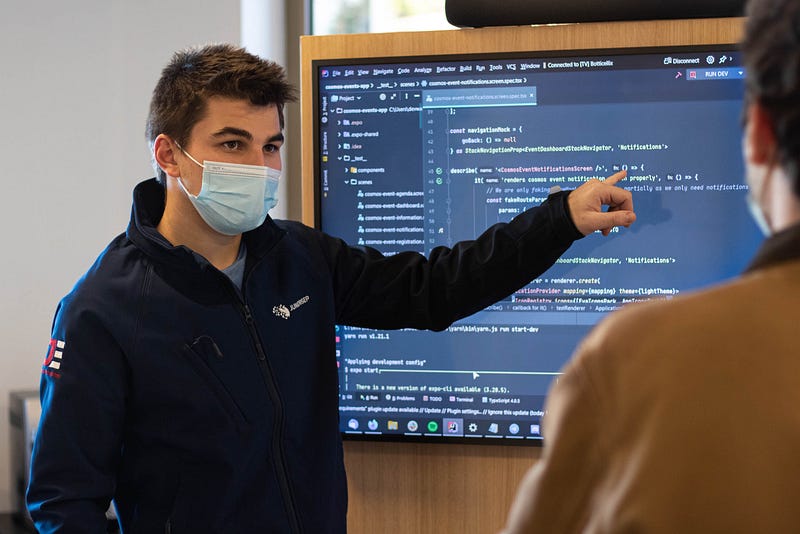
Let’s talk about the rules of communication between developers. More precisely, younger developers and older developers. Whether it is a teacher-student relationship or a senior-junior relationship, there are certain ways to improve communication between you and a more experienced programmer.
Attention: the recommendations below do not relate to interesting questions related to a specific task. Still, they are related to understanding important and non-obvious things that are usually not answered in Google.
Don’t ask questions
First of all, you need to make sure whether it is worth spending your time and the time of a colleague/mentor on this issue. Therefore, you should first ask yourself a few questions:
- Have I reviewed the documentation for the technology being used?
- Did I spend a few hours reading the source or solving the problem in some other way?
- Have I checked Google for the information I need?
If all these questions can be answered in the affirmative, then the help of a colleague/mentor is really needed. So let’s move on to the next point.
Tell us what you are trying to do.
Describe in detail the problem you are trying to solve and what result you want to get. It is better to explain why you want to solve this problem (in cases where it is not obvious). For example, you may be offered a completely different plan.
Tell us about what you have already tried to do.
It will be more convenient if the person you turned to for help knows everything that you have already tried to do. It will save you both time because he doesn’t have to develop solutions that have already been tried and will definitely not work.
Talk about your attempts in as much detail as possible, attaching links to the materials used, forums, StackOverflow, etc.
Provide code examples
Be sure to show the developer the code that doesn’t work for you. Do not under any circumstances write, “I wrote an application, and it does not work.” What exactly isn’t working? What is the error message? What’s in the logs?
Use services like Pastie.org to publish chunks of code. The more you post and show your victim, the better.
Ask a question
And now the most important thing: avoid by all means the simple “What should I do?”. Provide options. List the possible solutions to the problem and ask if any of them work.
In general, strive to ensure that the problem's solution and the questioned developer take as little time as possible. Ideally, after providing all the information and the question itself, you should receive a specific, succinct answer and immediately return to solving the problem yourself.
I always try to spend at least a few hours solving the problem myself. It is the only way to learn something quickly. Appreciate your time and the time of a colleague/mentor and learn to solve problems yourself.
More content at plainenglish.io