
The Roots of Our Predicament
Flash political Sci-Fi
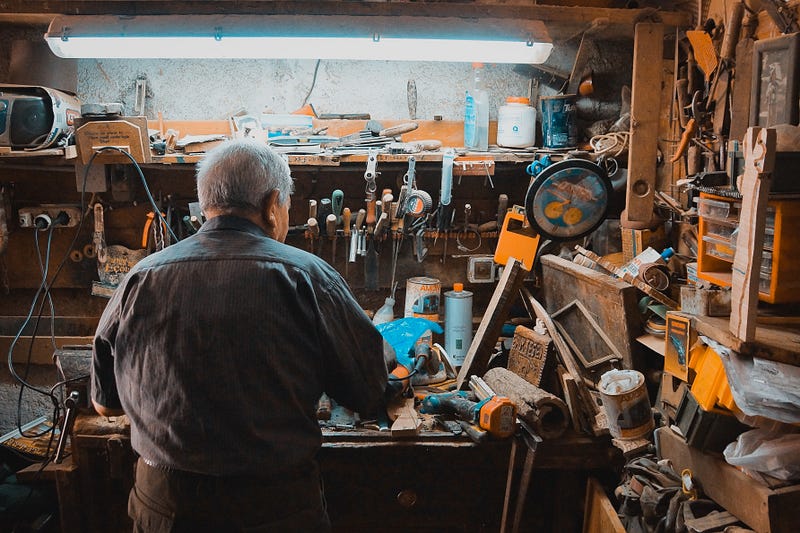
Joshua ushered his visitor directly into the basement. “Sorry, the smart windows are broken. I don’t want the nosy lady next door to see us,” he explained. “Even in 2055, I can’t get a window repair person here in less than a week… it’s sooooo 20th century.” The smell of cedar shavings from the woodshop filled their nostrils as they descend the stairs. At the bottom, his dealer handed over the package. Joshua’s liver-spotted hands paused for a second before accepting it, as he considered the illegality of the transaction.
“Here’s the last of it,” Gabriel explained in his low, disembodied voice. His trademark blue hoodie always covered his face so Joshua wouldn’t recognize him on the street. “I’m going back to smuggling people — less risky.”
“You can’t quit!” Joshua opened the bag and a familiar, pungent scent greeted him. The smell always invoked the same question: Does this make me a traitor to my Millennial generation? He carefully unwrapped the Brazilian rosewood, feeling the rough texture. The next smell, sandalwood, produced an immediate opiate-like effect and relaxed his body.
No, I am not a traitor. I am a woodworker. My father was a woodworker, and every male before him as far back as the tree branches.
“No, this is my last delivery. My supplier is getting out as well, so unless you know someone else, you’d better make this last.” Gabriel looked around the woodshop and studied the saw, drill press, miter saw, hand tools, and even a small portable generator, which Joshua used so his power tools didn’t draw the attention of the eco-police. The dealer picked up a birdhouse. “How’d you get into this?”
“You’re probably too young to remember because they outlawed it in the 2030s, but the Cub Scouts had this Pinewood Derby every year. Kids and parents worked together to build and race wooden cars. Plus, the woodshop was one of the few places my dad and I didn’t fight. Most of these tools are his or my grandpa’s.” Joshua motioned to the paraphernalia on the workbench.
“Where do you get the gas for that?” the younger man asked, pointing to the generator. “Maybe whoever supplies gas can bring you more wood.”
“No, I converted that to bio-fuel in the twenties — at the height of the Green New Deal.” A smile slowly spread across Joshua’s face and brought out the wrinkles around his eyes.
Gabriel noticed a hint of nostalgia in the older man’s voice. “Please don’t break into a chorus of ‘Those Were the Days.’ You don’t believe all that eco-crap.”
“You don’t know what you’re talking about,” Joshua protested, grabbing the birdhouse. “We had to do something; it was a climate crisis. The rainforest was burning, and our ‘elders’ those damn moderates, did nothing.”
“Calm down. You gotta understand why I’m askin’. You’ve been my best customer for years.”
“I know,” Joshua admitted. “But I also don’t know where it went so wrong. We ousted Trump and worked to save our planet! Everything was on track. We signed back onto the Paris Agreement and led the way globally. Electric cars. Public building managers installed light-weight solar panels. High-speed rail became ‘cool.’” Gabriel smiled at Joshua’s obvious pride at being part of the movement.
Joshua continued, “We created millions of 21st-century jobs in clean energy, engineering, and agriculture. During President Ocasio-Cortez’s inaugural in 2029, she announced the Green New Deal had worked, and we were on our way to ‘net-zero’ carbon emissions by 2050.”
“I remember that day!” exclaimed Gabriel, “I was about ten; my parents had a party.”
“So, then you remember what happened next? A series of changes were supposed to ensure ‘net-zero’ stuck. She banned the Pinewood Derby, declaring, ‘We can’t waste precious resources on hobbies,’ which made sense, the Amazon was still at risk. A ‘sin tax’ on meat had logic. Each change had merit, but after two terms of reforms, we had moved so far beyond the original Green New Deal.” Joshua paused to take a deep breath and calm down.
The younger man tried to lighten the mood. “My parents were pissed about the meat thing.”
“Reforms went too far, and she betrayed our original plan. And my wood supply dried up, so I supported a moderate, Chelsea Clinton, in the 2036 primaries. But she lost to Al Gore III, who beat Barbara Bush in the generals.”
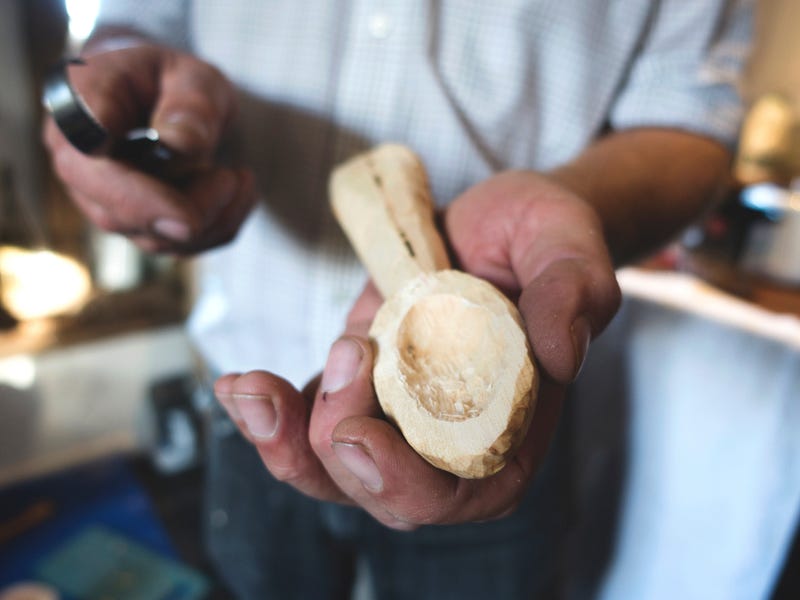
“Chelsea was a hottie…” Gabriel smiled, tossing a carved wooden egg back and forth in his hands.
Joshua rolled his eyes. “You know the rest. President Gore avenged his father by going crazy with environmental restrictions, starting with the ecological police force.”
“Yeah, they made me give up my rubber-soled basketball shoes… for hemp shoes. They sucked.”
“I refused to give up woodworking on principle, so my wife took my children and left, afraid the eco-police would cart us off.”
The pair began to “one-up” each other, citing all the things they had to give up. Processed cheese encouraged methane production — in cows and humans. Golf courses, football fields, and baseball diamonds wasted land and water — as did almonds and alfalfa. Airplanes. Modern medicines. The government also placed exorbitant tariffs on imports that arrived via fossil fuel power. The eco-police publicly shamed dissenters. Smugglers caught selling protected resources got more jail time than murderers.
Joshua popped a bootleg nitro-pill. “By the time Gore banned elections because ballots wasted paper, we ended up exactly where we feared a second term with Trump would lead! Extremism, authoritarianism, isolationism, inadequate health care, fearmongering.”
“And here we are,” sighed Gabriel as he scooped up a pile of bills from the workbench and headed toward the stairs. “If you decide to take up human slavery, let me know. Otherwise, good luck finding your sandalwood!”
He bounded up the stairs and out the door before Joshua could respond, so he began to whittle and reflected on his accomplishments… and regrets.
Annisa Wanat is a strategist & storyteller. Sign up for her newsletter here!