
The Roman Invasion of Iraq that resembles America’s Iraq Catastrophe
“History doesn’t repeat itself, but it often rhymes,”–Mark Twain.
Strangely, US President George W. Bush (R-Texas) repeated one of the Roman Empire’s worst mistakes: invading and occupying Iraq.
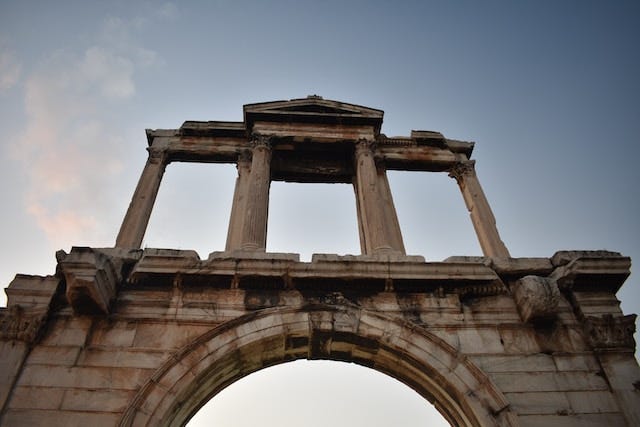
The Emperor Trajan began a catastrophic invasion and occupation of Parthia (modern Iraq) 1,888 years before Operation Enduring Freedom. Trajan’s Iraq invasion almost destroyed the Roman Empire.
Rome’s Rival
The Parthian (Persian) Empire was Rome’s greatest rival for over 400 years. At its height, the Parthian Empire stretched from Mesopotamia (modern Iraq) to the Himalayas in modern Pakistan.
Parthia’s military power rivaled Rome’s. In 53 BC, Parthian cavalry and archers destroyed several Roman legions and killed Marcus Licinius Crassus, a member of the First Triumvirate that controlled the Roman Republic.
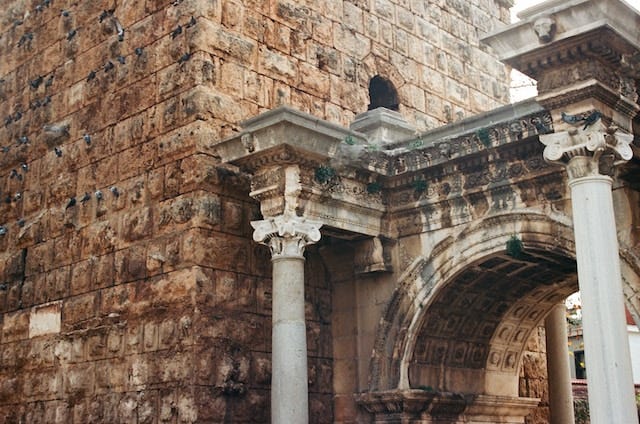
This defeat was humiliating because Parthia’s king supposedly used Crassus’s skull as a stage prop in a play at his court. The victory triggered the Roman Civil War by removing the man who kept the peace between Julius Caesar and Pompey, Crassus.
In 36 BC, Parthians defeated a member of the Second Triumvirate, Mark Anthony. Parthia was so powerful, Rome’s first Emperor Augustus Caesar did the unthinkable and signed a peace treaty with the Parthian king. This peace held until 113 AD.
The Outsider Emperor
By 110 AD, Parthia was in decline and Roman power was at its peak. One person who noticed Parthia’s decline was the Emperor Trajan.
Trajan, a career soldier, felt he had to prove his Romanness through conquest. The emperor felt he needed military glory because he was an outsider. In particular, Trajan was the first emperor born outside Italy in Spain. Plus, the Roman aristocracy looked down on Trajan, a middle-class professional soldier.
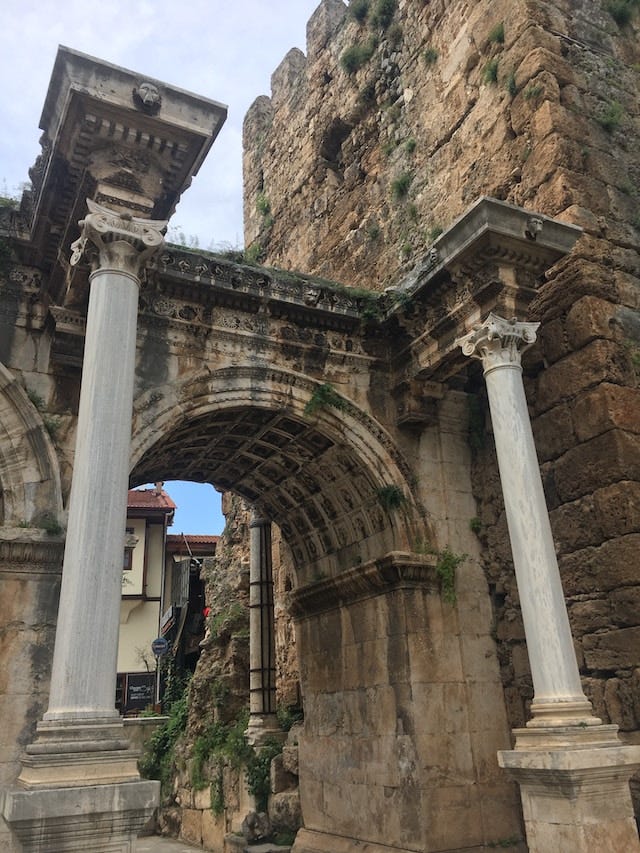
However, the Emperor Nerva made Trajan his heir because Marcus Ulpius Trajanus was one of the few men who could control the legions. The army supported Trajan, which made him the most powerful man in the empire.
Yet many Romans saw Trajan as a foreigner despite his abilities. One way Trajan could prove himself worthy of the title Caesar was through conquest.
Moreover, Trajan felt he needed to expand the empire to eliminate strategic threats along its borders. In particular, Trajan wanted to eliminate threats from Parthia and Dacia (modern Romania).
Consequently, in 101 AD, Trajan crossed the Danube and invaded Dacia. Dacia was rich and militarily powerful with a Roman style army. In particular, Trajan wanted to capture Dacia’s gold and silver mines to replenish the Empire’s debased currency.
It took several years of hard fighting and impressive engineering for Trajan’s legions to conquer Dacia. However, the legions won and Dacia became a Roman province, giving Trajan control of the gold mines. In 106 AD, Trajan returned to Rome with an enormous treasure.
Rome’s Iraq War
After several years of peace, Trajan began looking for a new war. The time seemed ripe because Parthia was in chaos, with two rival kings fighting for the throne.
Stupidly, Parthian King Osroes I gave Trajan a pretext for war by deposing the king of Rome’s client state, Armenia. Osroes I further provoked Trajan by naming his nephew Armenia’s new king. A war between two empires began because a man tried to give his idiot nephew a job.
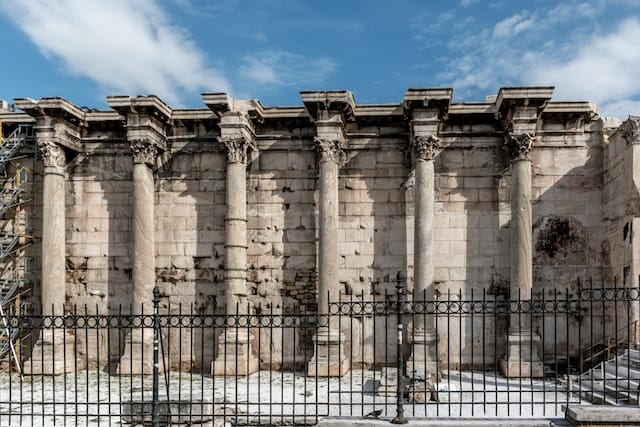
Consequently, Trajan began planning an invasion of Armenia and Parthia. In 114 AD, Trajan invaded and annexed Armenia with no Parthian response. Sensing Parthian weakness, Trajan invaded Assyria and Mesopotamia (modern Iraq).
Within two years, Trajan’s legions had overrun the Parthian capitol at Ctesiphon on the Euphrates and Tigris rivers. By 116 AD, Roman legionnaires reached the Persian Gulf. The Roman Empire was at his greatest size.
Trajan began thinking he could duplicate Alexander the Great’s epic feat of conquering Iran and Pakistan and invading India. Notably, Roman troops were occupying Babylon, Alexander’s capital, and Trajan was sacrificing to honor the Macedonian’s memory in the great man’s palace.
Like the Americans 1,888 later, Trajan found Iraq easy to conquer and hard to rule. After reaching Babylon, Trajan learned his troops were facing a massive local insurgency. Instead of marching to India, Trajan was fighting insurgents.
How Trajan almost Destroyed Rome
Meanwhile, a massive Jewish revolt broke out in Egypt, Asia Minor, and Cyprus. The rebels were Jews dispersed from Palestine by Trajan’s predecessor Vespasian in the genocidal Jewish Wars.
This revolt was successful because Trajan had redeployed the legions that normally policed those regions to Iraq. The revolt threatened Rome itself because they centered the insurgency in the city of Alexandria. To explain, Egypt was the source of Rome’s grain, and they exported the grain through the port of Alexandria.
During the revolt, Jewish rebels began a pogrom against Romans. Jewish mobs lynched thousands of Romans. In the ultimate humiliation, Jewish rebels forced Romans to fight to the death in the arena as entertainment.
Meanwhile, back in Assyria, Trajan’s forces were so weak they could not capture the citadel of Hatra. Trajan’s imperial overreach was destroying Roman military power.
In 117 AD, Trajan, who had suffered a stroke, began the journey back to Rome. He never made it. The Emperor became so sick, his ship stopped at the seedy Asian port of Cicilia where Trajan died.
Plotina to the Rescue
Trajan’s death could have made a terrible situation far worse because the emperor may have left no heir.
Fortunately, members of Trajan’s retinue found “correspondence” naming his relative Hadrian heir. They made this correspondence public on 9 August 117. Two days later, on 11 August 117, they announced Trajan’s death.
Historian Dio Cassius alleges Trajan’s widow, the Empress Plotina, arranged Hadrian’s “succession.” To explain, Plotina kept Trajan’s death secret long enough to write the Senate with news of Hadrian’s succession. Skeptics noted that the signature on a document naming Hadrian heir was Plotina’s, not Trajan’s.
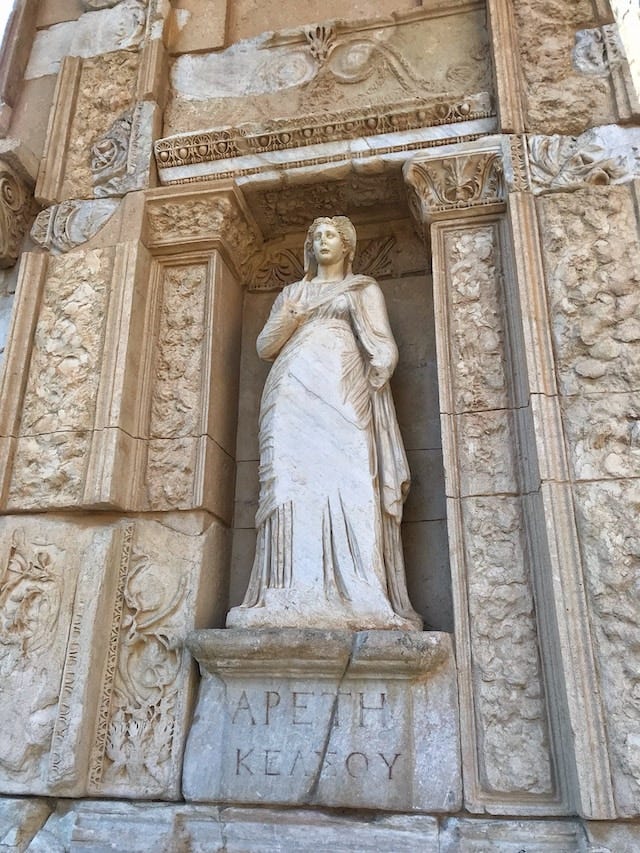
Thus, Plotina may have saved the empire from civil war by creating an official heir with army support. Unlike her husband, Plotina realized that the empire needed a powerful ruler with army support.
Hadrian ends Rome’s Iraq War
Tellingly, one of Hadrian’s first actions was to order Roman forces out of Mesopotamia. The Legions retreated to the Euphrates River.
Thus Rome’s Iraq War ended with a messy withdrawal, like America’s adventure. Abandoning Mesopotamia allowed Hadrian to redeploy the legions to fight the Jewish revolt.
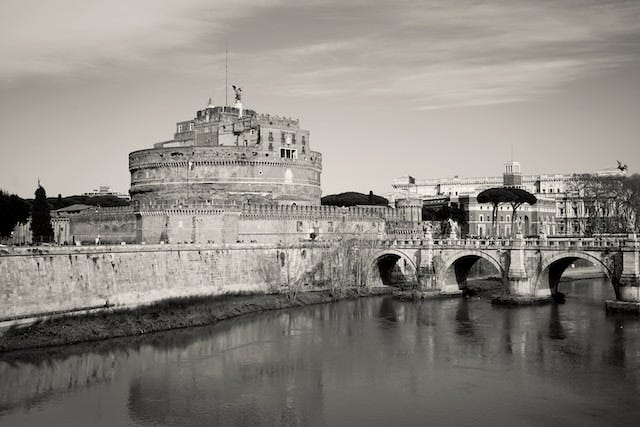
Horrifically, the legions killed enormous numbers of Jews and exterminated the Jewish populations in Cyprus and the Province of Cicilia. Plus, the army sold tens of thousands of captured Jews into slavery. However, the legions restored the peace.
Moreover, Hadrian abandoned Trajan’s conquests beyond the Danube River in Dacia. Yet, the emperor confirmed the conquest of the Dacian gold mines.
Hadrian’s Imperial Strategy
Abandoning Mesopotamia and parts of Dacia was a deliberate strategy. Hadrian justified the move by citing the Emperor Augustus, who made the Danube, Euphrates, and Rhine rivers the empire’s eastern borders. Since Augustus was a god, it was now a sin for Roman troops to conquer lands beyond the rivers.
Hadrian withdrew to the rivers because he understood two strategic realities. First, the empire lacked the resources for further expansion. There were not enough legionnaires to police all the territory Trajan had conquered.
Second, the legions were the only thing keeping much of the empire stable. In particular, the legions kept some of the empire’s residents from killing each other. For example, Jews and Greeks.
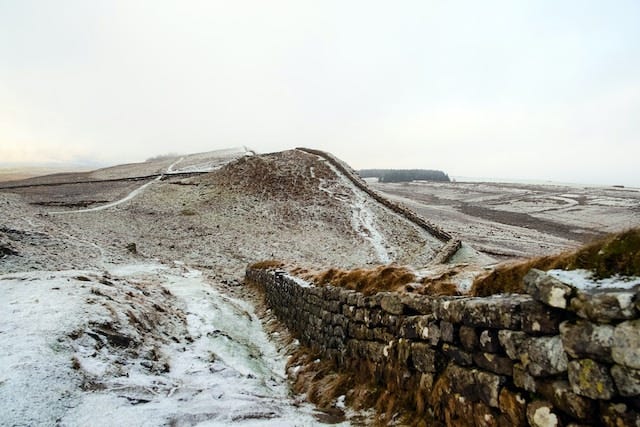
Hence, Hadrian understood the empire could not afford more foreign wars. Consequently, he ended foreign expansion. In Britain, Hadrian built a wall marking the extent of Roman conquests. England and Wales were Roman and Scotland was not. We know this barrier as Hadrian’s Wall.
America’s Iraq catastrophe
One person who never studied Trajan’s Parthian catastrophe was US President George W. Bush (R-Texas).
On 20 March 2003, Bush ordered an invasion of Iraq. By 9 April 2003, American, British, and token allies had overwhelmed the Iraqi Army and overrun Baghdad. This quick victory led to Bush’s infamous press conference on the aircraft carrier USS Abraham Lincoln, featuring the notorious “Mission Accomplished” banner.
Conversely, US forces remained in combat in Iraq until November 2009. The US Department of Defense estimates 4,418 US military personnel and 13 civilians died in Iraq between 20 March 2003 and 30 October 2023. Combat killed 3,490 of those people. Combat wounded 31,994 Americans in Iraq.*
Some American forces remain in Iraq to this day, and combat continues there. Iraq combat killed 11 Americans in 2020, Statista estimates.
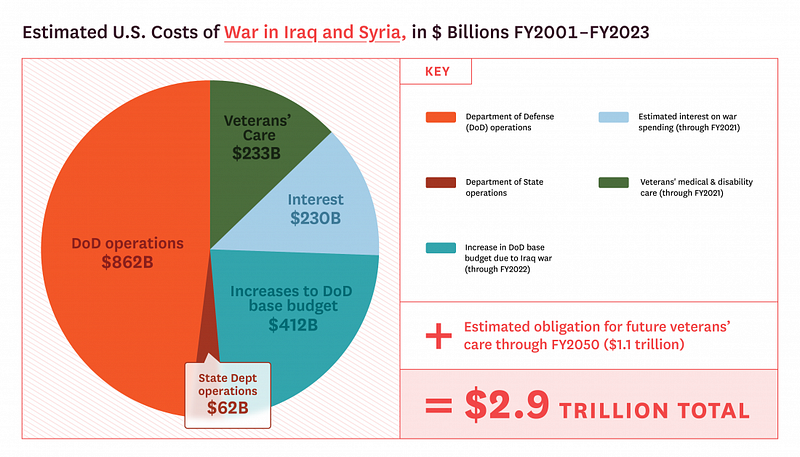
The Iraqi death toll is far higher. Combat has killed 280,771 Iraqis since March 2003, the Watson Institute for International & Public Affairs estimates. Plus, the Iraq war cost US taxpayers $2.9 trillion, the Watson Institute claims.
Despite the costs, Iraq remains a battlefield with US and Iranian forces in combat with local factions. Frighteningly, the war will continue. President Joe Biden’s (D-Delaware) administration is asking Congress for $400 million to fund operations against the ISIS terrorist army in Iraq.
Despite the costs, Iraq remains a battlefield with US and Iranian forces in combat with local factions. Frighteningly, the war will continue. President Joe Biden’s (D-Delaware) administration is asking Congress for $400 million for operations against the ISIS terrorist army in Iraq.
*Pax: War and Peace in Rome’s Golden Age by Tom Holland
*https://www.unrv.com/five-good-emperors/trajan.php
*https://www.thecollector.com/parthia-empire-forgotten/
*https://history-maps.com/story/Parthian-Empire/event/Trajan’s-Parthian-campaign
*https://roman-empire.net/people/hadrian/
*https://www.defense.gov/casualty.pdf
*https://www.statista.com/statistics/263798/american-soldiers-killed-in-iraq/
*https://watson.brown.edu/costsofwar/costs/human/civilians/iraqi
*https://watson.brown.edu/costsofwar/costs/human/civilians/iraqi