
The Role of Machine Learning in Customer Segmentation
How do you deepen your relationships with customers at scale? What’s happening with the customers who didn’t complete their purchases and never responded to your surveys? How do you transmit these customer insights to frontline employees who deliver personal and attentive service? Analytics and machine learning can come in to help. Here are some use cases.
1. Improve customer retention rates by understanding why they left in the first place
2. Decrease customer churn by understanding what causes them to be dissatisfied
3. Offer dynamic, real-time prices to increase customer conversions and decrease customer acquisition costs
4. Develop predictive models to identify which customers are most likely to defect so you can offer them interventions
5. Use text analytics to understand what customers are saying about you on social media and take action to improve sentiment
Descriptive
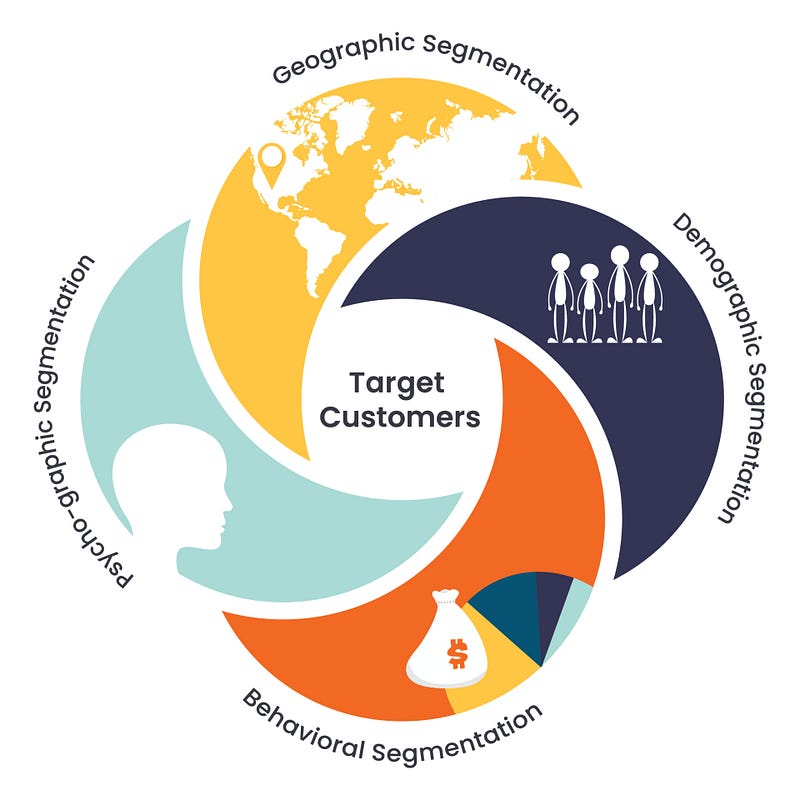
Most companies have rule-based segmentation in place to get initial insights. It is part of the first stage of analytics which answers the question of what happened. Companies increasingly integrate inputs from demographic-based data and consider various attitudinal, online, and offline behavioral inputs. Implementing big data technologies allows all the data collected on prospects and customers to be brought together. Companies can then go beyond broad segments and personas and create highly refined ‘micro-segments’ to help identify the best customers to target.
Diagnostic
The second stage of analytics is known as diagnostic analytics. This is where machine learning can come in to help. After identifying the problem, you need to ask why it is happening. Machine learning can help identify the root cause of customer churn or help identify which channels are most effective at acquiring new customers. It can also help identify what type of content is most effective at engaging customers. In this stage, it is important to have a clear understanding of the business problem you are trying to solve and a good dataset that can be used to train the machine learning models, for example, what behaviors or attributes make a great customer and rank the thousands of or more elements. Using statistical modeling, this can be quickly done. With clustering analysis, you can also break your customers into segments in a way that allows you to design a meaningful and tailored strategy for each segment.
Predictive
Predictive analytics takes the analysis further by providing insights into what will happen. You can use predictive analytics to understand better customer needs and how these needs will change over time. This is important for two reasons. First, it allows you to anticipate customer needs rather than react to them after the event. Second, it provides a complete understanding of customer behavior, which can be used to identify the most valuable customers and optimize marketing investment.
The predictive stage of analytics is where you can see the future. This is done by understanding the customer better through their behaviors and interactions with your brand. For example, you can use predictive analytics to identify which customers are most likely to defect and develop interventions to stop them from leaving. You can also determine which customers are most likely to churn and develop strategies to keep them engaged. In addition, you can develop models to identify which prospects are most likely to convert and design targeted marketing campaigns to reach them. Additionally, knowing which customers are most likely to be interested in a new product or service can help. Machine learning can also be used to detect irregularities such as fraudulent behavior.
Prescriptive
To take this a step further, prescriptive analytics answers the question of how you can make it happen. By combining descriptive, diagnostic, and predictive analytics, you can develop recommendations on what actions to take to improve customer satisfaction. With this capability, companies can generate rich customer insights from predictive modeling and act on them in real-time. For example, companies can automatically detect risks or opportunities and then trigger an action based on the detected situation, automatically reach lookalike prospects with targeted marketing messages, or identify loyal customers who have a high potential lifetime value (not current lifetime value) and enable retention activities to reduce the churn rates.
Machine learning algorithms can automatically identify the most effective marketing actions and prescribe each customer’s best course of action. These actions might include sending a targeted email, making a personalized phone call, or making a product recommendation. By automatically identifying and making the best efforts, companies can improve customer engagement and loyalty and increase sales and profits.
For additional PMM and ML reading and resources (mixture of free and subscription services): https://bitsbytesandbots.substack.com/


