Science | Psychology | Geeky
The Role of Epigenetics In Mental Health
Practical applications of groundbreaking discoveries
In 1900, Gregor Mendel, through his experiments with plants, set the basis for the discovery of DNA and genes.
Building on Mendel’s work, Wilhelm Johannsen in 1909 was the first to talk about the genome (the collection of genes), and in 1953 James Watson and Francis Crick discovered the “double-helix” molecular structure of DNA (deoxyribonucleic acid), which they called “the secret of life”.
The mapping out of the genome of humans and other organisms started. Watson said:
“We used to think our fate was in our stars. Now we know that, in large measure, our fate is in our genes.”
These advancements in science, also led to the study of epigenetics, which is the study of the intricate interactions that underlie an organism’s lifetime development.
The role of epigenetics
Biological information is encoded in DNA. It is composed of two chains that coil around one another to form a double helix and are made up of the four bases cytosine, guanine, thymine, and adenine as well as a sugar-phosphate backbone.
In most situations, messenger RNA (mRNA) serves as a template for proteins, the central tenets of cells, and some sections of DNA contain instructions for the development of these functional products (coding RNA).
Epigenetic processes have an influence on this tightly controlled process. The regulation of gene expression by non-coding RNA, histone changes, and DNA methylation are the three most significant epigenetic mechanisms.
Essentially, chemical modifications to DNA and the proteins that are associated with it can affect how genes are expressed, or whether they are turned on or off, without changing the underlying sequence.
The epigenetic system’s receptivity to alterations in the environment is crucial.
Therefore, the process of epigenetics doesn’t change the DNA sequence. Rather, through some minor additions on top of the DNA (the prefix “epi” comes from the Greek word meaning “above” or “on top of”), some parts of genes may be activated or deactivated.
Epigenetics and mental health
Research shows that the adversities we face in life, can trigger the epigenetics mechanism in a way that the changes (the additions on top of the DNA mentioned previously) can be passed down from one generation to the next.
Moreover, other findings suggest that epigenetic changes appear to be longer lasting if they occur earlier in a person’s life. This has several implications for the way mental health problems are being conceptualized.
It also raises the question about the long-lasting inequalities and adversities some groups of people face, which appear to be influencing their future generations, thus perpetuating the cycle of mental health difficulties in disadvantaged social groups.
The intergenerational effects of epigenetics are drawing more attention in the research community lately, especially since new models of understanding and conceptualizing mental health pathology are sought.
Overall, the focus is slowly turning away from simply attributing something to genes, and toward the ways in which the social and environmental aspects of a person’s life could be creating psychopathological consequences.
Reversing the changes
It should be noted that not all epigenetic changes are bad. As we learn and adapt to our environment, epigenetics play an important role in transferring desirable traits quickly from one generation to the next, without requiring major changes in the genome.
Similarly, for mental health, living a life without a lot of stress and any major adversities, could potentially create a positive epigenetic change to a person who has a genetic predisposition for severe psychopathology.
In that way, not only is that person protected from expressing a gene that could lead to the manifestation of psychopathology, but that person could further protect their future offspring since that epigenetic change will be passed down.
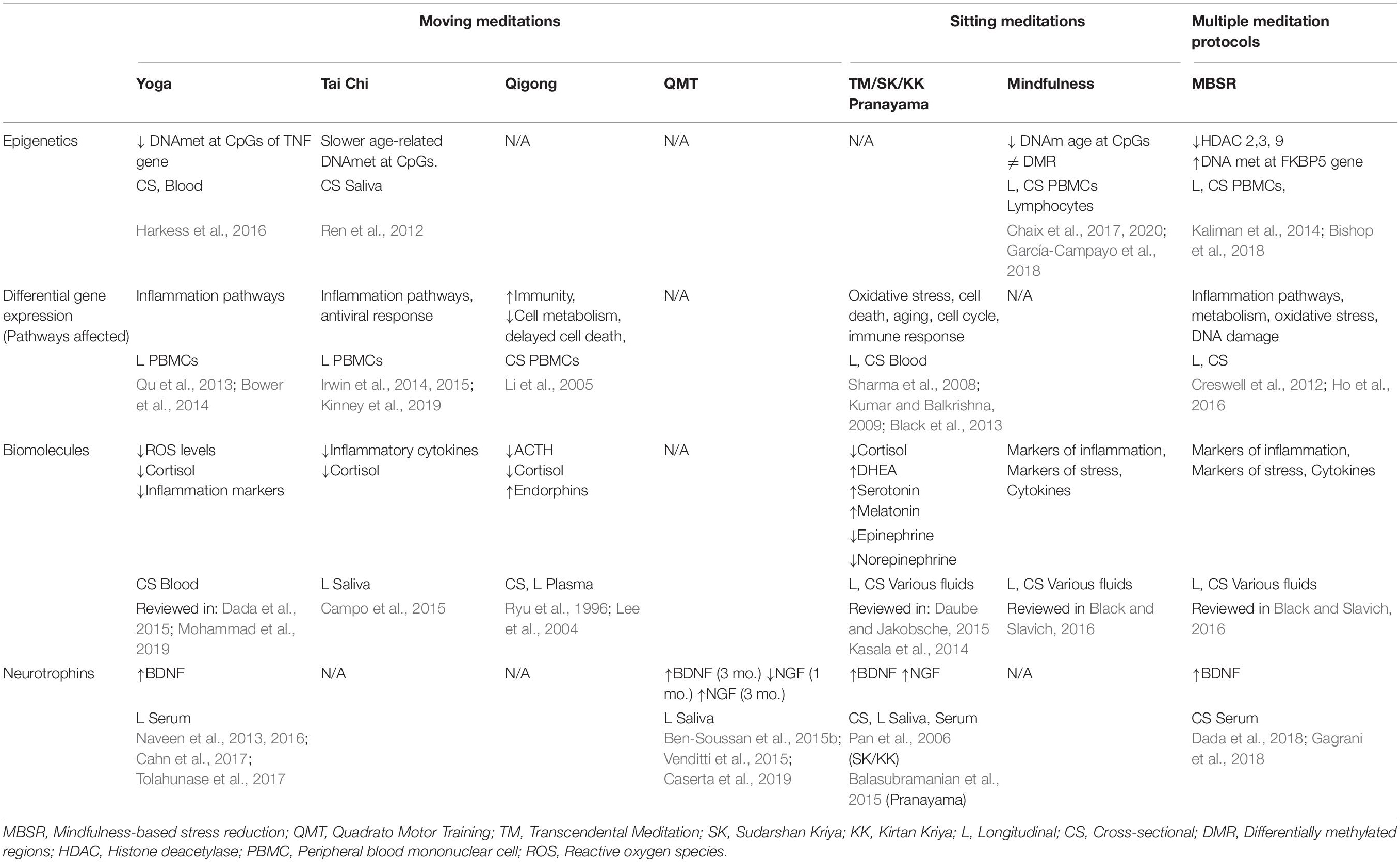
While there isn’t enough research yet on which interventions are best suited to reverse undesirable epigenetic changes, the results so far show that both dynamic meditations (combining the mind and the body, such as yoga and tai chi) and sitting meditations (meditating without moving) provide good outcomes.
More specifically, meditation appears to be lowering the levels of inflammation in the body. Different meditation practices seem to be working in slightly different ways (here is a summary table of the results from this study).
However, the researchers conclude that an important factor for all the positive changes is inner silence.
Since the research community still needs a few years to figure out exactly how meditation works on the molecular level, a tentative conclusion is that by finding inner silence we can reverse the negative epigenetic changes that affect our mental health.
Inner silence can be found in many ways, depending on the person and their experiences. This is one of the reasons why the researchers in the study cited above refrained from saying which meditation type is better.
To conclude, even though there are many things we have yet to learn about the role of epigenetics in mental health, it is good to know that we can start working on creating positive changes and reversing the negative ones. Furthermore, the prospect for new psychological therapies that will target epigenetic processes is of special interest to the psychotherapy community.