
The Role Introverts should play in the coming Collapse of the United States
You will be needed.
“I thought perhaps she was crazy, but she was only highly intuitive.” — Carly Jung
“Quiet is might. Solitude is strength. Introversion is power.” — Laurie Helgoe
“Introverts may take longer to respond because they are likely planning, thinking, and engaging in internal monologue. Because of this, they may take longer to process and respond than extroverts, especially when put on the spot.” — Dr. Karen Dudek-Brannan
Introverts also don’t often push for their own opinions at first because, unlike extroverts, they haven’t formed one.
Introverts prefer to listen and absorb all the available information and then use their brains to come up with a rational informed decision.
Being the first to come up with a plan or solution isn’t as important to an introvert as coming up with the right plan or solution.
Introverts are regularly misunderstood by extroverts. Apparently, we can come across as shy, rude, anti-social, snobbish, or even mentally slow. I don’t understand extroverts. I especially don’t understand how they rush to these snap judgments.
I think it’s rude to interrupt or talk over someone, but that doesn’t seem to matter as much to extroverts. I think it’s mentally slow to be the first person to offer an opinion on any topic as it seems the person believes themselves to be intellectually superior to others without the need for their input. I think it is snobbish to undermine quieter people with backhanded insults when they do contribute.
In fact, I think extroverts often ignore the most well-thought-out advice and the best solution to a problem by rushing headstrong into supporting the first ideas brought up. They often do so without thought and without considering other possible alternatives.
I would guess that the vast majority of bad decisions ever made have been made by extroverts.
They regularly “lead” through intimidation and strongly imply that any ideas brought up after the first ones are a waste of time to consider.
Introverts are told to act (and write) with more confidence, like extroverts. However, I believe that a more honest approach makes more sense. Perhaps those with an over-inflated sense of self-importance should humble themselves and be willing to listen to those whose voice isn’t as loud as theirs, but whose ideas are more sound.
Just like the Johnathan Swift quote often misattributed to Mark Twain’s says, “A lie can travel halfway around the globe before the truth has put on its shoes,” the best ideas often come with time, research, and consideration. Just like lies, bad decisions are fresh and flashy. They are full of zeal and catch a person’s interest.
I’ve noticed and there probably is a psychological theory regarding this phenomenon, that people’s default position is usually to agree when offered one option. When asked, “Do you want chicken for dinner?” more people are likely to default answering, “yes’ than if asked to chose between options such as, “Do you want chicken or ice cream for dinner?”
The unspoken result is that we live in a dictatorship of the first and loudest ideas.
We see it in the movies all the time. When someone later comes up with a better alternative after the first idea has been implemented, the characters get this stressed, exasperated look on their faces. The innovation is often squelched and suppressed. At the very least, the characters know that the idea will meet with strong resistance even if it is superior to the one being implemented.
This puts the introvert in a precarious situation. They suffer a lifetime of always being second. Even though they are often more intelligent than extroverts since they put in the time to research and listen to other people’s opinions before coming up with their ideas, just by the very nature of how and when they arrived at their ideas, they will often be met with criticism and rejection.
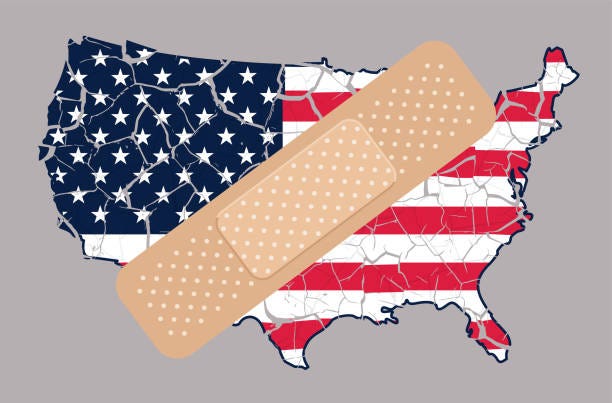
Considering the value placed on extroversion in American business and society, it is likely the case that many of our corporations, institutions, and our entire economic system are an unstable house of cards. Our inept response to Covid-19 shows how ill-prepared we are for any unexpected adverse event. If a second catastrophe were to hit us, we are finished.
Introverts would have the best ideas to lead us out of inevitable collapse and have the best ideas of how to reshape society once collapse is “official” and seen by the slower extroverts, making the news. But the culture will likely first turn to the extroverts who failed them for solutions. Naturally, as has been the case for all of recorded human history, the extroverts craving the attention and the desire to lead will offer up the first shitty reactionary ideas that come to their minds.
This is what my intuition tells me.
The collapse this is has been and will be.
Let’s now give this some perspective. I believe it is common knowledge among those who read, research and study, giving thought to such ideas, that when future history books are written, they will officially put the date the United States collapsed in 2008, the time of the global financial crisis.
It is now 2022 and most people are unaware that the collapse of American society is even a possibility. Since 2008, we have been the proverbial chicken running around with its head cut off. It is of interest to note that we did nothing to change what brought about the financial crisis of 2008. We just kind of kept going, sweeping it under the rug.
We are in deep denial running on the hopeium produced by a culture of toxic positivity.
We ignore those who know better and warn us while propping up those who tell us everything is and will be okay. The knowledgeable well-studied intuitive introvert gets punished for being anti-American. They are told, “America, love it or leave it,” when it is America they are trying to save from the zombie hordes hypnotized by their own shallow reflections.
The quiet ones who already hesitate to speak up, to begin with, because of a lifetime of abuse from bullying extroverts are told to “shut up!”
I was told that society has improved since the dark ages, but I don’t see it. We just use more petroleum products.
It is time for introverts to demand the respect they deserve.
I am 976 words into my rant, and I have yet to tell you the role introverts should play after the United States collapses as I said I would in my title. Perhaps this is one of those times when those with introverted intuition are able to make those connections where others are not. Or perhaps I have made it clear. Being misunderstood for a lifetime, I cannot tell.
However, I feel that although I haven’t explicitly stated it, if you really read and understood the words I have written here, the answer to the question of “What role should introverts play?” will become obvious. Perhaps leaving you to draw your own conclusions comes after a lifetime of being belittled and ignored. I already know we won’t listen to me, so maybe you will listen to yourselves.
I know that esoteric Eastern values of humility, being soft-spoken, reflection, keeping your ego in check, having compassion, and promoting the well-being of others are shunned if not mocked outright by Western, especially American society.
A new way forward.
I would humbly propose that adopting those values associated with the East in the United States is the only pathway forward. That is the only alternative to continuing the suppression of our basic human nature and descending into dystopian fascism and brutality.
Finally, let me state it more directly and explicitly to make sure there is none of the usual misunderstandings: the role of the introvert in the coming collapse should be to save the world. Or, to say it even more directly: to save the humans from themselves.
Warning. You will be opposed. You have to “put yourself out there” against your own will. It seems that humans would rather die in denial than live with bruised egos. You will be despised by the current generation if you insist on coming forward, but our great-grandchildren, should they survive the effects of inevitable climate change, will thank you.
The choice is ours, but will we be aware that we have options when the time comes?


