
The Rock Fortress “Sigiriya”- The Eighth World Wonder
Sigiriya Fortress
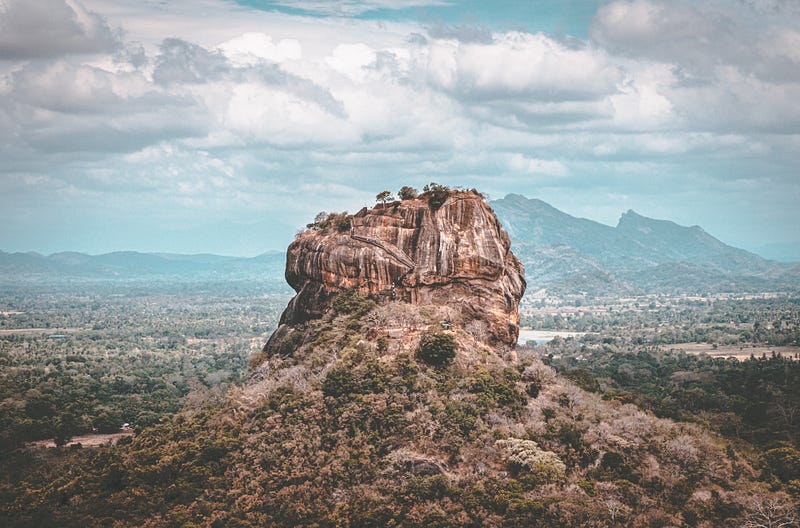
Sri Lanka is a small island in the Indian Ocean with a proud heritage, picturesque landscape, and mesmerizing beaches. Out of the many attractions in the country, Sigiriya is one of the most famous places among local and foreign tourists with approximately 25000 tourists arriving monthly. Sigiriya is named as a world heritage site by UNESCO in 1982 considering its historic importance and engineering excellence. It’s also considered as the Eighth world wonder as the ancient technology and cultural heritage has preserved for thousands of years.
Brief History of Sigiriya
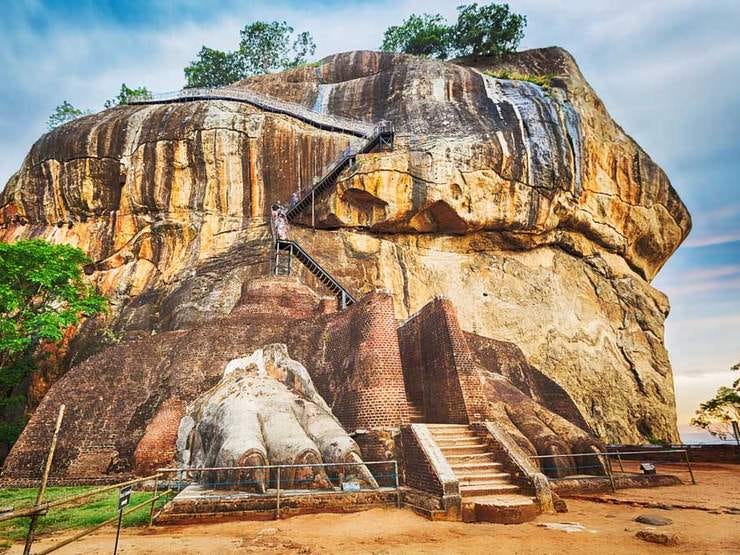
The name ‘Sigiriya’ derived from the words ‘Sinha Gira’, which means the Lion’s rock. At the entrance to the fortress, engraved giant Lion paws named the fortress as ‘The Sigiriya’. It’s believed that the rest of the lion’s body has decayed with the time, and only the paws can be seen today.
King Kashyapa is a popular name with the Sigiriya fortress and considered to be the founder of the place. However, archaeological evidence suggests that there was an ancient civilization in the place before the King Kashyapa reign. Hence the technology and the knowledge of Sigiriya fortress is older than the earlier anticipations. However, King Kashyapa made the renovations to the fortress, which conserve the natural beauty until today. Though King Kashyapa’s life ended with a tragedy it’s an interesting historic story to know.
King Datusena was the father of two princes Kashyapa and Moggallana. Price Moggallana was the rightful heir to the throne as his mother was the first queen. Prince Kashyapa was born to a second queen of King Datusena. However, King Kashyapa desperately wanted to be the king and declared a war against the prince Moggallana. Though the price Moggallana was the rightful heir, he fled to India, as he was not ready for a war.
As prince Moggallana fled, prince Kashyapa imprisoned his old father King Datusena. During the reign of King Datusena, he built irrigational tanks to store water to improve the agriculture in the country. Rice is the staple food in the country and agriculture is the main source of economy. The King Datusena brought prosperity to the country, with the new water systems, and therefore, the people in the country wanted to protect the king.
Unfortunately, the prince Kashyapa was misguided by some ministers and was told that King Datusena owned a hidden treasure. He forced the King Datusena to give all the treasures he possessed. As the king Datusena didn’t own any treasure, he took a handful of water from the ‘Kala wewa’, one of the tanks built by him and said this water is the true treasure he earned. The young prince was furious and asked to let him die near the ‘Kala wewa’ by entombing to a wall. With the King’s demise, the price Kashyapa became the new king of Sri Lanka.
Hearing ruthless murder of his father, fled prince Moggallana was frustrated. He started to organize an army to fight Kashyapa and take back his throne. As King Kashyapa killed his father, which was concerned as an unforgivable offense in society, people of the country refused the Kashyapa as their king. At the same time King Kashyapa knew that prince Moggallana also organizing an army to fight. Since his palace was not safe, he wanted a place with more safety where an army cannot enter at once.
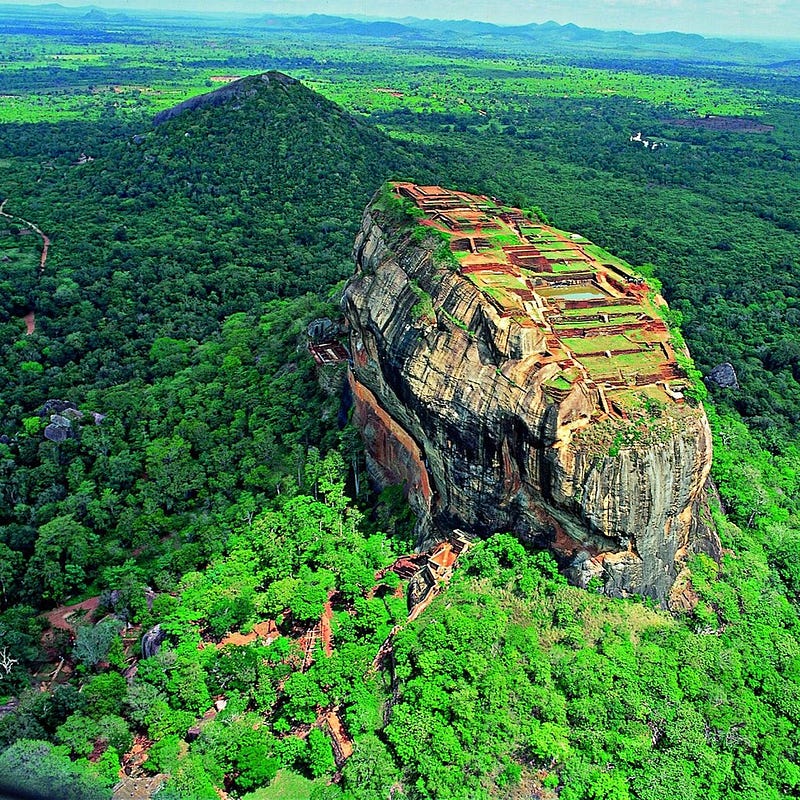
The Sigiriya rock has natural protection. Natural water canals surrounded by the forests and the steep rock formation make it difficult to reach. Since the Sigiriya rock is the highest peak in that area, the enemies were visible from a distance. Therefore, this has made a perfect place to camouflage and King Kashyapa chose the Sigiriya as his new palace which had good security. He built his palace on the top of the mountain which is difficult to climb upon. Though he lived on the Sigiriya for many years, price Moggallana declared a war against him soon.
At the war between Kashyapa and Moggallana the King Kashyapa was defeated and committed suicide. King Moggallana didn’t use the palace built by Kashyapa and thereafter the Sigiriya was abandoned for many centuries. Eventually it was converted to a Buddhist monastery and Buddhist monks used Sigiriya for their meditations. Lately it was discovered by 1831 by British. Though it was abandoned for many years, the proud history of Sigiriya has preserved for many years up until today.
Sigiriya Attractions
Though Sigiriya was a natural rock, the ancient kings converted it to a powerful fortress. Most of the staircases were built by the rock itself and some large rocks have cut into pieces as per requirements. The technology of cutting those hard rocks is still unknown. The Sigiriya rock is 200m above the surrounding plains and the coverage area is more than 37 acres. There are many attractions in the Sigiriya and few have been highlighted below.
1. Sigiriya Paintings (frescoes)
Sigiriya wall paintings are the main attraction of Sigiriya. About 100m above from the surrounding plain Sigiriya paintings can be seen. The artists of these ancient paintings (frescoes) were unknown. ‘Apsara’ or women were drawn in the wall who are wearing jewels and carrying flowers with them. Some believe the paintings reflect the fairies while some believe them as the ladies of the king, who were going to offer the flowers to close by temple ‘Pidurangala’. The designs and the color combinations of the frescoes are unique and cannot find in anywhere else in the country. Some believe the frescoes have some similarities to ‘Ajantha frescoes’ in India, but most of the designs are unique to Sigiriya.
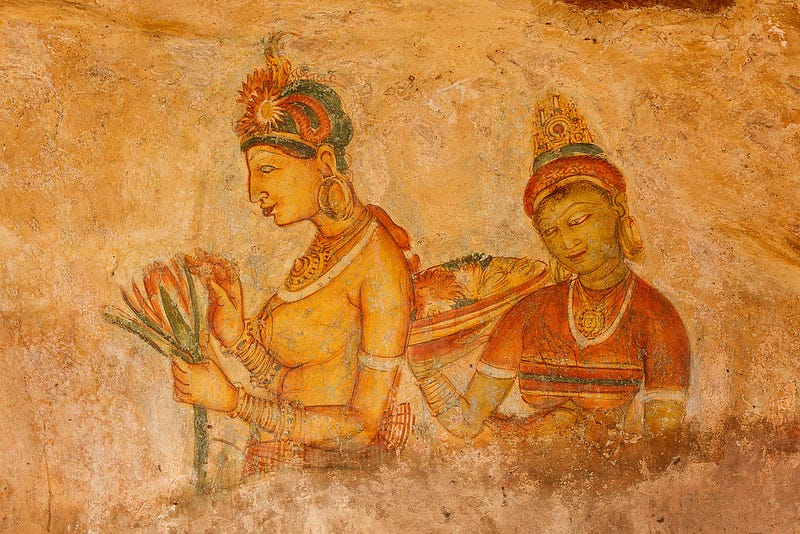
Though the paintings were centuries old, still the colors and the beauty of the women is visible. It is believed there were over 500 paintings on the wall, however today only less than 20 is remaining.
2. The Mirror Wall
The mirror wall is polished in the halfway up the Sigiriya rock. It was said that the king could see his face on this wall when he was passing by. Lately, many people visited the Sigiriya to appreciate its beauty. Those visitors scribbled their thoughts on this wall and that include poems and writings regarding the wall paintings, beauty of the gardens, and the palace. Most of the writings were in an ancient language and revealed the language of ancient Sinhalese as well. To protect the old writings, it’s prohibited to write on the mirror wall now.
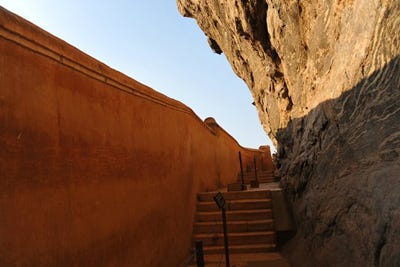
As per the Archeological evidences there were as many as 685 verses on the mirror wall earlier and few are visible as at now. One such writing says,
“I am Budal (the writer). I came with hundreds of people to see Sigiriya. Since all the others wrote poems, I did not!”.
3. The Gardens
The gardens of Sigiriya is another important tourist attraction. There are three gardens namely, the water, boulder, and terraced.
Out of all the gardens, the water garden is prominent as it reflects the hydraulic technology of ancient Sri Lanka. The water gardens are consisting of water ponds which connected to the artificial lake through underground water systems. The water system has carried water to the top and enable it to provide continuous water supply to the palace on the top of the Sigiriya rock. During rainy seasons the water system activates and the water fountains are visible even today. This evident the advanced technology of ancestors in Sri Lanka, which were lost forever.
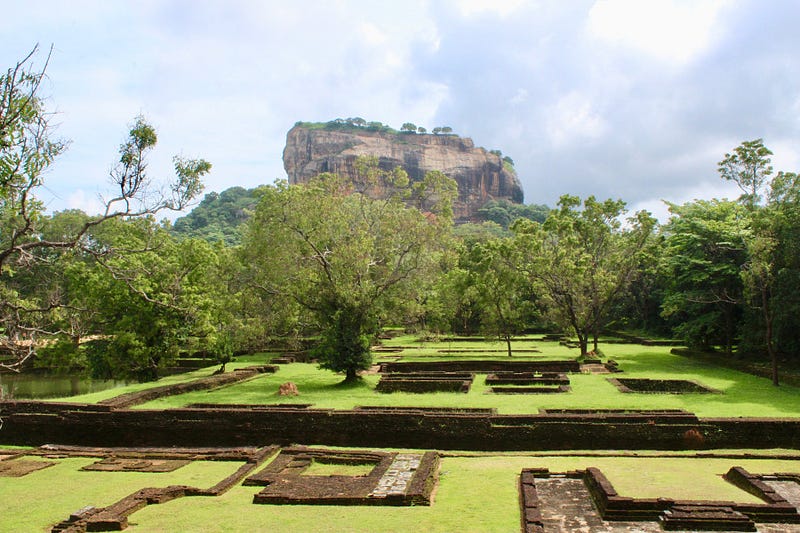
The boulder gardens have built to pushed off from the top to prevent the kingdom from enemies and the terraced gardens were built on the sides of the pathways and formed by a limestone staircase.
On the top of the rock, the ruins of the ancient palace of King Kashyapa can be seen. Some believe that Sigiriya was used as an Astrological observation center also, as it’s the highest peak in that area. Though the climbing of the rock is exhausting, the strong winds, clear sky with green surroundings create an unforgettable scenery, which make it worth climbing.
Though the Sigiriya fortress was fallen many years back, its dignity and proud history evident the beauty of the knowledge and technology of the ancient civilizations. If anyone is planning to visit Sri Lanka, Sigiriya rock fortress should be on the itinerary. It’s advised not to believe anyone’s words and this is an invitation to visit this Eighth world wonder to experience the unique history of Sigiriya!