
The Roar of Victory —A Memory Spiced up with Beerangu
Celebrating a momentous triumph at the 1996 Cricket World Cup final

On that day, we were ready.
More precisely, Beerangus, our hand-crafted firing guns, were ready. We loaded them with gunpowder scraped from safety matches and eagerly awaited.
Read this article for free here. Use my referral link to enjoy unlimited access to Medium posts.
Why was there such anticipation?
Well, it was a grand celebration for our entire country. It was the day a small nation made its mark. It was the day the world recognized the true potential of this island nation. It was the day of the final match of the 1996 Cricket World Cup.
The game was broadcast live on television, but among our relatives, only our home had a television. It wasn’t a large one, just a small black and white set. But more than enough for our purpose, so all of our male relatives gathered at our house, along with our gang of cousins.
We had to frequently rotate the TV antenna, which was situated on top of a pole outside, whenever we changed the channel.
We carefully positioned the antenna at the best angle early in the morning for optimal quality for the match broadcasting channel.
The final match was played between Australia and Sri Lanka. How Sri Lanka made it to the final is fascinating, but it deserves to be told separately.
Today, however, it’s all about the final match.
I was still a young kid then, so I wasn’t aware of all the rules of cricket. However, whenever the commentator screamed in celebration, we knew it was time to join.
We would grab our loaded Beerangus and rush outside to fire them. As soon as we were done, we eagerly reloaded them, anticipating the next moment of celebration.
I remember Sri Lankan Captain Arjuna Ranatunga winning the toss and deciding to field first. My father screamed in frustration because there was a common belief that scoring first and defending that score was easier.
Batting first, Australia scored 241 runs, an impressive feat. So, our Beerangu were rarely fired during the first half. My father was in a bad mood, pointing out each and every error and blaming the decision to field first.
We boiled a large pot of manioc (cassava) to eat during the break, along with our spicy Maldivian fish sambal. However, nobody was in the mood to consume it due to the seriousness of the situation.
The only relief we had was the performance of our opening pair of batsmen. They had been exceptional throughout the World Cup, and we expected nothing less from them in the final. So, amidst our father’s complaints, we held onto hope.
But reality had other plans. Our opening batsmen were out with relatively low scores, leaving us disappointed.
In a rage, one of my cousins bent his Beerangu and threw it away, stating that it was useless anymore. We all felt the same, but I didn’t want to destroy my precious Beerangu.
However, for the next wicket, we had a steady partnership, and one by one, boundaries started coming — the ball went beyond the fielding limit after being hit.
Initially, these were small celebrations, and we fired our Beerangu here and there. But gradually, it accumulated into something massive that required us to fire our Beerangu more often.
Perhaps our frequent Beerangu firing or the fiery performance on the field boosted our courage, along with the game’s suspense. The balance of the match made it unpredictable.
One of our uncles frequently visited the bathroom to relieve himself, unable to sit still due to the suspense.
But gradually, we reached a point where victory seemed obvious. So, we busily fired up the Beerangus and reloaded them repeatedly while watching the game.
The final moment is somewhat of a blur. Even though we were confident in our victory, winning the world title felt dreamlike.
We could hardly believe it ourselves. Yes, we had indeed achieved it. We became the world champions by defeating mighty Australia, losing only three wickets — a tremendous accomplishment.
To understand the actual situation, one should know a little about the history of cricket. Cricket originated in England and then spread to its colonial countries like Australia, New Zealand, South Africa, and the Caribbean islands.
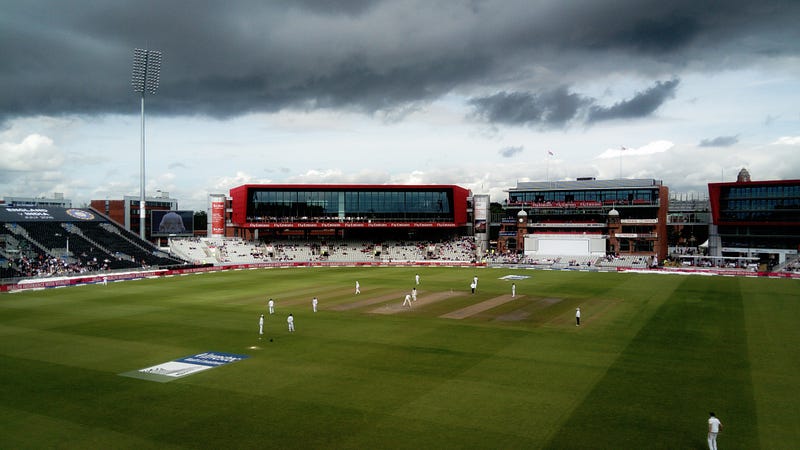
However, something remarkable happened when it reached South Asia — it transformed into more than just a sport — it became a religion.
In short, cricket started to flow into the bloodstream of South Asians. India and Pakistan had already embraced it wholeheartedly.
Although cricket in Sri Lanka dates back to 1964, it hasn’t gained a large audience yet. In fact, our national sport, volleyball, remains the most popular.
However, everything changed on that historic day. From that day forward, cricket in Sri Lanka was forever transformed. Joining our neighbouring nations, we also became a cricket-crazy nation.
Cricket became a household name with parents encouraging more and more children to take part in the sport. Even today, it remains one of the few defining the country’s identity.
For my American and other non-cricket-playing country friends, here’s a brief overview of cricket.
Cricket is a game played on an oval-shaped ground with 11 players on each team. The cricket ball is hard with a leather outer cover, and it is struck by a cricket bat, usually made of willow wood.
In a cricket match, one team gets the opportunity to bat first, determined by a coin flip. Similar to baseball, two players from the batting team go on the field at a time until one of them is out. The remaining players then take their turn to bat.
The objective of the batting team is to accumulate as many runs as possible within a predetermined number of deliveries by the opposition team. Usually, runs can be scored from one to six.
Meanwhile, all 11 players of the opposing team are in the field, with one player bowling and the other 10 fielding. Their goal is to dismiss all players of the batting team or restrict their total score.
The situation changes once a team sets a score, and then the opposing team attempts to chase that score under the same conditions. If the opposing team successfully surpasses the score set by the batting team, they become the winners. Otherwise, the batting team that set the score emerges as the winner.
Finally, I included the awesome Hindi song “Chokara.” Later, it became famous as the 1996 World Cup song. For my cricket-loving friends, it will surely bring back nostalgic memories.
And for those who have no idea about cricket, I encourage you to watch it to get a glimpse of the game. This video includes highlights from the final game.
Note:
Beerangus were made from a bicycle spoke with a flat head inserted into a wooden handle. We would then bend it at a 90-degree angle in the middle. The gunpowder was poured into the cap, fixed at the free end. After that, we would insert a one-inch steel nail into the cap and strike the nail head on a hard surface.
It created an unbelievably sharp sound; we could repeat it by refilling it with gunpowder. We would attach the nail to the spoke with a string to prevent the nail from flying off. Beerangu was used as an alternative to firecrackers because we didn’t have the opportunity to buy them, as they were somewhat rare in those days.
Thanks for reading my story.


