avatarStephan Chatigny

Free AI web copilot to create summaries, insights and extended knowledge, download it at here

2570

Abstract

nd accomplishment.</p><h2 id="a2fc">Daoism</h2><figure id="741e"><img src="https://cdn-images-1.readmedium.com/v2/resize:fit:800/0*4xc8rL82burwEOc8"><figcaption>Photo by <a href="https://unsplash.com/@patrickperkins?utm_source=medium&amp;utm_medium=referral">Patrick Perkins</a> on <a href="https://unsplash.com?utm_source=medium&amp;utm_medium=referral">Unsplash</a></figcaption></figure><p id="a774">Daoism is an ancient Chinese philosophy dating back some 2500 years. It introduced the notion of balance (represented by the concept of yin and yang) and proposes we follow the Dao or <i>the way</i>. What is enticing about <i>the way </i>is that is is not an external being or power but simply the natural order (Mother Nature if you wish) which we are a part of. Freedom is gained by acting in harmony with the Dao. Since we are not separate from Nature, we should not seek to rule or control but rather “go with the flow”.</p><h2 id="7f9a">The message</h2><p id="53ba">Daoism impressed upon me the notion of simplicity and balance (yin/yang). As a former business owner, I was driven by challenge and responsibility. That, however, came at a steep cost. I was also constantly preoccupied and under pressure. It is only when I sold my business, that I was able to adopt a more balanced lifestyle which now includes writing for Medium. Life can become complicated and stressful as we drift further away from the natural way. Who has not felt the therapeutic or calming effect of a simple walk through nature.</p><h2 id="760d">Existentialism</h2><figure id="a026"><img src="https://cdn-images-1.readmedium.com/v2/resize:fit:800/0*eIfnZD2La-lOrZ7Z"><figcaption>Photo by <a href="https://unsplash.com/@simplicity?utm_source=medium&amp;utm_medium=referral">Marija Zaric</a> on <a href="https://unsplash.com?utm_source=medium&amp;utm_medium=referral">Unsplash</a></figcaption></figure><p id="363a">Existentialism is often misconstrued as a bleak philosophy with its notions of <a href="http://Cline, Austin. " existentialist="" absurdity."="" learn="" religions,="" feb.="" 8,="" 2021,="" learnreligions.com="" absurd-and-absurdity-249953."=""><i>the absurd</i></a><i> </i>and the irrationality of existence, not to mention Nietzsche’s famous quote: “<a href="https://www.goodreads.com/author/quotes/1938.Friedrich_Nietzsche">God is dead</a>”. But focusing solely on these concepts would be missing the point. Existentialist thinkers such as Nietzsche, Sartre and Kierkegaard, developed some of the most powerful and influential philosophical ideas of the 20th century. A c

Options

ore tenet of existential thought is that existence precedes essence and since existence is essentially irrational and ungoverned, we are free to define our essence.</p><h2 id="69f7">The message</h2><p id="7163">According to existential doctrine we must strive to live authentically; that is, our actions should be in accordance with our beliefs, and this, in spite of external pressures to behave differently. This freedom, however, comes with responsibility. The freedom to develop our own personal doctrine means we are solely responsible for the consequences of our actions. I interpret this to mean: live life to the fullest. Life is a blank canvas and you, the artist, have the freedom to create your own masterpiece.</p><h2 id="e7bc">Logotherapy (more specifically the book: Man’s Search for Meaning)</h2><p id="f5ef"><a href="https://www.pursuit-of-happiness.org/">Victor Frankl’s</a> essential book <i>Man’s search for meaning </i>has had a profound impact on my outlook. The book relates his experience as a prisoner in a World War II concentration camp . Despite having been subjected to the worst horrors imaginable, he managed to survive by finding (creating) joy in his day to day existence. It gives the phrase: “First world problems” all it’s meaning; how we can poison our daily happiness with, ultimately, trivial problems. Frankl went on to create logotherapy which essentially is the science of creating meaning in life and is considered the Third Viennese School of Psychotherapy.</p><h2 id="a341">The message</h2><p id="0676">There is a silver lining in any situation. It is up to you to see the glass as half full, rather than empty. The key to happiness is to not let external factors control how you think and feel.</p><p id="1674" type="7">Always look on the bright side of life — Monty Python</p><h2 id="a622">Assembling a personal doctrine</h2><p id="61af">The question: <i>Why are we here</i>? has preoccupied mankind since s/he developed the capacity to reason. Whether answers are obtained through a personal lens or that of a higher power, it is fundamental to finding peace of mind and happiness. It explains why there are unhappy wealthy people as well as happy people living modest lifestyles. Now in my fifties, I can reflect upon the core elements of compassion, simplicity, responsibility and optimism and how they govern my day-to-day behaviors and outlook.</p><p id="1a59" type="7">He who has a why to live can bear almost any how.</p><p id="1fea" type="7">Friedrich Nietzsche</p><p id="7c73">Spiritually yours</p></article></body>

The road to equanimity

Cherry-picking from four schools of thought

Photo by Dominik Scythe on Unsplash

The road to equanimity can be a sinuous one but gaining peace of mind is essential to achieving contentment. Whether you believe in a higher power or not, making sense of our existence and creating meaning in our lives enables us to develop the emotional acumen required to traverse life’s numerous challenges. To assist us in developing the underpinnings of our understanding, we are fortunate to have access, through the web, to the wisdom of humankind’s many sages, philosophical currents and religions. Reflecting upon my own personal evolution, the following ideas and concepts, taken from four schools of thought, are the nucleus of my own personal doctrine.

Catholicism

Photo by James Coleman on Unsplash

I was raised a Catholic but our family jumped ship fairly early in my youth. I have memories of Sunday mass, meatless Good Friday (to mark the day Jesus Christ was crucified) and, naturally, attending midnight mass on Christmas Eve. Slowly but surely, we stopped attending every Sunday mass, observance of Good Friday was dropped and inevitably, midnight mass was abandoned. All was not lost however, since I worshipped long enough to be influenced by the Golden Rule (Mathew 7:12) of treating others as you would like to be treated, as well as, the concepts of the Seven Deadly Sins and Seven Holy Virtues.

The message

Being reminded of the Golden Rule flexes my compassion muscle. It enables me to see situations from the other’s perspective. The virtues of diligence, kindness, patience and humility were baked into my former business model sometimes, to it’s detriment but despite the numerous difficulties I faced running a small business, I am left with a sentiment of satisfaction and accomplishment.

Daoism

Photo by Patrick Perkins on Unsplash

Daoism is an ancient Chinese philosophy dating back some 2500 years. It introduced the notion of balance (represented by the concept of yin and yang) and proposes we follow the Dao or the way. What is enticing about the way is that is is not an external being or power but simply the natural order (Mother Nature if you wish) which we are a part of. Freedom is gained by acting in harmony with the Dao. Since we are not separate from Nature, we should not seek to rule or control but rather “go with the flow”.

The message

Daoism impressed upon me the notion of simplicity and balance (yin/yang). As a former business owner, I was driven by challenge and responsibility. That, however, came at a steep cost. I was also constantly preoccupied and under pressure. It is only when I sold my business, that I was able to adopt a more balanced lifestyle which now includes writing for Medium. Life can become complicated and stressful as we drift further away from the natural way. Who has not felt the therapeutic or calming effect of a simple walk through nature.

Existentialism
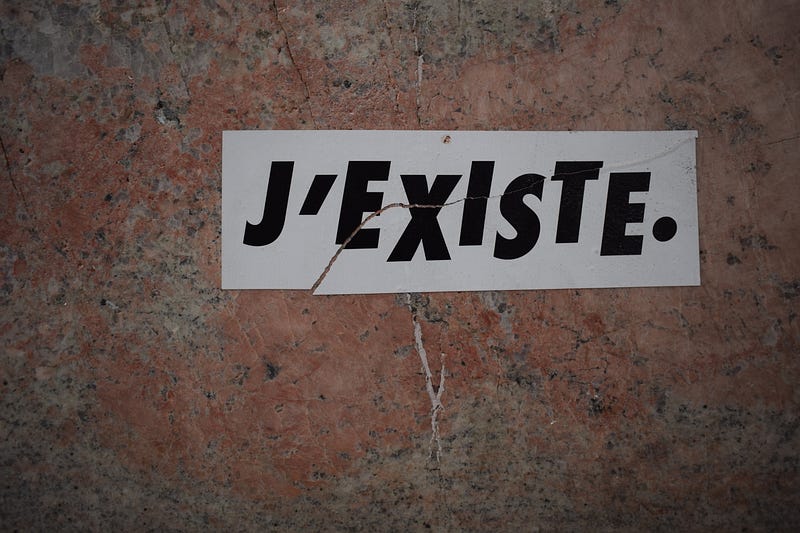
Photo by Marija Zaric on Unsplash

Existentialism is often misconstrued as a bleak philosophy with its notions of the absurd and the irrationality of existence, not to mention Nietzsche’s famous quote: “God is dead”. But focusing solely on these concepts would be missing the point. Existentialist thinkers such as Nietzsche, Sartre and Kierkegaard, developed some of the most powerful and influential philosophical ideas of the 20th century. A core tenet of existential thought is that existence precedes essence and since existence is essentially irrational and ungoverned, we are free to define our essence.

The message

According to existential doctrine we must strive to live authentically; that is, our actions should be in accordance with our beliefs, and this, in spite of external pressures to behave differently. This freedom, however, comes with responsibility. The freedom to develop our own personal doctrine means we are solely responsible for the consequences of our actions. I interpret this to mean: live life to the fullest. Life is a blank canvas and you, the artist, have the freedom to create your own masterpiece.

Logotherapy (more specifically the book: Man’s Search for Meaning)

Victor Frankl’s essential book Man’s search for meaning has had a profound impact on my outlook. The book relates his experience as a prisoner in a World War II concentration camp . Despite having been subjected to the worst horrors imaginable, he managed to survive by finding (creating) joy in his day to day existence. It gives the phrase: “First world problems” all it’s meaning; how we can poison our daily happiness with, ultimately, trivial problems. Frankl went on to create logotherapy which essentially is the science of creating meaning in life and is considered the Third Viennese School of Psychotherapy.

The message

There is a silver lining in any situation. It is up to you to see the glass as half full, rather than empty. The key to happiness is to not let external factors control how you think and feel.

Always look on the bright side of life — Monty Python

Assembling a personal doctrine

The question: Why are we here? has preoccupied mankind since s/he developed the capacity to reason. Whether answers are obtained through a personal lens or that of a higher power, it is fundamental to finding peace of mind and happiness. It explains why there are unhappy wealthy people as well as happy people living modest lifestyles. Now in my fifties, I can reflect upon the core elements of compassion, simplicity, responsibility and optimism and how they govern my day-to-day behaviors and outlook.

He who has a why to live can bear almost any how.

Friedrich Nietzsche

Spiritually yours

Peace Of Mind
Spirituality
Religion
Personal Development
Happiness
Recommended from ReadMedium