
The Road Less Travelled-Discovering Remnants of A Controversial Civilian Conservation Corps (CCC)Camp
Volume 19-Hiking in the McDonough NY State Forest
Special Thanks to Donald A. Windsor¹ For Information and Inspiration
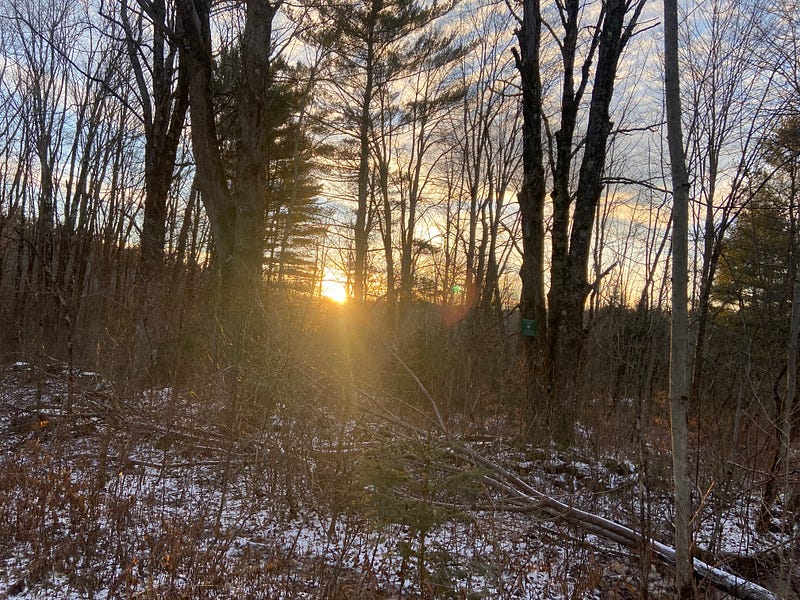
Welcome back to my series on the outdoors and adventure. Recently I took advantage of the lack of significant snowfall thus far this Winter and took a hike in the beautiful McDonough State Forest. This is one of my favorite places to cross-country ski and also to go mountain biking and hiking. However, today I was in search of evidence of years gone by.
First, Some History
For those unfamiliar, CCC represents the Civilian Conservation Corps, started by President Franklin D. Roosevelt in 1933. This was a national voluntary public work relief program that ran until 1942. It was for unmarried unemployed men ages 17 to 28. The purpose was for employment during the Great Depression, and for the conservation and development of public lands.
According to The History Channel, “By July 1, 1933, 1,433 working camps had been established and more than 300,000 men put to work. It was the most rapid peacetime mobilization in American history.”
The camp I was in search of here in rural Chenango County was known as the Preston Hollow Camp. Camp S-68 was the home for Company 235-C, which consisted of about 200 men by July 1, 1933. In case you're wondering, the C signified colored. At this time in history, segregation was not considered racial discrimination.
Tensions came to a head on July 7, 1933, as the men were angered that several African American clerks who had trained with the men prior to arrival were replaced by Caucasians once the men arrived at the camp. The unrest escalated to near rioting and authorities were sent to the camp where about 6 men were arrested, and others were shipped back to New York City. Brigadier General Charles D. Roberts addressed the camp, and the men were given a chance to leave if they didn’t like the work. Some took the opportunity, some went AWOL. In the end, about 40 men were eventually replaced with new recruits. It could have been much worse.
The camped operated through 1941 and in the end, 1500 men worked there. These men did a myriad of work including reforestation, conservation, and construction projects including the nearby Berry Hill Fire Tower, which recently was restored and is again open to the public.
In Search of the Camp
I started hiking on North Griffin Road, which is familiar to me; I have skied here many times. I learned of the existence of this CCC camp through Donald Windsor¹, a member of a local hiking club, The Bullthistle Hiking Club. I knew it was down this road but didn’t know the exact location. Since it was known as Preston Hollow Camp, I had a pretty good idea.
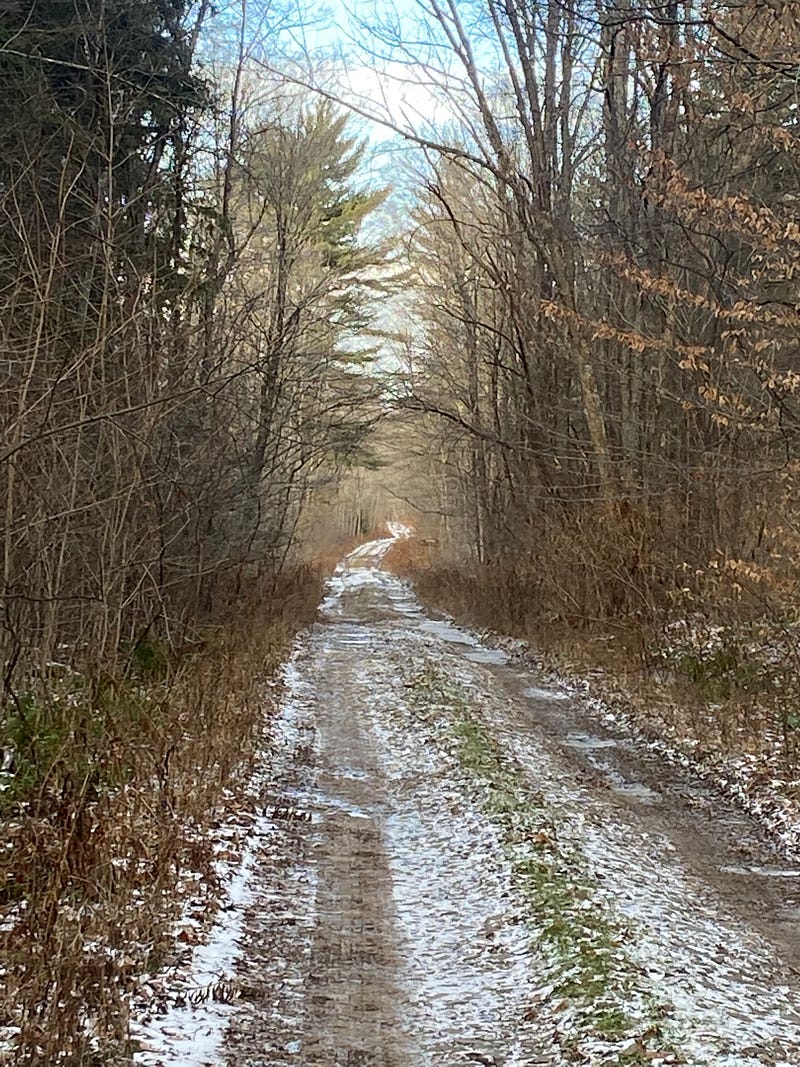
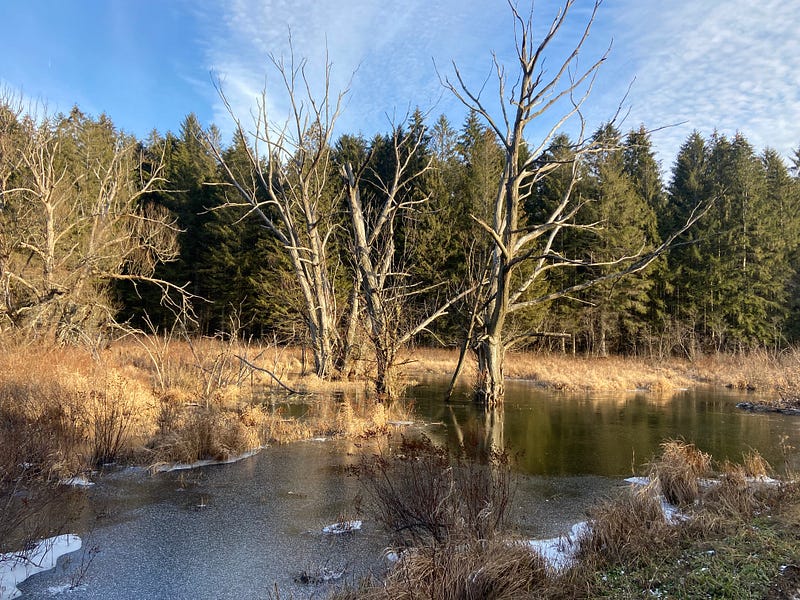
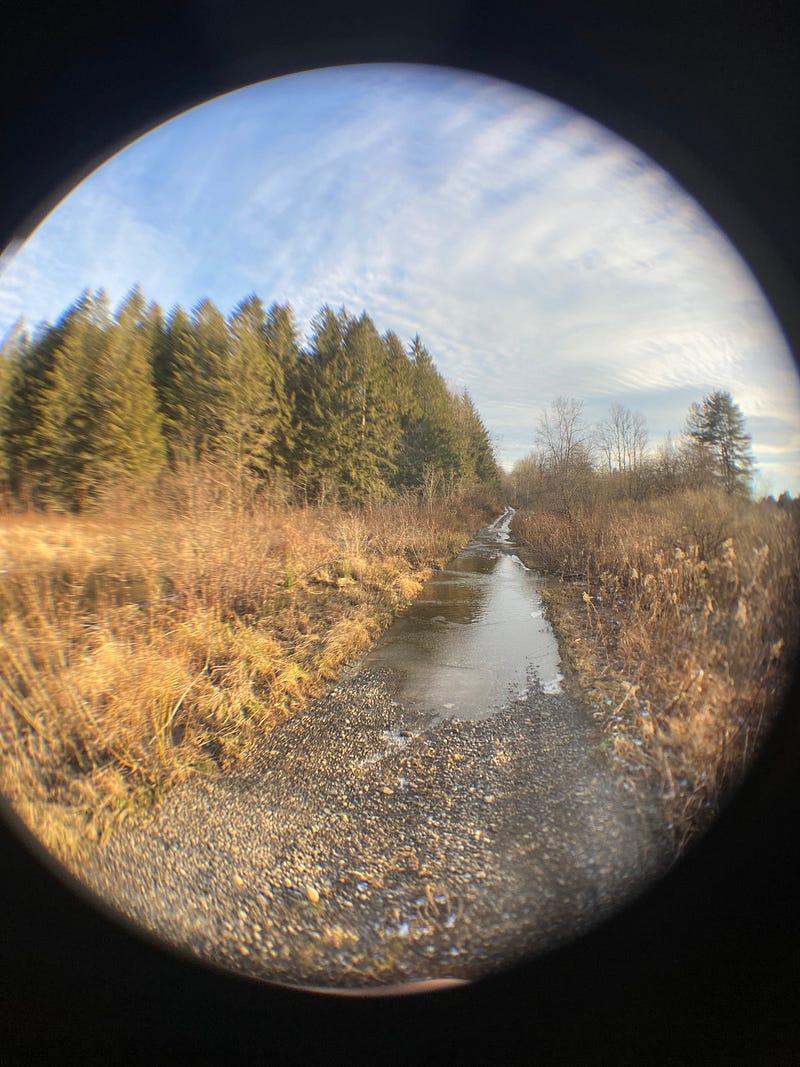
The first quarter to half mile starts out level, then the road descends down a significant grade. At the bottom of the hill, there is a wetland area, that flows into Mill Brook. I knew I had gone too far, the camp wouldn't be built on the wetlands.
So I headed back on North Griffin Road. There was what looked like a road on the left, but it only went in about 100 feet. It was heading towards Mill Brook, where I know the camp was located. It just looked like a dead end. I started back towards my car and began going uphill. Then I turned around.
This has to be it. I know the camp was built in a hollow, Preston Hollow. So I started to explore around this short “entrance” into the woods. I made my way through some brush. It looked like the road did continue on. Then I noticed that the area had been logged at some point; you could see the remaining stumps where trees had been cut. I thought to myself that it was just an old overgrown logging road.
I continued to explore, then I saw something. Not right next to the road, but fairly close. Maybe a hundred feet. I found it by accident.
Piled stones. Maybe just a stone wall, as the area is filled with them. As I got closer, I realized it was something more. Perhaps a foundation.
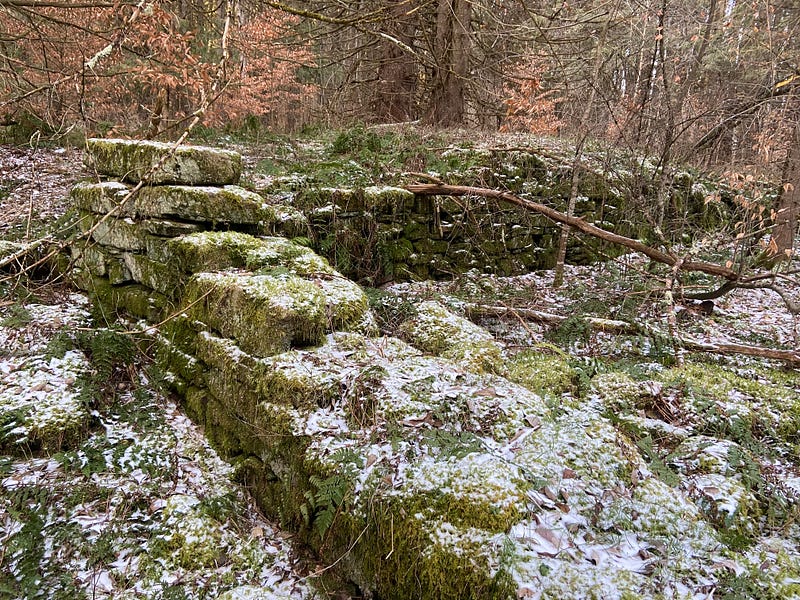
My suspicions were correct. It was a large foundation of laid-up stone. Perhaps a barracks for the men or some other building? As I looked around I could see remnants poking out of the leaves, mostly metal. Old rusted buckets, cans, etc. I would love to explore some more. This is NY State land (public), so I didn’t have to worry that I was trespassing.
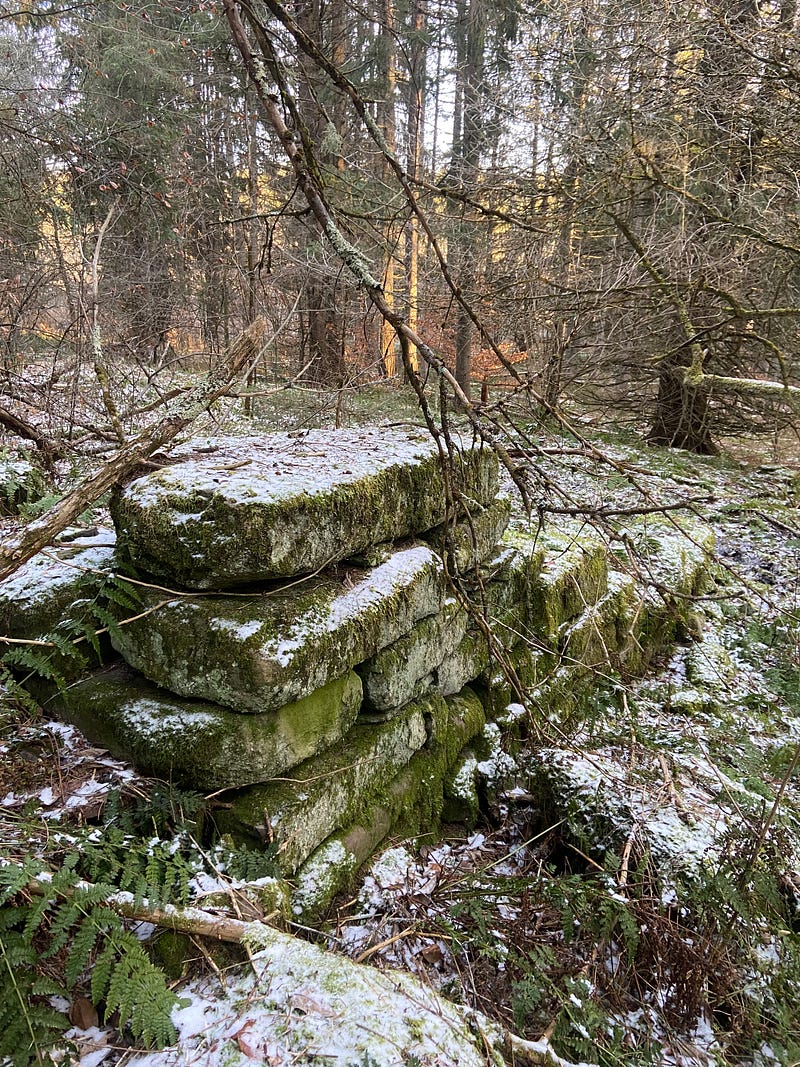
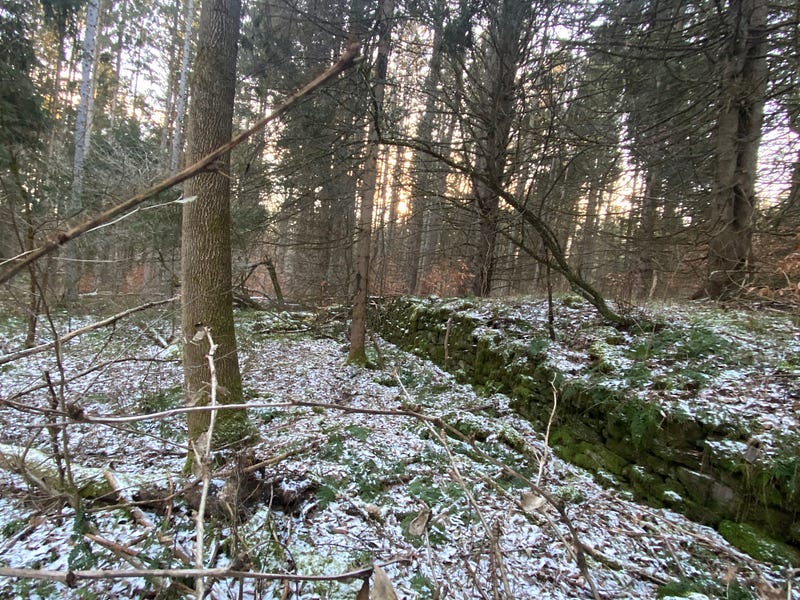
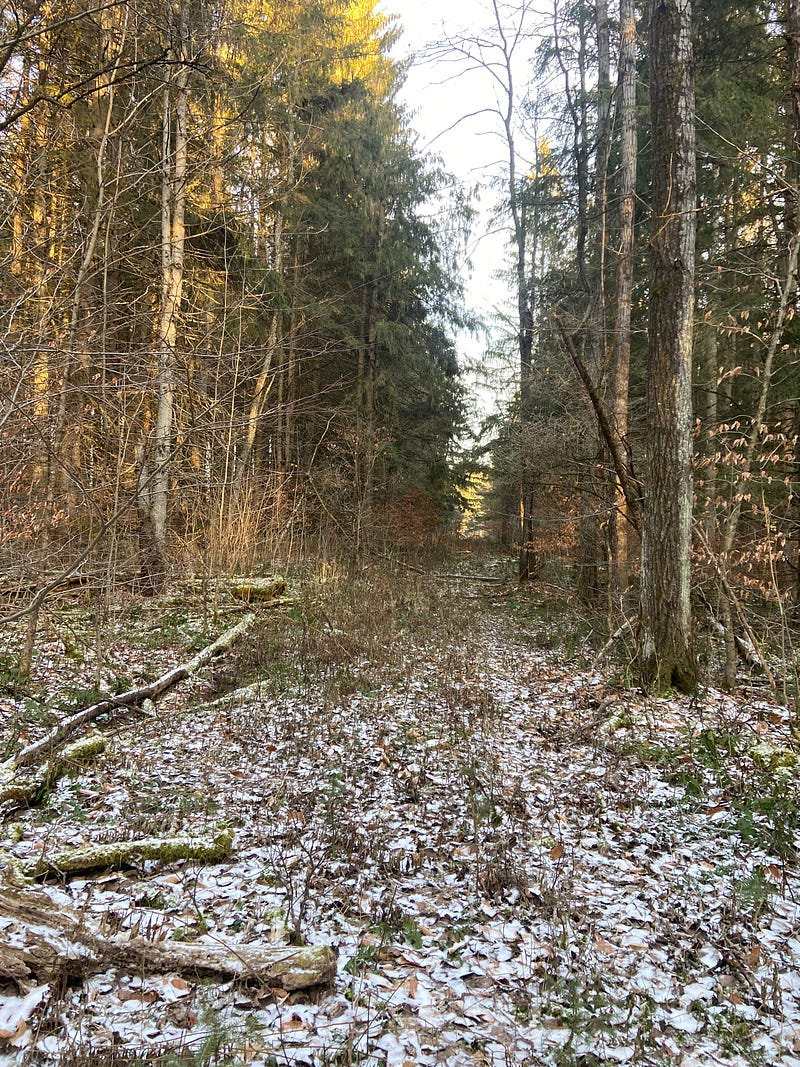
I then again found the road nearby and could see by then that it was not a logging road. You could see that it was well constructed, although it is now very overgrown. Of course, the camp ceased operation in 1941, about 80 years ago.
Could There Be More?
I followed the road further into the woods towards Mill Brook. I could see that the road curved to the left ahead. There was more I wanted to explore, some raised areas that looked like they were leveled off. Perhaps more foundations. According to the local hiking club, there is a magnificent stone dam further in. I wanted to continue to see it, however, it was getting late in the afternoon, and darkness would soon come. I was at least a mile from my car. So I headed back.
I will have to return another time. See what more I can find. And of course, there will be another story to write. I thoroughly enjoy exploring and finding remnants of years gone by. It’s hard to believe that all of this occurred in this peaceful forest, a forest that they created.
If you would like to read more of my stories, please subscribe using the following link. I would appreciate.
Sources¹
¹Donald A. Windsor, The Souvenirs of Yesteryear, Exploring Chenango County, New York, Volume 3, 2010, 794.773 WIND V 3; The Daily Star, Oneonta, NY, 2010 ; The History Channel.


