
SHORT STORY | LILLIAN
THE RIVER OF TIME
Lillian Lancaster sat eagerly in a small classroom at the University of Baltimore, waiting for her anthropology Professor Dr Anthony Carlisle to arrive for his Tuesday morning lecture. This morning he appeared to be running a few minutes late and the small classroom was crowded when he finally arrived.
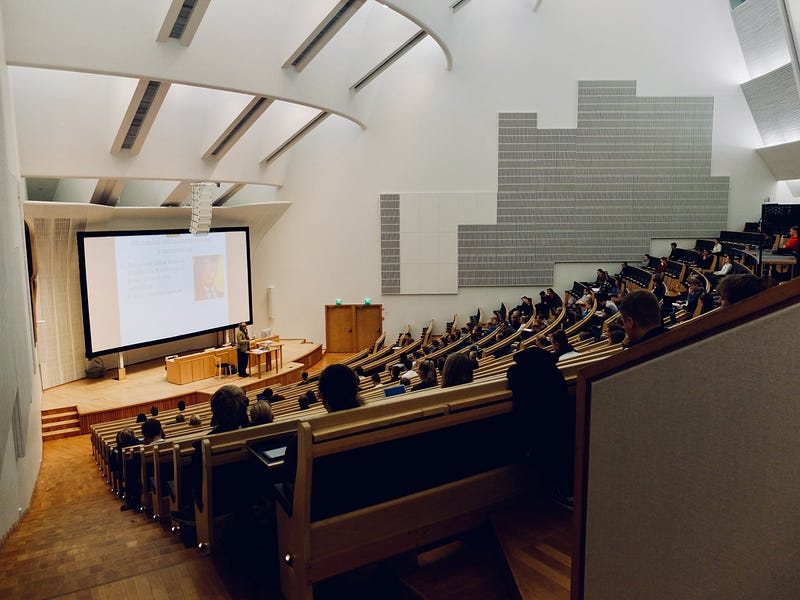
“Sorry to be late,” He greeted them all.”But I had a minor plumbing emergency. I hope everyone is ready to hear about Mesopotamia, which means the land between the rivers, in the Greek language.”
He pulled out from the closet a map of ancient Mesopotamia about 1 1/2 ft square And set it down on a table near the front of the room.
“This has been called the cradle of civilisation, where ancients believe man arose, which the writers of the Hebrew Scriptures credited as the location of the mythical Garden of Eden. Modern Anthropologists believe the evidence for an origin in sub-Saharan Africa is far more credible. This point I will deal with in detail in an upcoming lecture. But today we should focus on Mesopotamia.” He went to his desk and retrieved a large print bible and put on his reading glasses.
“And the Lord God planted a garden eastward in Eden and there he put the man that he had formed,“ he began to read. “And out of the ground made the Lord God grow every tree that is pleasant to the sight and good for food. The tree of life also in the midst of the garden and the tree of knowledge of good and evil and a river went out to water the garden and from hence it was split and became into four heads. The name of the first is Pison, That is it which compasseth the whole land of Havilah where there is gold and the gold of that land is good, and there is Bdellium and the onyx stone. The name of the second river is Gihon. The same is that compasseth the whole land of Ethiopia. And the name of the third river is Hiddekel, that is it which goeth toward the east of Assyria, and the fourth river is the Euphrates.” He set down the Bible.
“I’m sure someone here must know where this is on today’s map.”
“That’s Iraq,” Lillian answered.
“Look, in Genesis the name Mesopotamia is mentioned, the land in the middle of the rivers. According to the ancients, the site of the garden where the man was born I need remind you, as I’ve spoken before, the influence the Greek language and culture had had on how we view history, even the history of kingdoms which came along before the rise of Alexander the Great, and the propagation of Greek culture throughout North Africa and what we now call the Middle East. Of course, the names associated with these sites in the Scriptures are now referenced to the lens of the Greek language. Genesis, Exodus, Deuteronomy, Mesopotamia, are Greek words, which raises the question of what history is, but the retelling of past understanding in the language of the current consensus. It’s what we do every day. Each generation looks at the past through the eyes of their own experience and tradition has been continually re-interpreted in each new paradigm.
Then let us begin. Open your textbooks to page 78 and let’s discuss Mesopotamia.”
Lillian took her textbook and opened to the chapter titled, “the Land Between the Rivers and The River of Time.”
“Read the first paragraph, Mr Anderson,“ Professor Carlisle turned to one of the students near the front of the classroom.
John Anderson began reading, “When we read the ancient histories of prior cultures, We must always keep in mind that the writers of history are often centuries, if not millennia removed from the events they seek to catalogue. This distance in time and space often makes it impossible for us to come to a complete understanding of what really has happened, and unless we are given powers of perception, thus far unknown, where we could look back into time, we can only speculate. Our understanding of Mesopotamian history by necessity is coloured by the cultures that followed it, especially the Greeks, who captured and ruled the Horn of Africa for nearly a millennium.”
“Okay, that’s enough for now,” Professor Carlisle interrupted. “We must remember that it is the victors who write history and anthropology is not history. We have to use our minds and our senses to get beyond the stories each generation tells the next to perpetuate a system and a Paradigm, which serves only the agenda of the few I hope to help you learn a healthy scepticism, even about what I might say.” He paused. “Be honest and analytical. Now to the meat of the matter.”
As he began to explain the competing theories about the origin of the various creation myths, including stories of the great flood, which he confided that he found incredulous, Lillian listened earnestly. For a brief respite, her mind was taken away from thoughts about her cancer, About the growing tumour inside her head, and she became lost in his words, in the same way, she had been lost as a child when her father used to read her stories at bedtime. She loved those stories. Like her father’s voice, she found the rhythm of Dr Carlisle’s voice comforting and soothing. And some days she struggled not to fall asleep while he lectured. She was always annoyed if she fell asleep and missed many of his fascinating words.
She was always a little saddened when the class ended and she had to leave. Since she had gotten the news about her cancer, these conclusions had a special poignancy.
“So what are your plans this weekend?” One of her classmates named Wayne asked her after the class ended.
“I haven’t been doing much,” she answered. “Some reading and just relaxing.”
“A few of us are going to the national aquarium. I thought you might like to come.”
“I don’t think so,” she responded. “I really need to rest this weekend.”
What she wasn’t going to tell anyone at this point, is that she would be in the hospital for the weekend receiving cancer treatments. Lillian was still determined for no one to know she was sick. She dreaded the thought of people pitying her and worse, the ones who would avoid her unconsciously or consciously thinking her illness would somehow rub off on them. She hated the way many people behaved around the sick. Even her grandmother couldn’t persuade her that she needed to tell her friends to give them the opportunity to help her. On one of the many times she spoke over the phone, she told her grandmother, “I don’t want people to feel sorry for me. I don’t want them to pull away from me because they think I am going to die. I want my life to be as normal as it can be for whatever time I have left.”
“You can’t carry this alone, my precious, Lily,” her grandmother gently responded. “I know you want to be strong. But no one should have to carry this kind of burden alone.“
But what neither she nor her grandmother knew nor could have known, was that there was someone else who was helping her carry this burden, and I had confidence they could both get through this ordeal together. I, Jonathan, had a special place in my heart for Lillian Lancaster, and of all the drawings of the hundreds I had drawn, hers was the only one which I had carried with me from the time I first drew it when I was six years old. And what Professor Carlisle could not have imagined was that I could see back into the past and into the future.


