
The Rhino Lady of Limpopo Province
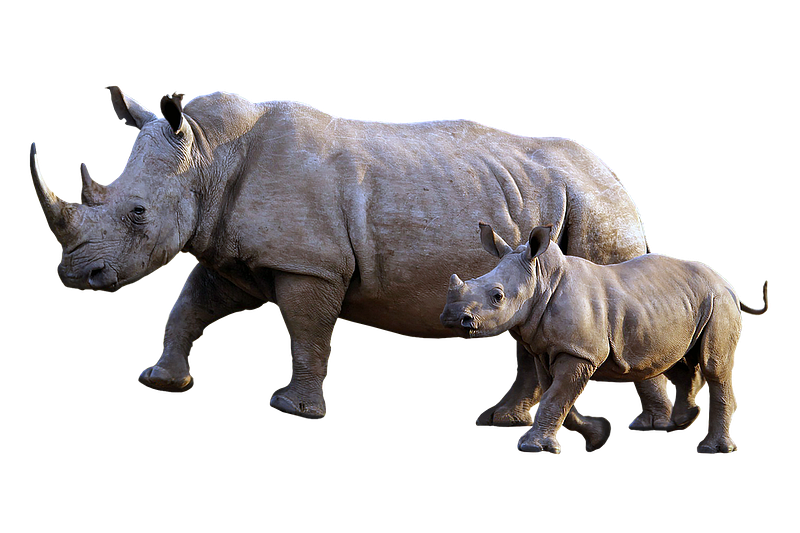
When I met the Rhino Lady, she was already retired and living beside an 88,000-acre game reserve near the very northern tip of South Africa, rather than on the 61,000-acre rhinoceros sanctuary she had created in Kenya decades earlier. Still, Anna Merz’s final home had its own resident rhinos, and that seemed appropriate: the woman who devoted much of her life to Africa’s threatened rhino population needed to live close to the creatures she had literally saved from extinction.
When we met, Anna Merz was around 80, short white hair, wiry and fit, a firm gaze and handshake. She lived alone with her nine dogs on a compound in the Lapalala Private Game Reserve in South Africa’s Limpopo Province. She called her compound Samia, in honor of the rhinoceros immortalized in her best-known book, “Rhino at the Brink of Extinction”.
Her three horses were cared for on another estate not far away, and she went riding several times a week. She rarely walked or rode in the bush without her gun and knife. She wasn’t at all afraid of stray rhinos, but buffalo, baboons, warthogs and puff adders all presented challenges. Her favorite horse, Grizelda, a purebred Boerperd, had been bitten by a puff adder on the muzzle a few years earlier and almost died. (With such a bite, the muzzle swells and the horse risks death by asphyxiation).
However, the most dangerous predator in the African bush is man himself.
Merz learned this soon after moving to Africa in 1958. British by birth, she had moved there with her first husband. In the early 1980s, she attended a lecture in Nairobi by American Esmond Bradley Martin, a world authority on the illicit rhino-horn trade, which was then exploding exponentially.
This period marked the nadir of rhino extermination. According to the Lewa Wildlife Conservancy (a group that has evolved from the rhino sanctuary originally founded by Merz), in Kenya, black rhino numbers declined from an estimated 20,000 in 1970 to around 450 in 2002, with an all-time low of 280 animals in the early 1980’s. This decline was largely due to illegal killing for the rhino horn trade. {As of 2021 there were 897 Eastern black rhinos in the country, thanks to the foundations set by Merz’s conservation efforts}.
A rhino horn can be sold for $60,000 to $400,000 a kilo in Asia (depending on the type of rhino), and one horn alone weighs five or six kilos. “It is literally worth more than gold,” Merz emphasized to me, noting that the Chinese and Korean markets are driving the destruction of the rhino, and that of tigers too. The threat isn’t from the occasional poacher, she insisted; it is from organized crime. “Bands of 14 men armed with sophisticated weapons kill rhinos openly on the game reserves. A lot of money buys a lot of corruption. The only way to protect them is in private reserves, fully patrolled, well-secured and fenced, and such reserves cost several million dollars per year.”
Merz turned the plight of the rhinos into a personal crusade. She persuaded the Craig/Douglas family, landowners in Kenya, to set aside 5,000 acres of their estate, Lewa Downs, into a protected rhino sanctuary. They named this the Ngare Sergoi Rhino Sanctuary. In 1984 the sanctuary received its first rhino, a white rhino male called Mukora. By 1988 the sanctuary had 16 rhino and had doubled in size to more than 10,000 acres. Merz not only spearheaded the creation of the sanctuary and its enlargement, she also personally financed the project.
By 1994 the whole of Lewa Downs as well as the government-owned Ngare Ndare Forest Reserve had been enclosed within a 2.5-meter-high electric fence, creating a 61,000-acre rhino sanctuary.
Merz not only extended financial support, she paid visits to community leaders, contacted conservation groups, made speeches, and wrote articles to increase awareness of the problem. She worked closely with the rhinos in the wild, and wound up raising a number of orphan black rhinos and successfully re-releasing them into the bush. One female orphan in particular, Samia, became the focus of Merz’s best-selling book, and the basis of her contention that rhinos are more intelligent than many wildlife experts believe. She offered two examples:
One, when Samia was young and still living in the compound: Merz had “hidden” from the rhino to see what she would do. Samia, not finding her human friend, had opened the gate where the dogs were kept, using her flexible upper lip to negotiate the closure, then followed the dogs as they used their noses to lead her to Merz.
A second example, which occurred after Samia had been re-introduced to the wild: Merz was accustomed to walking on the sanctuary grounds with her dogs, and Samia usually emerged from the bush to accompany Merz on these afternoon ambles. One day they came upon three rhino bulls who were not kindly disposed to a human or her dogs. Samia, obviously smaller than the males, had broken away from Merz and charged up to the males in a belligerent manner, snorting and somehow communicating, “If you want to charge the human, you have to charge me first.” The three males had backed off and scattered.
Because of the close bond that developed between Merz and Samia, the Englishwoman was devastated when the latter died in a freak accident in the wild, along with her infant son Samuel, in 1995. In an interview in 1997, Merz commented, “I have lived my life with animals and have hand-raised many, but my relationship with Samia was unique…. I never tried to discipline or hold her — she lived as a wild rhino, as part of the local community. Yet of her own free will, she kept alive the bond between us.”
When Merz retired from day-to-day management of the rhino program at Lewa Wildlife Conservancy, she returned to Kenya two months a year to maintain contact.
Today the sanctuary boasts 230 rhinos, more than 13 percent of all rhinoceros in Kenya. Merz believed that the fate of these animals depended on the private sector because governments — then as now — were overwhelmed with pressing social demands (starvation, disease, dehydration) in addition to corruption and inadequate infrastructure. She was convinced that pressure from the U.S. government on China and Korea to discourage trafficking in rhino horns would prove to be the single most effective way to ensure the future of Africa’s rhinos.
The rhino seems not to capture as much public attention as the elephant, but it IS the world’s second largest land mammal and as smart as the elephant, at least in Merz’s view. When I visited the Rhino Museum in Limpopo Province, I had no way of gauging the intelligence of the 3 ½ year old orphan black rhino living at the facility, but I can testify that the baby girl was statuesque and impressive. Visitors had the opportunity to hand-feed her and she was polite and accommodating, scooping pieces of shrub and greenery delicately into her mouth with her prehensile top lip. She regarded us, her feeders, with impish curiosity.
Whatever intelligence rhinos may have, it does not extend to their mating habits. This baby female had been attacked by her father and left for dead by her mother when she was a week old. Samia of Kenya may have been pushed over a cliff to her death by her ill-tempered mate. Apparently rhino husbands are more demanding than their human counterparts, and the wives are more compliant.
Fortunately, Anna Merz was neither compliant nor undemanding, and the surviving rhinos of Africa — few but feisty and steadily increasing in number — are her living legacy.


