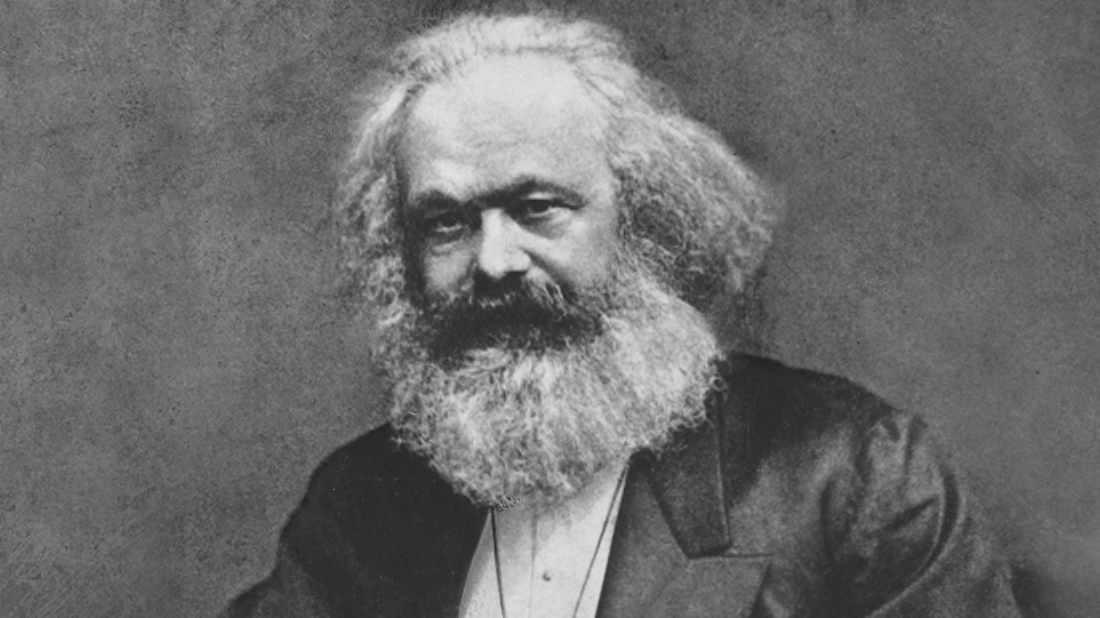
The Revolutionary Impacts of Karl Marx’s Visionary Theories
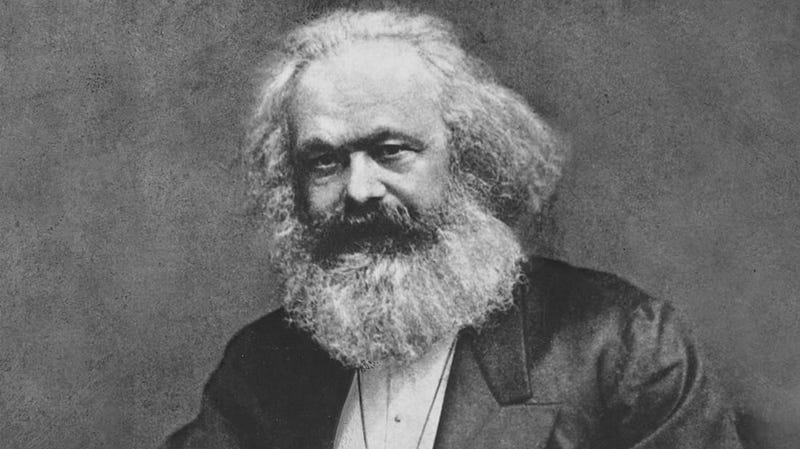
Political philosophers often leave ambiguous messages revealing the realities of our society and the ways to address them. Karl Marx was one such philosopher who, although he desired to change the entire structure of society and create a more egalitarian one, never really predicted a utopia awaiting humanity in the future as people generally credit him for. Instead, he warned society of the severe repercussions that will undoubtedly be caused by the ongoing capitalist production model. Marx was born in the house of Heinrich Marx, a Protestant lawyer who was a man of the Enlightenment, in the Kingdom of Prussia. As a classical liberal, Heinrich was heavily interested in the ideas of German Idealism forwarded by the likes of Immanuel Kant and Voltaire.[1] Heinrich actively participated in several agitations and demonstrations demanding for a constitution in Prussia. His involvement in such proceedings contributed to the philosophical development of the young Karl Marx who witnessed strong socialist ideologies at such a young age.[2] Moreover, Marx was born merely thirty years after the famous French Revolution. The intellectual environment of Europe was going through a massive shift, in both its ideologies and its figures.[3] The role of religion in the society had taken a turn for the worse. Christianity had become a central constitute of the rising German nationalism. Marx’s father himself converted to Christianity from Judaism in order to be included in the higher sections of the society. Such activities linked religion and classism and motivated Marx towards atheism.[4] As Marx describes in his revolutionary Communist Manifesto, by the time humanity entered the 19th Century the majority of social classes and hierarchies had vanished, leaving behind just the bourgeoisies and the proletariats. The power was even more unevenly distributed amongst the different sections of the society than it was a few decades ago. This situation led to Marx’s belief that since society has finally been divided into two drastically different parts, it is time for the proletariats to rise against their oppressors.[5]
Marx, being an inquisitive philosopher and economist, was deeply moved by the works of his predecessors and his peers alike. Marx was heavily influenced by Georg Wilhelm Friedrich Hegel in his youth. Hegel’s theory of idealism, which promoted the moral outcome of society based on the moral thoughts of its members, baffled Marx as he could only observe the influence of materialism in his surroundings. This motivated Marx to develop his theory of Historical Materialism which argued that the historical development of the society is a result of materialistic actions rather than ideological movements.[6] While historical philosophers such as Hegel definitely shaped Marx’s theories, a major influence on him was the work of his long-time academic partner and friend, Friedrich Engels. Engels’s 1845 publication The Condition of the Working Class in England provided one the earliest structured studies of England’s industrial working class, which informed Marx about the realities of the class struggle and imprinted in his mind the idea of proletarian revolution as the only solution to end this struggle.[7]
Karl Marx’s political ideologies progressed and transformed over the years of his life, leaving behind a vast collection of socioeconomic analysis methods. Unlike his influencer Hegel, Marx believed that a human being’s “active nature (is) embodied not in thought alone, but in ‘sensuous human activity’.”[8] Since humanity is dependent on materialism, Marx believed that the progress towards a more idealistic society can only be approached through materialistic interventions, that is by getting actively involved in the development process. Marx believed that the materialism theorized by him differed from the existing ‘contemplative’ materialism because according to him, “the chief defect of all hitherto existing materialism is that the thing, reality, sensuousness, is conceived only in the form of the object, or of contemplation, but not as sensuous human activity, practice, not subjectively.”[9] Marx’s theory of Alienated Labor stemmed out of his theory on materialism. According to this, when a worker in a capitalist society realizes that the fruits of their labor are not under their control, but their employer’s, they feel alienated from, even dominated by, the products of their own labor. This leads to an eventual alienation from the labor, then their self and finally, society itself. The only freedom that remains is in the consumption of commodities.[10] According to Marx, the capitalist society not only alienates the workforce but also exploits them. This is done systematically by extracting ‘surplus value’ from them. Marx theorized that the “surplus value is the difference between the value a labor produces and the value of his labor power.”[11] While the theories described so far portray the working class’s miseries, Marx’s theory on Historical Materialism deals with the relationship between an individual and the constituents of the economic force, namely the forces of production (raw materials, land, machines, labor power) and the relations of production (ownership distribution, owner-worker relations). According to this theory from Marx, an individual unwillingly and indispensably enters into these relations with the constituents of the economic force, forming the economic structure of the capitalist society. Moreover, this economic structure is the basis of the entire socio-political structure of that society. Hence, materialistic actions, and not ideological movements, have contributed to the historical development of the society.[12]
The Theory of Class Struggle is considered to be Marx’s most popular and profound theory. Marx begins the Manifesto of the Communist Party with his most memorable quote, “the history of all hitherto existing society is the history of class struggles.”[13] Marx describes that since the beginning of civilizations, the story of mankind is the story of the clash between different classes — “freeman and slave, patrician and plebeian, lord and serf … in a word, oppressor and oppressed”.[14] According to this theory, the actual barriers in society are not religion or language, but class itself. Marx believed that it is this clash between the classes that leads to the identical thought process of the working class all over the world with a common interest against the oppressing ruling class.[15] Building on his theory of class struggle, Marx formulated his theory of the state and the revolution. Marx observed that throughout history, whenever a new property owning class brought about a revolution in the mode of production, that too in the name of the entire society, that particular class ended up being the ruling class once the new modes of production had been established. Hence, Marx believed that the proletariat class was the universal class and the only hope to revolutionarily establish a classless society with no private ownership, which will only be achieved by capturing state power from the bourgeoisie.[16]
Karl Marx’s ideologies have been thoroughly misinterpreted and travestied by some of the leading powers of our world leading to orthodox, oppressing ideologies — namely the Chinese and the Soviet communism. Both of these communist governments have failed to provide a free, classless society which is favored towards the proletariats. On the contrary, both of these nations are governed by an authoritarian regime. On a separate note, despite several predictions from Marx regarding an impending proletariat revolution, the capitalist societies have not been disheveled — either due to the long-lasting colonialism or the welfare state established by many capitalist societies.[17] With the introduction of stock ownership and the disaggregation of workers into different types, modern economies have increased the involvement of more individuals in the capitalistic ownership of production. This contradicts Marx’s prediction that the proletariat class would increase in numbers because of the ever shrinking ruling class, leading to a massive proletariat revolution.[18]
Marx has been criticized by several modern political analysts for believing that class struggle is the only flaw of a capitalist society. Critics believe that social movements, such as the fight for women’s equal rights, should be at par with the struggle for a classless society since women not only faced discrimination based on their class, but also their gender.[19] Although Marx has been criticized for many of his theories, it cannot be denied that most of “the 20th century sociology or political economy has been a response to Marx’s questioning of class”.[20] Marx was also farsighted enough to predict the inevitable inequality of distributed wealth in the future. For instance, “in the United States, the pay of chief executive officers of companies has increased by 300 percent over the last 15 years, whereas wages have increased in the same period by only 5 percent and minimum wage workers have seen their pay fall by 6 percent.”[21] Marx is undoubtedly one of the most prolific visionaries in humankind’s recorded history. It is a feat to be able to forecast the future that the capitalist society holds, that too in such an excruciatingly detailed manner. Nevertheless, that does not justify the avid misinterpretation that his theories promise an egalitarian future. Society should instead take heed of his warnings and sincerely avoid the practices that continually create differences, inequality, and suffering all over the world for the working class, the everyday people.
[1] “Karl Marx.” History.com. A&E Television Networks, November 9, 2009. https://www.history.com/topics/germany/karl-marx.
[2] Lewis S. Feuer, and David T. McLellan, “Karl Marx.” Encyclopædia Britannica, Encyclopædia Britannica, inc., May 4, 2020, https://www.britannica.com/biography/Karl-Marx.
[3] Lewis S. Feuer.
[4] “Karl Marx.”
[5] Lewis S. Feuer.
[6] Shefali Jha, Western Political Thought — From the Ancient Greeks to Modern Times, 2nd ed (Noida: Pearson India, 2019), 224.
[7] Lewis S. Feuer.
[8] Jha, Western Political Thought, 217.
[9] Karl Marx, “Theses on Feuerbach”, Essay, In Early Writings: Karl Marx (Harmondsworth: Penguin, 1981).
[10] Jha, Western Political Thought, 220.
[11] Jha, Western Political Thought, 223.
[12] Jha, Western Political Thought, 224.
[13] Karl Marx and Friedrich Engels, Manifesto of the Communist Party (Chennai: Indian Universities Press, 2019).
[14] Manifesto of the Communist Party.
[15] Jha, Western Political Thought, 227.
[16] Jha, Western Political Thought, 228.
[17] Jha, Western Political Thought, 229.
[18] Jha, Western Political Thought, 229.
[19] Jha, Western Political Thought, 229.
[20] Jha, Western Political Thought, 230
[21] Jha, Western Political Thought, 230.