
The Reparations Debate in the Caribbean
A Legacy of Colonial Entanglements
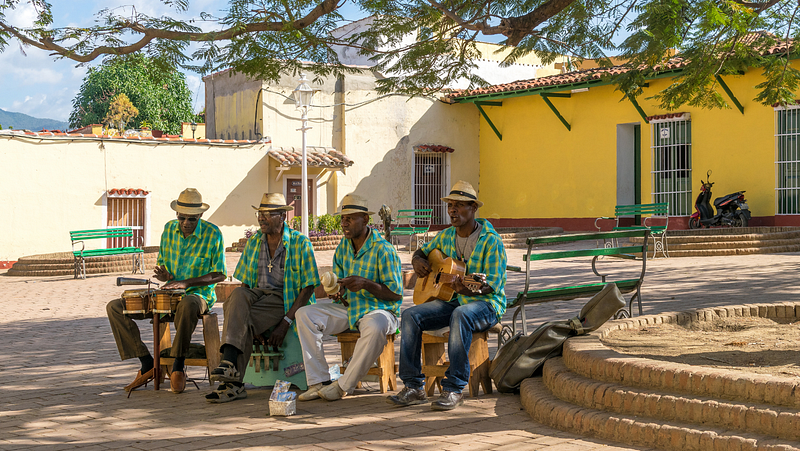
The tumultuous undercurrents of the Caribbean’s history are undeniably linked to European colonialism.
Having borne the weight of colonial conquest, exploitation, and the scars of slavery, today this weight manifests in the resonating call for reparations from many Caribbean nations.
The demand is clear: amend the transgressions of the past.
The Colonial Imprint on the Caribbean Landscape
In an era where European maritime capabilities were rapidly advancing — an age marked by the quest for unknown lands — the Caribbean became the apple of the colonial eye.
Driven by economic hunger and the competitive geopolitics of the European landscape, Spain, England, France, and the Netherlands, saw the Caribbean as territories to claim and invaluable nodes in their burgeoning global trade networks.
The fertility of the Caribbean soil and the region’s climate made it an ideal locale for cultivating cash crops. Sugar cane, in particular, stood out for its lucrative potential, with demand for it growing in Europe.
Quickly, sugar’s byproducts, including rum and molasses, joined this list too, alongside aromatic spices that European palates coveted.
However, the mass cultivation and production of these goods demanded a workforce, one far beyond the numbers and capacities of the local populations — with the transatlantic slave trade providing the solution.
This trade involved the massive, organised abduction and transportation of Africans, who were ripped from their families, communities, and ancestral lands.
Packed into ships with inhumane disregard for life or dignity, they endured the torturous journey of the Middle Passage, where countless lives were lost to disease, despair, and brutality.
Upon reaching the Caribbean shores, these survivors, already traumatised, found themselves in a meticulously constructed system of exploitation.
Everything was designed to suppress and control — to extract every ounce of labour while minimising rebellion or escape.
The laws of colonial powers codified racial hierarchies and the rights of slaveholders, giving legal backing to the everyday horrors of plantation life.
Simultaneously, these laws denied enslaved Africans any semblance of autonomy. The cultural practices, languages, and religions from diverse African regions were suppressed, replaced with a forced assimilation into European customs
As sugar mills worked incessantly, the society around them became deeply intertwined with the institution of slavery.
Economies flourished, European settlers grew rich, and colonial powers tightened their grip, all while an entire population was subjugated — their freedoms curtailed and their lives bound to the relentless rhythm of plantation work.
The Economic Legacy of Slavery
The machinery of the transatlantic slave trade and the subsequent establishment of Caribbean plantations laid the groundwork for a system of economic extraction and disparity that has left lasting reverberations.
At the heart of this system was a dual dynamic: the accumulation of staggering wealth by a few and the systemic impoverishment of many.
Plantations, fuelled by forced labour, became centres of vast economic activity. Sugar, rum, spices, and later, cotton, became the primary exports, finding eager markets in European cities.
The financial gains, however, did not benefit those who toiled in the fields but flowed into the coffers of plantation owners, European trading companies, and colonial governments.
This wealth subsequently contributed to the industrial growth in Europe, funding infrastructural projects, banking systems, and even cultural endeavours.
In stark contrast, the Caribbean saw little reinvestment from these vast profits, with the islands often treated as mere extraction points in a broader economic network.
The abolition of slavery in the 19th century, while a momentous moral victory, did not immediately dismantle the economic structures that had been established.
Plantations, still hungry for labour, shifted from outright ownership of individuals to systems of indentured labor, bringing in workers from India, China, and other regions under contracts that often bore striking resemblances to the conditions of slavery.
These new labour systems, though different in name, perpetuated the economic dependency of the Caribbean on European and, later, American markets.
Land ownership, too, remained concentrated. Vast tracts of the most fertile lands remained under the control of European landowners or powerful local elites, limiting opportunities for economic diversification or grassroots entrepreneurship in the Caribbean.
The impact of this concentrated land ownership can still be felt today, as many Caribbean nations face challenges in land reform and ensuring equitable access to resources.
The post-slavery era also saw European powers and later global institutions extending credit to these nations, often at unfavourable terms.
This credit was sometimes used as a tool to maintain influence or control over the region’s resources and politics.
As a result, many Caribbean nations found themselves ensnared in cycles of debt, where substantial portions of their national budgets were allocated to servicing external debts rather than investing in local development.
In the modern era, while the chains of slavery have been cast away, the shadow of economic imbalances remains.
Caribbean nations, rich in culture and potential, still grapple with challenges stemming from centuries of extraction and exploitation.
The road to economic empowerment and self-determination requires not just financial strategies but a deeper reckoning with the legacies of a past that continues to shape the present.
Social and Psychological Scars — Healing the Collective Psyche
The devastation wrought by the transatlantic slave trade and the subsequent European colonisation wasn’t just economic — the affliction bore deep into the psyche of the Caribbean peoples, manifesting in layers of social and psychological anguish.
To understand the profoundness of these scars, one must look beyond visible remnants and delve into the less tangible terrains of identity, memory, and collective consciousness.
The systematic brutality of slavery was designed not just to control bodies but to dominate minds. Enslaved individuals were consistently subjected to tactics meant to obliterate their sense of self-worth and personal history.
Names were changed, religious practices were outlawed, and cultural traditions were suppressed.
This forced assimilation had a clear aim: to create a homogenous, compliant labour force bereft of its ancestral moorings.
Language was a primary casualty in this onslaught against identity. Diverse linguistic traditions from the African continent, rich in history and nuance, were eroded.
The enslaved were often punished for speaking in their native tongues, leading to the gradual decline of these languages.
In their resilience, the enslaved created Creole languages, merging elements of their native languages with European tongues — but this doesn’t take away from what was lost.
The familial structure, the bedrock of any society, was another casualty.
Families were torn apart, with members often sold to different plantations, never to see each other again.
This dispersion fractured ancestral lines, disconnecting generations from their roots, and creating a longing — a yearning for connection, often unfulfilled.
This sense of loss, of a history interrupted, generated a pervasive collective trauma. Such trauma is not just confined to the generations directly affected but echoes down the lineage, manifesting in feelings of displacement, a struggle for identity, and a hunger for belonging.
This is evident in the tales passed down, in the music and art of the Caribbean, which often speaks of pain, loss, but also resilience and hope.
Colonial-era societal structures further exacerbated this psychological trauma.
The stratifications based on skin colour — often the lighter being equated with superiority — created and perpetuated colourism; a prejudice that still lingers in many Caribbean societies.
These hierarchies, driven by European standards of beauty, value, and worth, skewed societal perceptions and were internalised, leading to generations of individuals grappling with self-worth and societal acceptance.
These colonial classifications also had tangible implications — entrenched hierarchies determined access to education, job opportunities, societal privileges, and even political power.
This resulted in a system where socio-economic mobility was, for many, limited by the colour of their skin or the texture of their hair.
In the modern Caribbean, while strides have been made in recognising and celebrating the rich mosaic of its heritage, the ghost of these hierarchical structures remains.
It reflects in societal biases, in the narratives of beauty and success, and in the political and economic corridors of power.
Modern Calls for Reparation — Rectifying Historical Wrongs
Caribbean nations, united under platforms such as the Caribbean Community (CARICOM), have been at the forefront of movements calling for reparation for these past wrongs.
The strength of this advocacy stems from a shared history, a mutual understanding of the depths of exploitation endured, and a recognition of the long-term ramifications of colonial rule.
Central to the call for reparations is the principle of acknowledgment.
The exploitation of the Caribbean was not a series of random events; it was a calculated, systematic strategy orchestrated by European powers.
From the extraction of wealth through plantation economies to the strategic suppression of native cultures and identities, the European colonial endeavour in the Caribbean was marked by sustained periods of enrichment at the region’s expense.
The reparations debate seeks acknowledgment of this exploitation and an understanding that the benefits European powers derived were not just historical transactions but formative events that shaped the contemporary socio-economic landscapes of both Europe and the Caribbean.
However, reparations, as envisioned by Caribbean advocates, extend beyond monetary compensation too.
While financial reparations could potentially redress some economic imbalances, the wounds inflicted by colonialism are multifaceted, and their healing requires a diverse toolkit.
Debt cancellations, for example, would provide Caribbean nations with much-needed fiscal breathing space, freeing up resources that could be redirected towards development initiatives.
Such a move would not only provide economic relief but also symbolise a break from the shackles of financial dependencies rooted in colonial histories.
Developmental assistance, tailored to the unique needs and aspirations of Caribbean nations, can pave the way for infrastructural, educational, and health advancements as well.
Such assistance should be seen not as charity but as a means to level the playing field — to give Caribbean nations the opportunity to thrive in a world shaped significantly by colonial impositions.
Educational exchanges hold immense transformative potential as well.
By fostering academic collaborations, research partnerships, and student exchange programs, the narratives of the past can be re-examined, re-told, and understood from alternative perspectives.
Such exchanges can dispel myths, challenge biased historical narratives, and cultivate a mutual appreciation of shared histories.
Lastly, initiatives aimed at cultural restoration are important too.
Colonialism sought not just to control lands and resources but to dominate narratives, often by erasing or marginalising indigenous cultures.
Celebrating suppressed arts, revitalising lost languages, and documenting and honouring ancestral traditions can all serve as powerful countermeasures, that reaffirm the Caribbean’s rich tapestry of identities.
The call for reparations is a call for affirmation of identity, a push for justice, and, most importantly, an invitation to former colonial powers to step forward, acknowledge the weight of history, and work collaboratively towards crafting a more equitable future.
Counterarguments and the Path Forward
The debate over reparations is not without its detractors. Some argue that modern-day European citizens should not be held accountable for the sins of their ancestors.
Others question the practicality of reparations, pointing to the difficulties in quantifying the owed amounts and ensuring their effective utilisation.
However, as the dialogue intensifies, a consensus has emerged on certain fronts.
First, there is an overwhelming acknowledgment of the historical injustices committed.
Second, there is an understanding that these past actions have left indelible marks on the present.
For the Caribbean nations, the reparations debate transcends material compensation — it is a quest for acknowledgment, for dignity, and for forging a future that recognises the worth of every individual and community.
In bridging the chasm between the past and the present, the reparations debate beckons us to understand our shared histories, acknowledge collective wounds, and work collaboratively towards a more just and equitable world.
The debate underscores the enduring legacies of colonialism and the moral imperatives of our time.
In addressing these historical imbalances, we don’t just settle debts; we take steps towards healing and unity in a world that often seems divided.