
The Reluctant Atheist: I want to believe
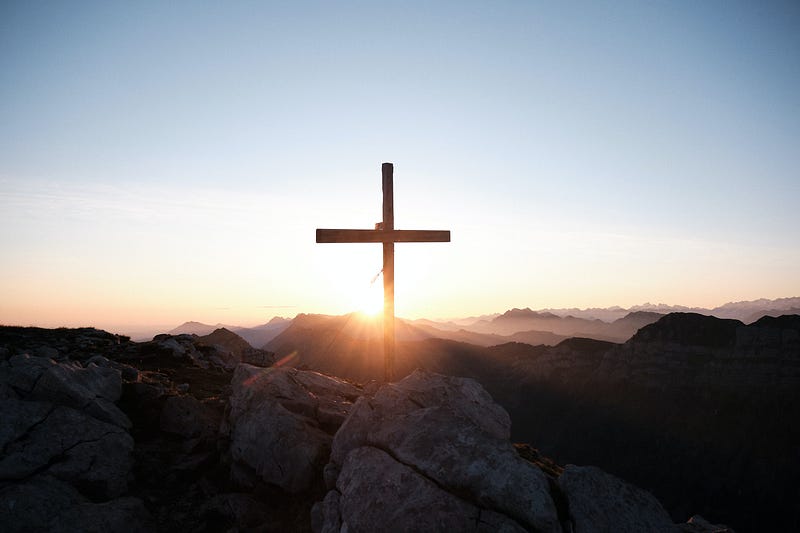
Since before I can remember every Sunday at 8 am we went to mass. I sat and kneeled and sat again. I drank God’s blood and ate his flesh. I sang the hymns and whispered the prayers, but even at that young age where emotional intensity is the default state, I felt nothing. Not a feeling of warmth, nor a feeling of hope or one of protection. I felt nothing except the overwhelming urge to run out of the building and to the close by Wimpy where I could peacefully eat a cheeseburger without a priest in sight to continuously mutter words I was far too young to understand.
I tried to change this from the time I was old enough to read. I did the rituals and read my children’s bible every night and as I flipped through the pages one evening I landed on one of Jesus’s many sermons, only in this one as opposed to inspiring a neutral feeling which he did every other night, he scared me. In this one, he declared that the greatest commandment of all was to “love the Lord your God with all your heart, all your soul, all your strength, and all your mind”. And as my little fingers traced through the spaces beneath those words I felt not a great sense of peace but a tremendous amount of fear. I knew I loved my mom. I knew I loved my dad. I knew I loved my stuffed rabbit, Mr Fluffy. But I had never felt any spark of warmth or inclination towards God himself. After all, I couldn’t see him, had never touched him, and had never encountered him and if the greatest commandment of all was to love him with all my heart and all my soul then surely, even at the young age of 7, I was bound for hell.
When we moved countries I transferred from a non-denominational school where the name of anyone’s God or lack thereof was not uttered in the classroom to a full-blown Christian school where the day had not properly started or ended until we had pledged our allegiance to God, Jesus and the Christian establishment with hymns and prayer. This terrified me even more because now that I was exposed to God constantly throughout the day. Now that I had to watch my teachers and classmates close their eyes while singing soulful hymns. I thought something was wrong with me for not feeling that spark, not feeling that fiery warmth.
I took protective measures to try and ensure my entrance to heaven. I read the bible more thoroughly. I joined a youth group. I learned the words to all the hymns we sang at assembly. And every night as I knelt in front of my bed and folded my palms and said my nightly prayer, I waited for it. My reward. That spark. That warmth. That undeniably present feeling of love I was supposed to feel for this special deity but it never ever came.
As I entered my acne stained teens I did all the usual rituals but I kept my mouth shut and my grand secret to myself — that in this place of Christian fundamentalists. In this place where I witnessed one of my teachers furiously rip out a page of a science book that mentioned evolution. In this place where they sent a pastor to speak to us after the Da Vinci Code came out to tell us that every sentence on every page of that book was nothing but fallacy — I very much was in doubt of every spiritual thing I’d been taught. Looking back at these grand displays of “faith” I think they were scared. Scared anything could sway our perception. Scared something would sway our beliefs. So scared were they that we would begin to question everything we’d been taught and start the process of reversing all the unintentional indoctrination imposed on us.
I used to think that this was for the protection of our eternal souls, that this was to ensure that we all went to heaven. But looking back now I think that wasn’t the case. As the saying goes, “one bad apple spoils the bunch” and if even one of us began to question. If even one of us began to spread these grand and dangerous ideas that evolution actually happened. That the big bang was a scientific fact, and that same-sex relationships might actually be okay then we would infect the whole group and in that way affect them. If we began to question we would pose those questions naturally to our educators who at a Christian school were also there for spiritual guidance. Adults who their whole lives had claimed this faith and stood by it. Despite every contradiction. Despite every cruel sentence, and despite every story and practice that mentioned that this God that we prayed to more frequently than we did our laundry might not be so loving after all. If we began to question their religion they might just have to do so too. And when the very foundation of your life is built on what you thought to be unshakeable faith, what do you do when it crumbles? If they really, truly believed in God, science wouldn’t scare them. Proven facts would not absolutely terrify them because their faith in this being, in this deity would be so strong that nothing and no one would be able to shake it.
But their belief is not my subject or my business. Mine, however, or lack thereof is. I gave up when I was 17. When I was tired of waiting years and years for something it seemed like would never come. When I was tired of being associated with people who didn’t think it was okay for a person to love another person, regardless of their gender. With people who didn’t understand that maybe, just maybe, it was an individual woman’s choice, and hers alone, whether she should decide to become a mother or not. And as much as this does not speak for all Christians, or all of Christianity, being associated with a religion is a lot like being associated with a political party. People become aligned with not only the greatest triumphs of their chosen government but its greatest sins.
As soon as I gave up a little bit on God I felt this overwhelming sense of freedom, this overwhelming sense of relief. Now I was free to do whatever I wanted without fear nor want of the euphoric gates of heaven or the steamy fires of hell. But with this sense of relief came this unshakeable twinge of sadness. Hadn’t it been God I prayed to when my classmates began to relentlessly bully me? Hadn’t it been him I asked to get me through every disappointment, every heartache and every family tragedy? I wanted so badly for someone to always have my back. I wanted so badly for someone to love me eternally — longer than either of my parents could ever live long enough to be able to, that I held on to a semblance of hope that maybe God might exist. I was no longer a Catholic. I was no longer a Christian. My label was officially agnostic.
Giving up hope is a sad thing though. Giving up hope in someone who allegedly made you in their image and loved you beyond measure is even sadder. Because isn’t that what we all want? Whether it’s secret or obvious, both the richest of men and the poorest of would do everything and anything for a structure of eternal support, for a pair of “everlastings arms”.
As I left my teens and entered university I was confronted with cults and Christians on what felt like every corner. All of them asking the same question — didn't I want eternal love? Didn’t I want eternal life? I didn’t think then but do think now about how the thought the answers to those questions could ever be no? Did they think I hadn’t read every chapter of the bible? Did they think I hadn’t researched the Quran and the Torah and looked up the tenants of Buddhism? Did they really think that I had gone through a life that inevitably pains everyone without looking for some form of support or purpose? Did they think that those of us that didn’t believe chose not to believe?
How great it would be if all of us found comfort in the things we’d been told would bring us comfort. How epic would it be if all the answers to all the questions we’d ever asked were contained in a one size fits all book? How hopeful would it be knowing that if we just followed a simple set of instructions the death we’d been taught to so thoroughly fear would be followed by everlasting happiness. But one cannot force what isn’t there. One cannot fake affection where there is none to be found. When cannot feign belief without a reason to do so.
I began to think of my relationship with God as an arranged marriage. People tell the bride and the groom that all it would take for one to love the other was the passage of time. But I’m sure that for hundreds and thousands of people that isn’t ever the case and they are doomed to spend their lives with people they neither loved nor believed in simply because they’d been told that what would happen was fact.
I had no intention of being trapped. I had no intention of taking part in rituals I didn’t believe in simply because it would make others happy. And most importantly of all I would not set aside my biggest asset — my brain, for a feeling that I would only ever be able to feign.
As I entered my twenties and the reality of adulthood set in, which consisted of brief moments of euphoria but mostly pain after pain after pain. One particular event shook me to my already unstable core and made my never-ending depressive episodes significantly worse to the degree that I began to question louder than ever where God was when all of this happened. If he loved me so deeply how he could trap me in a situation with no way out? How could he let me hurt and be hurt and do absolutely nothing about it? It was that year that I refused to be confirmed into the Catholic church, ironically enough, it felt blasphemous to receive a sacrament I was now in complete doubt of. But hope, even when it was once a blazing blue fire that has been reduced to a matchstick flickering in the wind, perseveres.
Until one day, I woke up and realised that this matchstick that I had guarded so protectively with my hand had completely blown out without me knowing it. It felt like over time I had simply stopped believing in God and had had so little conviction in the idea of him that I hadn't even noticed it disappearing. But with this came questions, only this time they were not mine but other people's. Invitations to church and religious events always followed when I expressed my beliefs and with them the generic statement that I was missing out on a feeling unlike any other.
But to this question, to this statement, and to this belief my response is and always was “don’t you think we want to feel that feeling? Don’t you think we want to feel that warmth? Don’t you think we all would cherish knowing we were eternally loved?”. But just as love is sometimes unrequited, some of us never get it. Some of us never feel it. And there is no sacred passage or drop of holy water that could ever change that.
In my darkest hour, I remember screaming and pleading to God, to the universe, to whoever could possibly be up there to please just let me die. Please just allow me to die. Declaring to both the sky above and the hell beneath that I did not ask for my birth and that just as much as I felt I did not want or deserve the bad, I did not want or deserve the good either. But no one answered, in the darkest hour of my life I was met with silence from a deity I'd been told’s presence would always be there, from a pair of everlasting arms I’d been told would always be there to hold me.
Even though it’s only been a little while, I now consider myself an atheist who will probably never feel that flickering matchstick again. But as much as it warmed my hand, what warms it, even more, is the fact that I now have the ability and freedom to question. The freedom to not be associated with extremists who are the antithesis of my moral core. The ability and freedom to be unapologetically, without fear of talk of sin or widespread condemnation, myself.