
The Reflections of a Gay Theologian
Second Class in the House of God
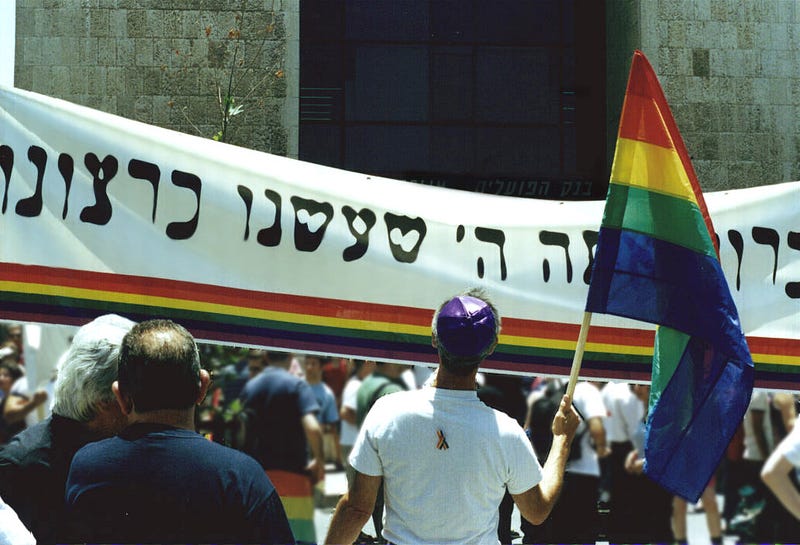
LGBTQ+ experience is at the forefront of societal discussions like never before. While hate undoubtedly continues to prevail, the first-world narrative is generally one of radical inclusivity as queer people find themselves not only tolerated but celebrated — a place where “love wins.” Rather than fighting blatant acts of violence and discrimination, gay rights activism increasingly focuses on nuances of reshaping society’s perception of the “unknown.”
As a part of this newly celebrated minority, I must admit that it has been both validating and entertaining to see relatable narratives occupying the top charts on Netflix. Gay romance scenes have helped me understand the hype of a cinematic love affair.
Queer narratives have become a trend that media shamelessly monetizes upon. Governments that once oppressed queer bodies, now utilize the LGBTQ+ experience to garnish support when convenient. If I sound skeptical that’s because I’m am. Yet, even if corporate displays of inclusivity are simply effective marketing strategies, this suggests something important:
statistics must show that the majority of the population values queer people and are more inclined to support inclusive spaces. It therefore comes as no surprise that churches today increasingly find their pews empty.
As a theologian, I have willingly entered an increasingly narrower world where my voice risks being discredited due to the way I love. To be queer and religious is a growingly uncommon dichotomy, and I’m not willing to sacrifice either part of my being. When the secular world has come to normalize and celebrate who I am, homophobia feels ever more foolish. It becomes increasingly difficult to honor the wisdom of these rich traditions when respect is not reciprocated. It could be that the sacred spaces that matter most to me are yet to “get on-trend,” yet I fear that they will let their institutions crumble before submitting to inclusivity.
Why Religious?
For good reason, both anti-religious sentiments and new spiritual movements are on the rise. While I have dabbled in various “conscious communities” where my sexual orientation was of no concern, these spaces far from facilitated my earnest pursuit of Truth.
Read my thoughts on genuine spiritual pursuits here…
For people like me, religion and spirituality are two parts of a divinity’s whole experience…
Religion offers systematic approaches to the mysteries of Truth. As an academic, the spiritual guidance I receive must be structured like a good essay; with a proper grounding in authoritative sources. Religion offers me the opportunity to enter into spiritual experience through ancient traditions developed over thousands of years by devoted seekers.
Religion is the guardian of the philosophy, art, and mythology produced by our ancestors. As I connect to a heritage I once chose to ignore, Christianity has become a way to experience my family tree that has been rooted in this religious worldview for at least 1400 years. I connect to all of humanity by studying the mosaic of the spiritual life found in world religions.
To separate spirituality from these ancient frameworks risks the integrity of my spiritual pursuit. I believe that spirituality without religion becomes individualistic and therefore ego-affirming.
I then ask the question: Why should I be the first of my ancestry to forsake our religious traditions?
Because I am in love with a man?
My Reconciliation.
My experience in religion has been less discriminatory than one may expect. While I may not have experienced blatant acts of exclusion, I am a straight-passing white male and haven’t asserted myself as a full member of any religious community. The one time I explored membership in a Hindu temple, I found myself back in the closet after a decade of pride. I believed that by entering into a heteronormative religious relationship, I would be welcomed into the community as a first-class member.
I am painfully aware that my religious exploration comes with limitations. This summer, I am enjoying classes at the Orthodox School of Theology. Yet, regardless of my theological success and deep respect for the Orthodox tradition, I am aware that without vowing to chastity, I would be denied participation in the sacraments of their church.
While I use Christianity as an example here, I have faced the same problem in various traditions of world religions. Unless first-world secular society has come to appropriate the tradition, queer identity within religious institutions remains contentious.
Growing up, I dreamed of living in a Buddhist monastery. At another point in my life, I spent time in a Hindu ashram. The question arose: Why live cloistered amongst men as if I am hiding from the temptations of the female form?
No traditional religious system addresses an answer to these questions. At best, they’re silent.
Perhaps I have yet to identify with one religion, as my options are seemingly endless yet painfully restricted. Perhaps it is a blessing that I find myself on the margins of these traditions. On the margins, my religious identity has become expansive rather than dogmatic.
I will always honour the wisdom found in religious traditions regardless of my status within their institutions. As we queer people continue to right the wrongs of society, I pray to find belonging in a religious tradition where I am seen for my spiritual virtues rather than othered by my perceived sexual acts.
A Message to my Fellow Queers
You have value. You deserve a rich spiritual life and community.
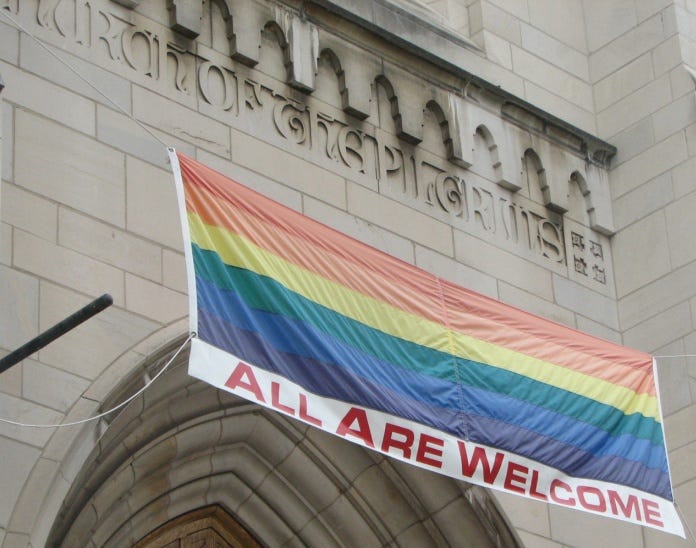
I encourage you not to give up your spiritual pursuits for religious wisdom. While dogmatic institutions may not be able to accept us as we are, we can still learn from the teachings of our ancestors. Find inclusive spaces where you are celebrated. They may not be rooted in the tradition you crave to belong to, but they will honour your truth. Study what brings you closer to Truth and bring it to include spaces. Don't toil while trying to prove your value to those who don’t see it.
Most importantly, protect yourself from harm.


