
The Recovery Rate of COVID-19 is Worth Talking About
It’s the only way to restore calm in a time of panic and despair
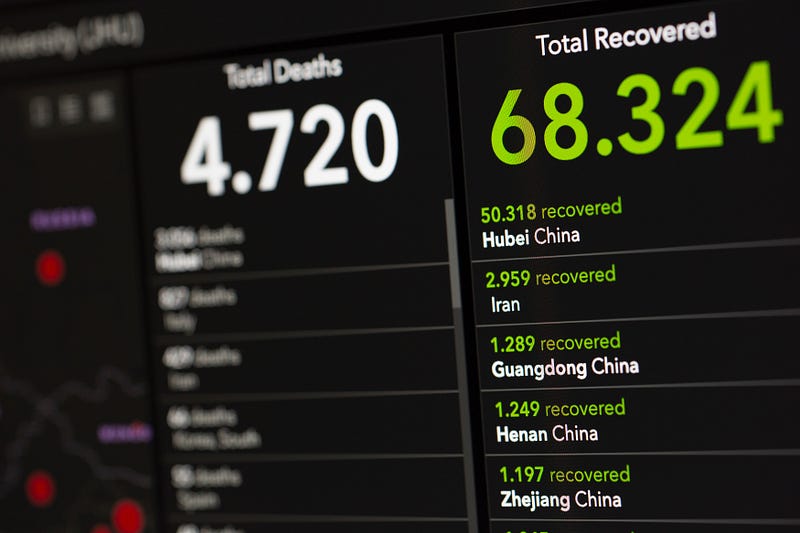
Are we going to die, mama? my toddler asks. She is afraid, everything is different. She misses her friends and news of the virus is all we hear about. I kiss her forehead and tell her NO we won’t die as long as you….. eat your vegetables. She giggles, I hug her tight then she says, will you make it go away?
Her words had me thinking as much as I can’t make it go away I can give a different perspective. One that reminds us of the resilience of the human body.
The death rate of COVID-19 reported by WHO is as low as 0.2% among the young and as high as 8.8% among the old. This is low compared to the 1918 flu pandemic, which infected one-third of the world’s population, according to the CDC 10% of patients died.
If we focus on the recovery rate 90% of patients survived the deadliest pandemic in human history. That`s amazing!! Today around 1,418 patients die of the flu every day this number is surprising to most people WHY? because the average person recovers from the flu. Therefore, our history with the flu virus and current data on COVID-19 is pointing at our resilience as human beings.
COVID-19 and the Flu virus
The flu virus and coronavirus share uncanny similarities. They are both transmitted by coughing and sneezing, both cause upper respiratory infections and both have RNA as their genetic material. This is important because many people get infected with flu every year some die but most people survive. Those that succumb to the illness usually have other ailments and those that survive develop immunity. COVID-19 is showing this same trajectory. Just yesterday globally 81% of the 218,951 infected patients recovered and 19% died. Which makes one wonder how most people survive.
Just like the flu, treatment for COVID-19 is symptomatic and preventative. Meaning no treatment targets the virus. Its RNA genetic material makes vaccination a tricky route because RNA is unstable and prone to mutations. Which is why the seasonal flu vaccine is only 45% effective at preventing flu. Medication is solely used to alleviate our symptoms until the immune system eradicates the virus. This means the recovery of COVID-19 just like flu depends on one’s immune system.
COVID-19 and the immune system
When the virus enters your body the protruding protein spikes attach onto human cells, allowing the virus to get inside the cell. Once inside, the virus hijacks the cells into making copies of the virus.
Depending on how robust your immune system is, the intruders will be recognized, flagged and attacked by antibodies. If the immune system delays the virus will multiply, and the symptoms will be severe. Some immune systems are so robust that the invading virus is eradicated before symptoms develop. This shows that symptoms and recovery rate depends on the state of one’s immune system.
Data from China, South Korea, Germany, Canada, and the USA, show that as much as 95% of active cases in the general population are “mild” and do not require specific medical treatment. This means the average person recovers. The small percentage that does require intervention are the elderly whose immune systems have naturally declined. According to the National Institute of Health, 85.6% of those that died in Italy were over 70 years of age and 48% of them had an average of 3 prior illnesses. The data further stresses the point of a healthy immune system.
6 ways to strengthen the immune system
- Reduce toxins, such as smoking, drinking, junk food, drug use, etc so that the body doesn’t get overwhelmed. Drink water helps flush out toxins and cleanse the body from within
- Reduce stress. If you tired rest, resolve conflicts, be at peace. Our state of mind affects the immune system
- Eat a balanced diet this will help nurture your microbiome which will, in turn, boost your immune system
- Bask in the sun, you’ll get vitamin D which boost the immune system
- Eat fresh fruits and vegetables they provide trace minerals which important biochemical activities of the body
- Have vitamin C preferably from fresh fruits. This vitamin C boosts the immune system in its natural state. It is very unstable when exposed to air or light so you lose a lot when taking a pill
- Exercise, an active body is an active system. Have you ever noticed after a jog, you breathe better and feel better? During an exercise, your lungs expand to take in more oxygen which can be available for cells. Your cells use that oxygen to produce energy for their specific duties
For long we have lived in fear and found ways to acclimatize but COVID-19 has been our tipping point. It has shocked our psyche in ways that made us narcissist, selfish and overly cautious. This fear-based reaction made us controllable. But fear isn’t the problem, fear informs us of what we truly don’t want. I hope this piece has helped put some of your fears to rest.


