
The Recent SpaceX GPS III Launch: Everything You Need to Know
The important facts about the June 30th launch, all in one article
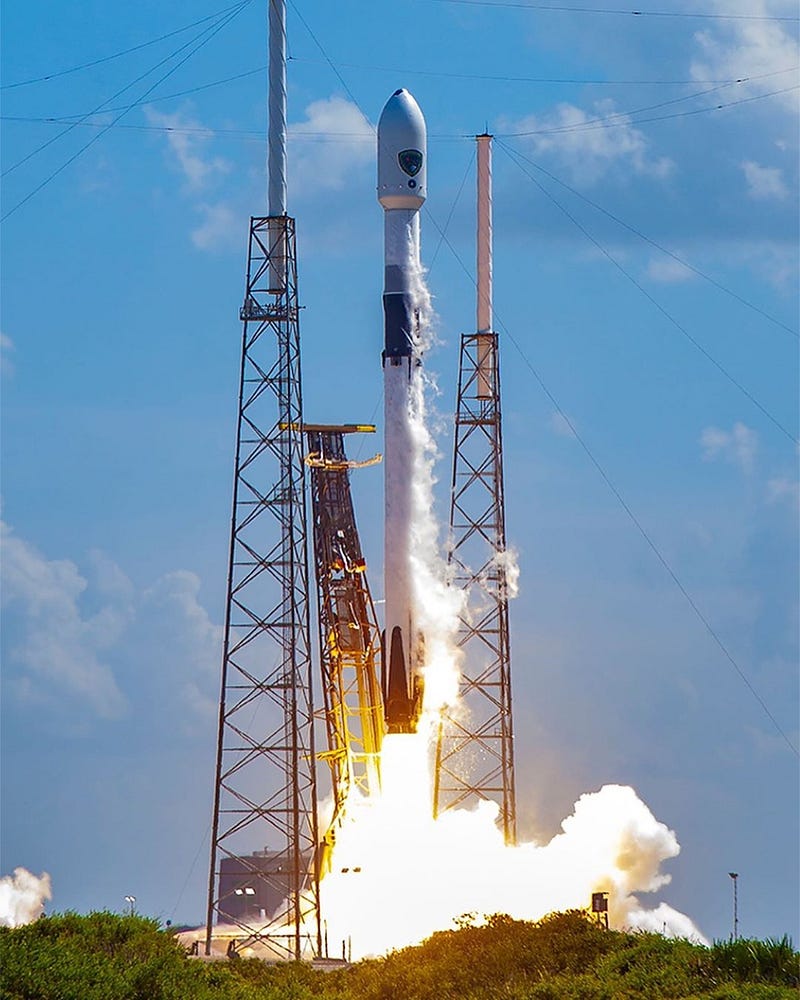
A couple of days ago, SpaceX launched a series of GPS satellites for the Space Force. If you want to know more details about the launch, or are looking to know enough to add to a conversation at the dinner table, you’ve come to the right place.
Space Force and GPS III
The Recent mission was contracted by the United States Space Force, which is a new organization as of December 2019 that aims to protect the United States’ Space interests. This launch was the first launch SpaceX has done for the Space Force, but SpaceX has launched GPS satellites prior to this mission.
The 50th Space Wing of the Space Force now operates the NAVSATR Global Positioning System (GPS). NAVSTAR GPS is a satellite-based radio navigation system owned by the United States government and operated by the United States Space Force. The GPS network provides positioning and timing services worldwide for military and civilian users, beaming signals relied upon by airliners, ATMs, drivers, and smart bombs, among numerous other users. To date, including the recent launch, the GPS system hosts 30 active satellites. This system is not new at all. In fact, the first NAVSTAR satellite was launched to space in 1978, which was made by Rockwell International. NAVSTAR then reached full operational capability in 1995, with over 4 billion users. At the time, Space Force did not exist and most of the work for these systems was done by the United States Air Force, with involvement from NASA.
The new satellites that were launched were part of the GPS III mission. GPS III consists of brand new satellites with new technology developed and created by Lockheed Martin, and these satellites are intended to improve the 20-year-old GPS system that we currently use.
A total of 10 satellites were launched, and it is unknown whether these satellites will replace existing ones in the GPS constellation or lock into new slots. These GPS satellites provide more accurate navigation signals and boasting longer design lifetimes of 15 years. The new satellites also broadcast a new L1C civilian signal that is compatible with Europe’s Galileo network and Japan’s Quasi-Zenith Satellite System. This is important as we now will have launched satellites that are compatible with our allies' navigation systems, which means more accurate positioning and timing.
The launch
This specific launch was actually intended to happen in April of 2020, but due to COVID-19 and development, the launch was delayed. The launch happened on June 30, 2020, at 4:10 PM EDT. It was the first launch by SpaceX contracted by the Space Force.
This is not the first of GPS satellite launches for SpaceX, however. In December of 2018, a Flacon 9 launched a GPS III mission that was successful, to an extent. SpaceX was not able to land the Falcon 9 booster, simply because the military did not allow them to. The military persisted that the Falcon 9 use all it’s fuel to ensure that the satellites reach the proper orbit, so, therefore, the landing legs were removed from the Flacon 9 booster and a landing was not attempted. That’s another reason why the recent launch is historic — it’s the first time SpaceX was able to land a Falcon 9 booster on a U.S. Air Force mission.
The Falcon 9 booster that launched the satellites was a brand new one, on its first flight. It successfully landed in the sea on the drone ship “ Just Read the Instructions”. SpaceX also recovered the rocket fairings from the sea.
Previous missions by the Space Force and military for their GPS systems or other satellite missions have usually been contracted to a different rocket company, United Launch Alliance (ULA). ULA flies two major rockets, which are government designs, the Atlas V and Delta heavy rockets.
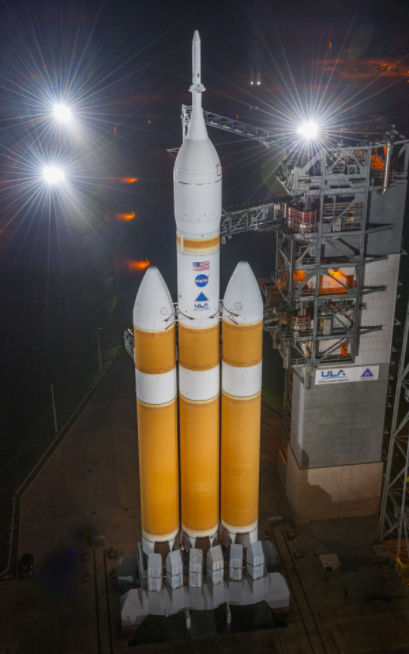
The move to contracting SpaceX is a smart one. Here’s how the launch costs break down:
The payload capacity of a ULA Atlas V is 20,520 kg to low earth orbit and the max payload of a SpaceX Falcon 9 is 22,800 kg to low earth orbit. For larger orbits, the numbers are pretty close. That said, it is safe to assume that both rockets can launch most satellites to their intended orbits successfully. Looking at launch costs, the Atlas V is reported to cost $110 million per launch, and the rocket is not reusable. The Falcon 9, however, is reusable and costs only $57 million per launch. This is close to a 50% reduction in cost per flight. And for larger missions, SpaceX is even more desirable.
The Delta Heavy can support a payload of 28,790 kg to low earth orbit, while the Flacon heavy can support an insane payload of 63,800 kg. The Falcon Heavy is the most powerful and tops any other rocket for payload capacity. Looking at prices, the Delta Heavy is reported to cost $350 million per launch. The Falcon Heavy, on the other hand, only costs $90 million per launch, which is close to a 75% reduction in costs.
Conclusion
This successful mission highlights a movement towards a private space company for military missions, which is revolutionary. With SpaceX growing and becoming more profitable and successful, they are able to continue to develop Starship and BFR, which are the spacecraft that we hope will take us to Mars one day.
Follow for more updates!


