
The Reason We May Never Have Another bell hooks, Eve Babitz, or Joan Didion
I’m Going to Write About Writing. Sorry In Advance
Once, while researching a piece for the New York Times Magazine , I came across a debate between William Styron and Ossie Davis moderated by James Baldwin. The reason for the debate: Styron, a white guy, had written a first-person historical novel from the point of view of Nat Turner, the real-life historical figure who, as you will recall, led an 1831 slave rebellion in which he and his fellows literally killed every white person they saw including babies and children. Turner even wrote a short pamphlet explaining himself before he was hanged and it really is a primary source that is not taught nearly enough as either an historical or literary work. I guess we don’t really have the stomach for it. But we probably should.
Some 135 years later Baldwin suggested (or maybe “dared” is the better word) Styron to write about the event in the first person and Styron accepted the challenge. The result was 1967’s The Confessions of Nat Turner, a book which enjoyed a wild but brief success — it dominated the bestseller list and won a Pulitzer Prize — before the backlash came. A year later, a compendium of Black authors critiquing Confessions was published and suffice it to say a lot of people weren’t feeling Stryon’s work. Hollywood, however, was all in. In 1968 20th Century Fox and producer David Wolper — who would later produce Roots — paid a whopping $600,000 for the adaption rights to Confessions, at the time reported as the largest sum ever paid for book-to-film rights. Academy Award winner Norman Jewison (In the Heat of the Night) was tapped to direct and James Earl Jones, who was the hot new actor after dazzling Broadway with his turn in The Great White Hope, was eyed for the lead role.
Ossie Davis was among the first of Black actors in Hollywood to say “not so fast,” to the movie project, taking particular issue with Styron’s depiction of Turner as a revenge rapist which was purely an act of invention on Styron’s part. Davis reasoned that while the book was bad enough, transferring this image to screen could very likely lead to real and material death for real Black people in America. It was not long before the likes of Stokely Charmichael (a.k.a. Kwame Ture) and H Rap Brown were on board with the Davis-led boycott. Jewison wanted precisely none of the smoke and backed out, citing scheduling conflicts with Fiddler on the Roof, an entirely less controversial project which would go on to be the highest grossing film of 1971. Sydney Lumet (Dog Day Afternoon, 12 Angry Men, Network) was said to have sniffed around the Turner project for a minute, but ultimately it would lay dormant until Fox Searchlight repeated history by paying a record $17.5M at Sundance to acquire Birth of a Nation, Nate Parker’s deeply ill-fated 2016 attempt at the Nat Turner story. You’ll recall that film was shelved before release, due to sexual assault allegations against Parker. You might say this story about a Black man heroically killing a bunch of white people is a cursed project all the way around.
Anyway, all that is background.
At one point Baldwin, who had been something of a defender of Styron’s book, or at the very least of his right to have written it, moderated a debate between Styron and Ossie Davis on whether or not it was reasonable to put Confessions on screen. In his brief introductory remarks Baldwin made the following observation:
“Whereas Bill’s novel is more or less a private act and one’s reaction to it is a more or less private thing, what happens with this on screen, in what we like to call America’s living room — a room populated entirely by Shirley Temples and Ronald Reagans and their really fearful offspring — is another question altogether”
It’s been over a year since I wrote that story and first came across that quote and it has clung to my mind. I think of it every time I open Twitter or scroll Instagram, but until recently I could not understand why. It wasn’t until this past week, a week where we saw the deaths of bell hooks, Eve Babitz and Joad Didion within days of each other that it occurred to me what it is about this quote, particularly the naming of a work of prose as a private act, that I have not been able to shake: It is the fact that when Baldwin spoke those words, they were true. And now, they no longer are.
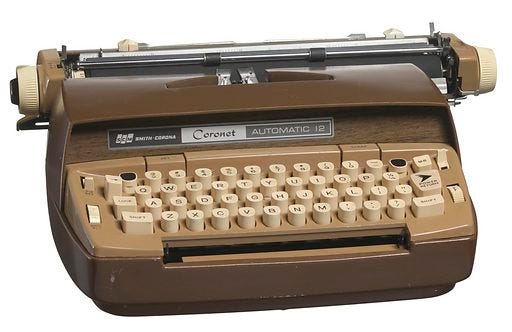
Works of writing are no longer private, nor are our reactions to them. Social media and the Internet have made it that writing itself has in many ways become “America’s Living Room,” to use Baldwin’s term. We post our writing publicly; we see everyone’s reaction to our writing on Goodreads and Twitter. We react to books and articles online and in full view of one another; we see everyone’s reaction to everything we haven’t read. We seem know what everyone thinks of everything all the time. People build entire online brands around their takes on other people’s writing, on hating what everyone likes, liking what everyone hates.
The cycle is predictable — a work is made, people say it’s great, it gave me life, here are the same five screenshots. Soon people are subtweeting that it’s really trash and wtf is wrong with people. Then people are tweeting that people who hate it are trash and wtf is wrong with people. Meanwhile the work gains views and clicks and the title stays on everyone’s lips. You can’t scroll ninety seconds without seeing some regurgitated take on it. Then people start resenting that the title is everywhere, and we quickly move to the “I’m sick of the discourse” part of the discourse which of course is another way of using the discourse to for engagement. Two and a half days have passed. Soon the work is gone from public memory. Another work takes its place, and the cycle begins anew. The reaction to a work is no longer private. In fact, it is not even public. It is beyond public. It is now content. It is now performance. Reaction to work has become a form of work in and of itself.
When hooks and Babitz died the Internet became an (arguably) insufferable place for those few days, because as much as we were inundated with legitimate memories and beautiful posts honoring these brilliant thinkers and writers, we were also inundated with a sense of the pressure everyone feels to perform reactions not only to their deaths but to their works. Liking Eve Babitz becomes how you signal who you are, what kind of writer, what kind of person. bell hooks can’t die without you making sure that everyone knows that you were super into bell hooks and always have been. Just as tweeting about Babitz is a performance if you are a writer, so too is not tweeting about Babitz. The whole thing leads to the kind of disingenuousness endemic to our period of public branding in which the authors are used as tools for self-advancement without their actual work meaning all that much. Writer and editor Alana Levinson summed up this aspect of the Babitz–on-the-Internet phenomenon thusly:
“A lot of the media types who fawn over her would have hated her if she was coming-of-age today. Slutty female geniuses are typically reviled by contemporaries but it’s easy to love them when they are not your competition.”
By the time Didion passed, a mere six days after hooks, one could sense a fatigue with the theatrics of public mourning already setting in. “I absolutely loved her work,” went one screenshot of a text conversation that a friend posted the morning of Didion’s passing “but this is about to be the most annoying day in the history of the internet”
Maybe Baldwin’s observation struck me because, as a writer, I wish it were still true. I wish that my writing and your reaction to my writing could indeed be private acts, or at least more private than they are now. But those days are over. I must now consider, at least on some level, what this imaginary force called “The Internet” will think of what I write. How might it be misinterpreted? Will I be cancelled?* What about the handful of people who can’t stand me (which, fair) and look for any reason to be annoyed by my presence? I remember a meme that said if you have more than 10k followers on Twitter you can rest assured there is a group chat somewhere where they screenshot your tweets and roast you. I found that oddly comforting.
Obviously we are not the first generation of writers to be overly sensitive about criticism. The difference, of course, is that we live in a time in which not only is everyone a critic but every critic is motivated to serve the content gods by @ — ing you directly with their critiques. We have not yet evolved the mental capacity to operate sanely under those circumstances and it is driving each of us a little crazy it seems.
As much as I claim not to care about any of that, as much as the work of being a writer is, indeed, to quiet, heal, calm, and assuage that fearful, perhaps childish part of you that does care about that what other people think, those imaginary characters are always with me. I am always on some level writing to or away from them. Writing, therefore, is no longer a private act between me and the page, or the laptop. Thousands of social media strangers are also present. The most I can do is ignore them. But it is far too late, and I have done far too much scrolling to make them go away.
This, I suspect, is a deeper unspoken mourning behind the deaths of hooks, Babitz and Didion: we may never have writers like them again. And the irony is that the social media performances honoring them only serve to underscore that harsh reality. They wrote in a time in which their work, while made public, was still largely private in the sense that Baldwin implied. Your responses to them — the moments you loved, the ones you questioned, doubted, wondered about- the parts you chewed over and over in your mind, that played and replayed for you at odd hours, while you were washing your hair, going for a walk, folding your laundry, making lunch for your kids, parts that you didn’t quite understand, weren’t even sure if you liked, those parts of their writing were a private exchange between you and them. You were not called upon — nor did you necessarily feel the urge — to comment upon them publicly, nor were you forced to hear everyone else’s reactions to them immediately and publicly. This meant that your process with them could unfold slowly, organically, perhaps more honestly. No one could tell you what to think.
To be a reader in an environment like this is one thing, but to be a writer in such an environment must have been a different thing altogether. There is a power in not knowing how many people dislike you, a freedom in it. You are able to work out your own relationship to your ideas without the ever distracting threat of an Internet pile-on. Perhaps more importantly, you are able to tap more easily into the hazy, dialectical ambiguities that define our time. I would imagine this would mean you could write more candidly, perhaps address ideas with more nuance and complexity, perhaps be wrong more freely.
Of course this is all speculation. I don’t know because I don’t write in a time before the Internet. But I do know that with the deaths of hooks, Babitz, Didion — heck you could throw Greg Tate in there, though lucky for him he died in a week in which author death was not a trending topic — we have lost more than just these writers. We have lost something about what they did and how they did it ; something it is incumbent upon us who are still breathing to translate, honor, and preserve. Call it honesty, call it courage, call it the integrity of our beliefs. We must write what we believe in and if we don’t know what we believe in it, we must write that we don’t know what we believe in and we must interrogate on the page deeply and precisely why it is that we don’t know.
But whatever it is we must write patiently. We must write in a way that takes time, time to process, time to understand, time to know. Not in a way that gets the most tweets and likes, but in a way that explores our ideas most thoroughly and genuinely. Of course you know this. Perhaps I need to remind myself. Perhaps I just need to remember that if I don’t do that, then what was the point of all the work these women did?
We often ask people to rest in peace, or power, but today, it is my hope that hooks, Babitz, Didion and Tate rest in your pen and in mine.
*It needs to be said here that social media does the work of holding people accountable for harms when systems refuse to and that’s why it has developed the way it has in the first place. There is no “woke mob” and social media is not a “witch hunt.” My fear of being “cancelled” is not a fear of being unfairly harmed or targeted. It’s an ego-based fear that not enough people will like me. Think of all the harm and bullshit people got away with before they could be called out en masse by regular folks. No really, sit and think about it. There is for sure a conversation to whether the impact of call out culture is 100% good, but I’m not here to co-sign your anti “cancel culture” bullshit, so if that’s what you’re looking for, keep scrolling buddy.