
The Reality of Living Exhausted from Complex Childhood Trauma
Allostatic load and increased risks for chronic fatigue syndrome
Trigger Warning: This article talks candidly about potential long-term effects of complex childhood trauma. While my intention is to educate, some may struggle with reading this article in its entirety, especially if living with complex or relational trauma.
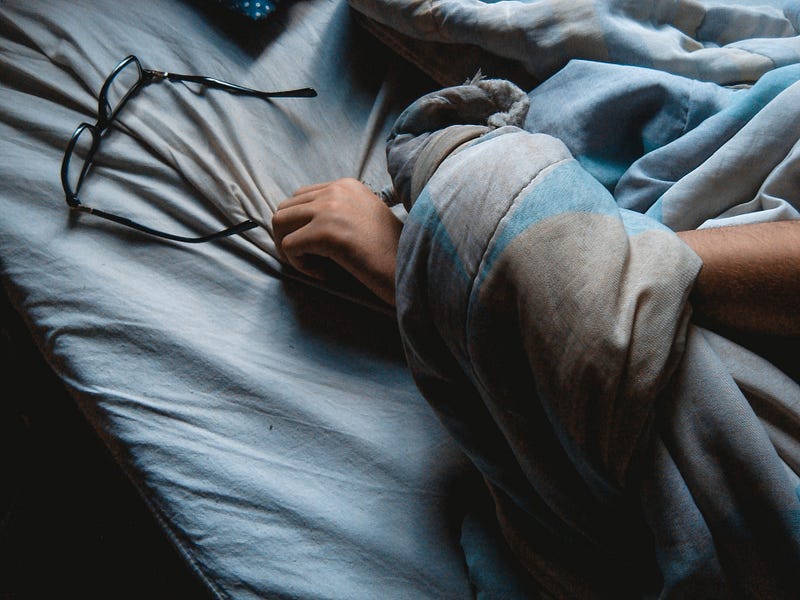
As a kid, I loved to sleep. I pulled the covers up over my head every chance I got. Sleep allowed me to escape an otherwise unhappy childhood; it gave me a sense of safety. When asleep, my mind and body were elsewhere, which was the only way I knew how to feel secure outside of the protection of my childhood dogs.
Sleep offered a momentary pause on my reality. When sleeping, I wasn’t dissociating; nor was I stuck in flight mode trying to think up ways of running away. Sleep helped me accept the reality that no one was coming to rescue me from my cries of pain, nor the silence that followed. Sleep allowed me to turn a blind eye to the fact that I was not on my teacher’s ‘high-risk’ radar because I wasn’t the rowdy kid causing trouble in class.
On the contrary, I came to realize only decades later that since I couldn’t fall asleep in school, I sat dissociated in class most days. I remained emotionally and physically numb in a state of suspended animation, yet eerily able to answer the teacher’s pop questions when asked.
Dissociating in class allowed me a few minutes to recharge from the “normal” happenings of the night before. School became my respite and my safe haven. It is little wonder I spent over half my adult life there. I didn’t know at the time, but as tough a kid as I was to the experiences of chronic trauma, my body was keeping the score.
Childhood Trauma & Its Effects on Our Health
In recent decades, research has found that the effects of stress on our physical, emotional, and mental health are significant and can be lifelong. Perhaps most groundbreaking was the study conducted through Kaiser Permanente between 1995–1997 on more than 17,000 participants — mostly Caucasian, mostly middle-class, mostly college-educated, and mostly with health insurance — which has come to be known as the Adverse Childhood Experiences, or “ACE’s” study.
Examples of adverse childhood experiences that were found from the study included:
- Parent or mother-figure being treated violently
- Abuse
- Neglect
- Intimate partner violence
- Divorce
- Poverty
- Drugs or alcohol in the home
- Parent/guardian abandonment
- History of familial mental illness
- Unsafe living conditions
The results from this study were shocking, and include three common clusters: a) approximately 28% of the participants reported physical abuse, and 21% reported sexual abuse; b) the “average” ACEs scores included more than 40% of the participants reporting at least 2 adverse childhood experiences, and c) ACEs scores are highly correlated with increased risks for mental health issues, narcissistic/abusive relationships, substance abuse, suicide risks, depression and/or anxiety, heart problems, high blood pressure, diabetes, and cancer, with increased risks of comorbidity.
And, most concerning is that an ACEs score of 7 or higher includes a risk of twenty years off of a person’s life.
My score: 7.
As a young adult, I thought the only way to overcome feeling exhausted all the time was to keep myself busier with more things to do. I confused exhaustion with boredom. I felt deep shame if I got tired during the day, or couldn’t accomplish everything on my daily “To Do” list. I became a workaholic and a studyaholic. I pulled 16-hour days on average for over a decade, and felt guilty for taking a day off or turning down an extra project at work.
What I didn’t realize back then was that I was trying to outrun my trauma, which only made things worse.
I found peace in burying myself in work and books. Actually, I found numbness. In hindsight, I now see that I wasn’t attending school back then for the joy it brought me, but for the feeling of disconnection it handed me. Burying myself in another textbook offered me the Golden Ticket in avoiding my trauma and my deeper pain.
Is It Any Wonder Why We’re Exhausted? Unpacking Allostatic Load & Chronic Fatigue Syndrome
Allostatis, or allostatic load, is the cumulative burden on our body created by chronic stress or trauma. This increased ‘wear and tear’ on our bodies is the results of repeated environmental stressors. Current research correlates elevated allostatic load indices with poorer overall mental and physical health outcomes, including risks for Chronic Fatigue Syndrome (CFS) and severe mental health disorders such as schizophrenia and bipolar disorder.
Research supports that exposure to one adverse childhood experience (neglect, abuse, or environmental trauma such as divorce or poverty) increases our risk of early death due to chronic disease.
Can you imagine what exposure to chronic, and repeated adverse childhood experiences can cause?
The Institute of Medicine of the National Academy of Sciences published a book in 2015 that states there are between 800,000–2.5 million people living with the effects of Chronic Fatigue Syndrome (CFS). In an interview with Harvard University professor and expert on CFS, Dr. Anthony Komaroff, he discusses the effects of CFS and other autoimmune diseases, including fibromyalgia.
Symptoms of CFS often come on unexpectedly after experiencing the common cold or flu. The effects are typically lifelong, and often overlap with symptoms of fibromyalgia, which can lead to feelings of depression and overall lethargy.
Other common symptoms include:
- Extreme exhaustion after physical or mental exercise.
- Problems with memory or thinking skills.
- Dizziness that worsens with moving from lying down or sitting to standing.
- Muscle or joint pain.
- Unrefreshing sleep.
However, one important finding from Dr. Komaroff’s research is that SSRI anti-depressants did not treat the effects of depression in those suffering from comorbid depression and CFS, suggesting that something other than a psychiatric disorder was happening to people afflicted with chronic fatigue.
Clearly, much more research needs to be conducted in finding answers for anyone afflicted with symptoms of CFS, fibromyalgia, or other autoimmune diseases that often originate from chronic childhood adverse experiences.
Living day-to-day with the effects of CFS or other autoimmune diseases such as fibromyalgia can be grueling. Our body often takes on a life of its own; we’re left unable to do the things we want because we’re either too exhausted, or living with limited mobility.
“Chasing the dragon” by working harder, or longer, or taking up other distractions only numbs the problem, it doesn’t offer a solution. Pushing through the exhaustion or pushing ourselves too hard only increases our risk of damaging our body more.
Ignoring the trauma or living in denial while pretending it never happened hurts us more in the end. On top of feeling exhausted or struggling with brain fog, headaches, and muscle/joint pain, we end up pulling the wool over our own eyes if we minimize what we survived.
The thing is, we should be angry for feeling cheated out of a childhood filled with safety, consistency, and belonging. Yet many who’ve experienced complex childhood trauma end up blaming themselves.
We should be pissed off for being conditioned to believe a child deserves abuse or neglect. Instead, we simply go No Contact with some, and limited contact with others to protect our peace. Harboring resentment eventually causes more pain than it’s worth.
We learn to become more selective on who we allow in our lives, and who we dismiss without regret. The more removed we are from the bullshit and drama that identified some relationships, the faster we spot the red flags and walk away.
We learn to value our time and we learn to choose quality over quantity with the people in our lives.
We learn how to say “no” and we teach ourselves to not feel guilty for establishing a boundary, especially around those who think they’re entitled to overstep our comfort zone.
We don’t care about hitting the snooze button in the morning because it is a gift we’re giving to our body.
We don’t care whether we turn down a night out, or opt for a hot bath and a quiet night in because it nurtures our healing.
We learn to put our needs, first.