
The Real Woman Behind the Hodges Meteorite
Ann Hodges was only sleeping on her bed when a meteorite, an extraterrestrial object, hit her, which either brought her good or bad luck.
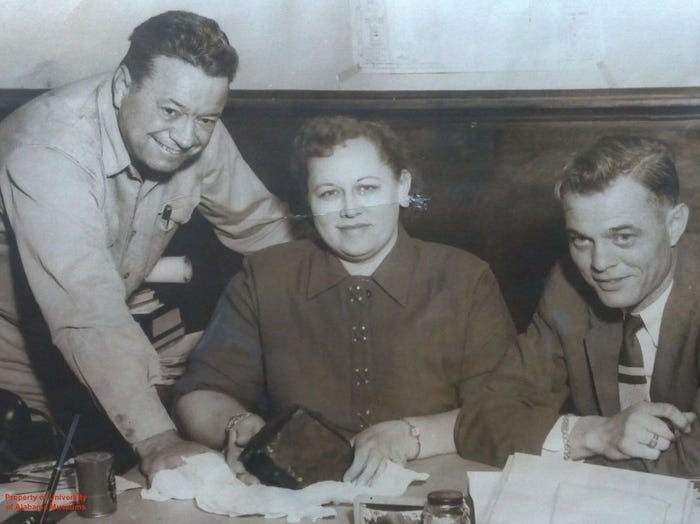
“You have a better chance of getting hit by a tornado and a bolt of lightning and a hurricane all at the same time,” Michael Reynolds, a Florida State College astronomer told National Geographic.
How many times have you fallen asleep on your couch, and nothing happened? To most of us who take naps, the next thing that occurs after we wake up is to feel rested or feel even more sleepy.
But on November 30, 1954, it wasn't the case for Ann Hodges. She was like on any other day, wanted to sleep as she wasn't feeling particularly well that day, but instead, what happened next changed her life forever, for the better or worse, it is up to you to decide, after you continue reading.
What happened next?

A meteorite hit Ann, and the odds of that happening are almost impossible, but it occurred to Ann Hodges on that day.
The approximately 8.5-pound, 4.5-billion-year-old interplanetary traveler shot like a bullet through her Sylacauga house’s roof at 2:46 p.m. It banged into her large radio console and bounced onto her body, causing a large bruise on her left side. — Smithsonian Magazine
This happened in 1954, when American society was always suspicious or wary that another war was coming their way, or that the USSR would one day attack the US, and when this happened, at first, not only the people around where this all occurred wanted answers but also the government.
By the time Ann's husband arrived from work, his home was already full of people who wanted to know more. On top of that, an investigation from the government leads it to "confiscate" the meteorite.
The meteorite was taken to Maxwell Air Force Base in Montgomery where it was tested and identified. It measured about six inches in diameter and weighed approximately nine pounds. The inside consisted of a metallic, gray granular substance which responded to tests given for sulfide and the outside coating was a black satin appearing substance.
Anne Hodges's life changed forever.
Meteorites aren’t uncommon. They’ve been falling on Earth since the beginning of time, and “they fall all over the Earth,” according to Cari Corrigan, a research geologist at the Smithsonian Institution’s Natural History Museum. On November 10, 2019, a bright meteorite the size of a basketball sped through the sky near the Gateway Arch in St. Louis, according to NASA. The internet was ablaze with reports of its dazzling flare.
Because it became news, the event's aftermath changed Anne Hodges's life. Since she and her husband were renting their house from a woman named, Birdie Guy she brought a lawsuit against the Hodges, thinking she was the rightful owner of the meteorite because it was her house after all, and the Hodges are only renting the house.
But public opinion didn't favor Birdie Guy. So instead, she had to settle for $500 and give the ownership back to Anne Hodges.
Still, it could be by the time the lawsuit was settled, the novelty of the news waned, and while a few institutions wanted the meteorite, it ended up not being sold. Later on, it was donated by the Hodges to a local museum, the Alabama Museum of Natural History. For whatever reason that the Hodges donated the meteorite is a mystery in itself.
Conclusion
In 2017 an auction successfully sold a piece of the meteorite, but not from the one Anne Hodges owned.
Instead, it was part of the same, that was discovered by a local farmer who sold it right away to the Smithsonian, and the winning auction by Christie's, of which the size of it was no bigger than a dime fetched for $7,500, money that the Hodges never got from their meteorite.
Many believed it brought her suffering as a footnote to Anne Hodges's life. Years later, she divorced her husband, got sick, and at the age of 52, died from kidney failure in a nursing home.
Eugene her husband, suspects the meteorite and frenzy
that followed had taken its toll on Ann. He said “she never did recover,” according to the museum.
Ann “wasn’t a person who sought out the limelight,” added museum director Randy Mecredy. “The Hodges were just simple country people, and I really think that all the attention was her downfall.
To Ann Hodges, may she find her peace, and we will never know why the meteorite hit her that day and if that alone changed her life. But Ann will forever be known as the woman hit by a meteorite and lived to tell the tale.